


President Donald Trump's December 29th declaration at Mar-a-Lago that the United States would support another rapid Israeli attack on Iran represented a significant escalation in American policy toward Tehran. Speaking with characteristic bluntness, Trump threatened to "knock the hell" out of Iran if it continues developing its ballistic missile and nuclear weapons programs, explicitly endorsing Israeli military action against both capabilities. This marks the first time a sitting U.S. president has publicly authorized preemptive strikes targeting Iran's missile infrastructure, not merely its nuclear facilities.
The timing reflects a fundamental recalculation in the U.S.-Israeli strategic approach following June 2025's Twelve-Day War. That conflict successfully degraded Iran's nuclear program but inadvertently accelerated Tehran's missile development as compensation. Netanyahu's visit to Trump was designed to secure American backing for addressing this reconstituted threat before it matures into an overwhelming conventional deterrent. Trump's statement provides precisely that green light, transforming the confrontation from a narrow nuclear focus into a broader campaign against Iran's entire force projection capability.
The post-June strategic landscape
The June 2025 strikes against Iran's nuclear infrastructure achieved their tactical objectives, setting back Tehran's enrichment capacity by an estimated 18-24 months. However, they also triggered a predictable strategic response. Faced with degraded nuclear capabilities and unable to compete with Israel's technological superiority in air defense or precision strike, Iran's leadership made a rational choice: prioritize rebuilding and expanding the one asymmetric advantage they retain—massed ballistic missile salvos.
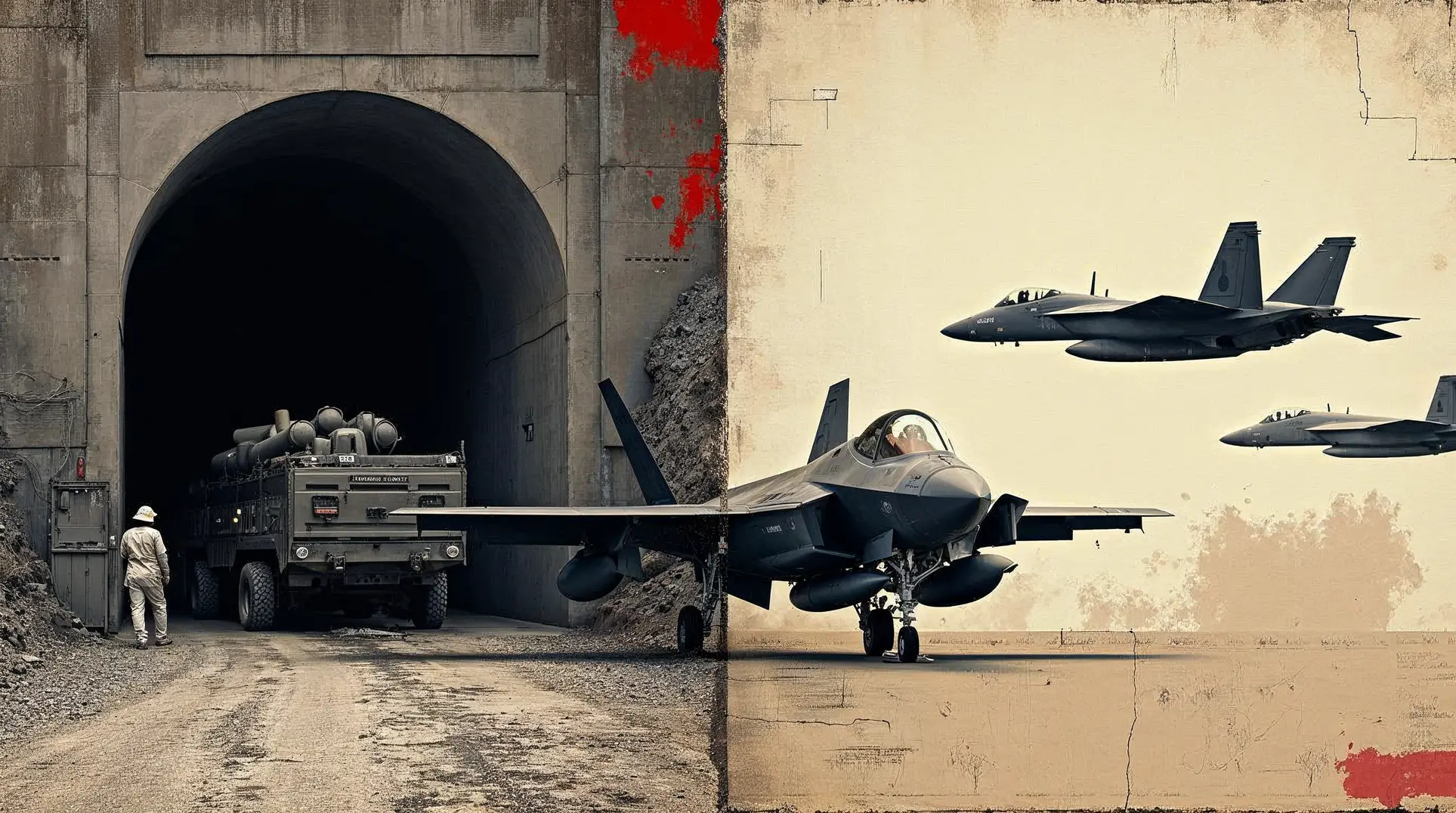
Intelligence assessments indicate Iran has reconstituted approximately 60-70% of its pre-June missile inventory, with production accelerating at underground facilities that survived Israeli strikes. This represents a classic security dilemma dynamic: each side's defensive measures appear offensive to the other, driving escalatory spirals. Israel views Iran's missile rebuild as preparation for retaliation; Iran views Israeli preparations as evidence of impending attack. Trump's statement effectively validates Israel's threat perception and sanctions action based on it.
The strategic calculus has shifted from preventing a long-term nuclear breakout to countering an immediate-term conventional threat. While a nuclear weapon remains months or years away, Iran can launch hundreds of missiles today. For Israeli defense planners, this timeline inversion makes the missile program the more urgent priority, particularly as Iran's proxy network has collapsed, eliminating buffering mechanisms that previously provided strategic depth.
Members are reading: Why three rational state actors pursuing legitimate national interests are creating conditions for escalation none of them actually want.
A new phase in the confrontation
Trump's Mar-a-Lago statement formalizes a strategic shift that has been developing since June. The confrontation is no longer exclusively about preventing an Iranian nuclear weapon—it now encompasses the entire delivery system infrastructure. By publicly authorizing strikes against missile facilities, the U.S. president has effectively declared Iran's conventional deterrent a legitimate military target, not merely a proliferation concern.
This creates a fundamentally more unstable dynamic than the previous nuclear-focused approach. Nuclear development timelines are measured in months or years, providing space for diplomacy. Missile production operates on shorter cycles, compressing decision-making windows and increasing the premium on preemption. Trump's explicit backing makes Israeli strikes more likely, which in turn makes Iranian acceleration more rational, which further validates Israeli threat assessments in a self-reinforcing cycle.
The critical question is whether this coercive pressure produces the diplomatic breakthrough Trump seeks—a comprehensive deal addressing both nuclear and missile programs—or whether it triggers the very escalation it aims to prevent. Iran has briefed Trump on the missile threat and Netanyahu has sought backing for strikes on missile plants. The pieces are positioned. Whether the next move is military or diplomatic will determine whether the region faces another round of strikes or a genuine reordering of the strategic balance. What remains clear is that the old framework focused solely on nuclear weapons is obsolete. The new confrontation encompasses the full spectrum of Iranian force projection, making it both more comprehensive and more dangerous.
Subscribe to our free newsletter to unlock direct links to all sources used in this article.
We believe you deserve to verify everything we write. That's why we meticulously document every source.


