


The moment came not in a leaked document or intercepted communication, but from behind a White House podium. "We're going to run the country until such time as we can do a safe, proper and judicious transition," President Trump told reporters on January 3, 2026, hours after U.S. forces captured Venezuelan President Nicolás Maduro and his wife, Cilia Flores. The statement—blunt, unvarnished—transformed what had been framed as a counter-narcotics warrant execution into something else entirely: an explicit declaration of foreign administration over a sovereign state.
 Viktor Petersen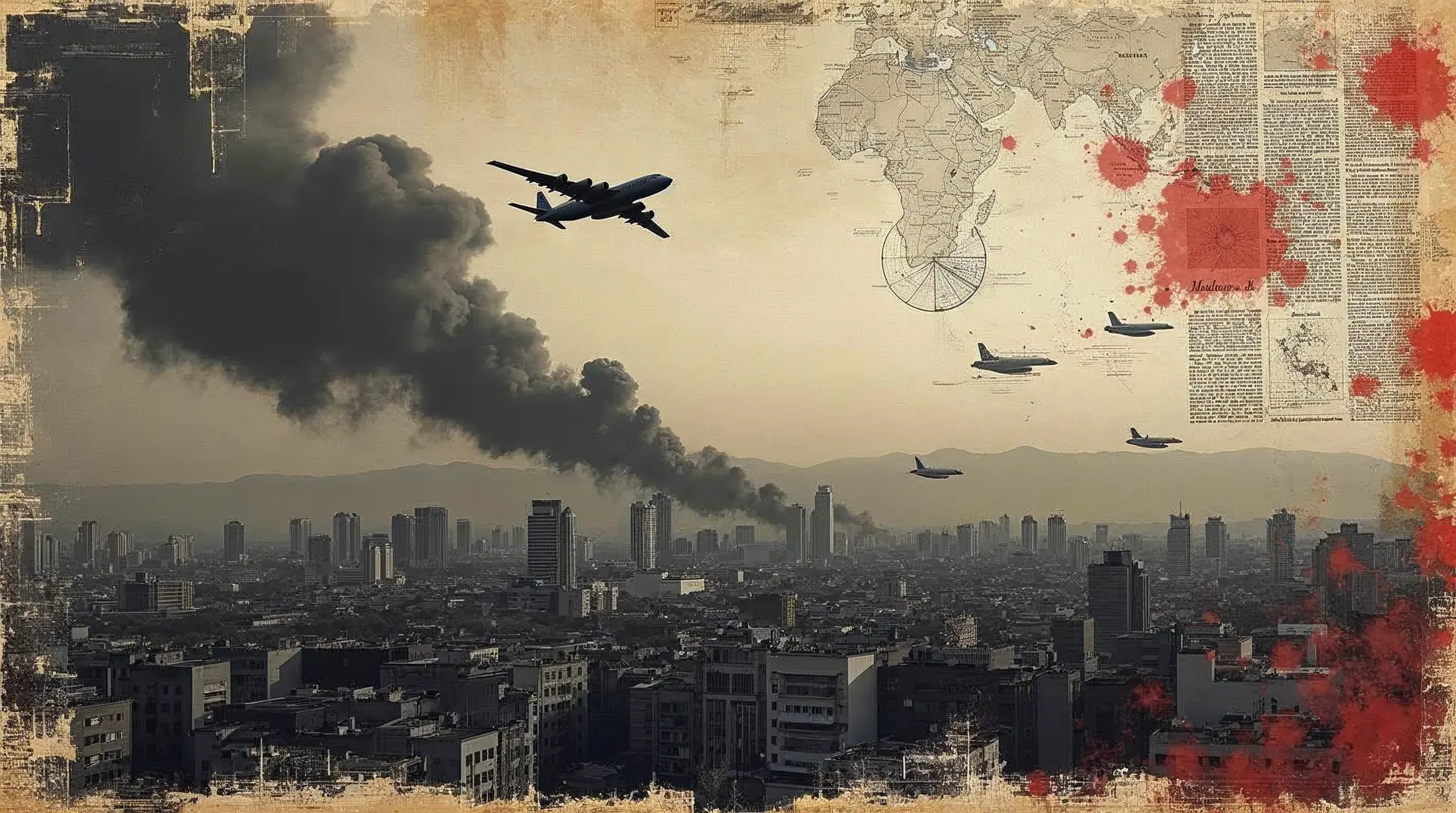
This is not a gaffe or rhetorical excess. It is the unveiled logic of an operation that legal scholars are calling a textbook "crime of aggression" under international law. While Secretary of State Marco Rubio has maintained that the military action merely enforced Department of Justice warrants against Maduro for narcoterrorism charges, Trump's own words reveal the structural ambition: not law enforcement, but regime installation. Not justice, but control.
The rhetoric of liberation, the mechanics of occupation
Trump's press conference language deserves close examination. "We want peace, liberty and justice for the great people of Venezuela," he said, deploying the familiar vocabulary of humanitarian intervention. Yet in the same breath, he asserted the United States' right to determine who governs Venezuela: "We can't take a chance at somebody else takes over Venezuela that doesn't have the good of the Venezuelan people in mind."
The paternalism is explicit. Venezuelan sovereignty—the right of Venezuelans to determine their own political future, however messy or contested—is subordinated to U.S. judgment about what serves Venezuelan interests. This is the framework Trump has openly embraced as the "Donroe Doctrine," his rebranding of the Monroe Doctrine's assertion of U.S. primacy in the Western Hemisphere. What 19th-century policymakers articulated as keeping European powers out of the Americas has morphed into a 21st-century license for direct administration.
The operation also reveals its economic architecture with unusual candor. Trump announced plans for U.S. oil companies to "fix the badly broken infrastructure and start making money" in Venezuela, home to the world's largest proven petroleum reserves. The phrasing is telling: not humanitarian reconstruction, but profit extraction as stated policy. The decades-long U.S. interest in Venezuela's nationalized oil industry—an interest that predates Maduro, predates Chávez, predates the Bolivarian project itself—now finds its most direct expression yet.
Members are reading: Why international legal experts say this operation establishes a dangerous new precedent that could justify similar actions by any major power.
Sovereignty as a negotiable concept
What Trump's press conference reveals is a worldview in which sovereignty is not a universal principle but a privilege extended conditionally. "We've had decades of that," Trump said, referring to Venezuelan governance that didn't align with U.S. interests. The implication is clear: decades of policy deemed harmful warranted not diplomatic pressure or sanctions, but military overthrow and foreign administration.
This framework has profound implications for the Venezuelan people whose welfare the operation ostensibly serves. True peace and justice cannot be imposed through occupation. Self-determination—the foundational principle of post-colonial international order—means the right to make political choices, including choices the United States might oppose. The current operation denies that right entirely, substituting U.S. judgment for Venezuelan agency.
The operation also sets a precedent that will echo beyond Venezuela. If narcoterrorism charges can justify invasion and regime installation, the exception swallows the rule. International law becomes not a constraint on power, but a vocabulary through which power justifies itself. The victims of this logic will not be limited to Venezuela, and the instability it generates will far outlast any "transition" the United States attempts to engineer.
Subscribe to our free newsletter to unlock direct links to all sources used in this article.
We believe you deserve to verify everything we write. That's why we meticulously document every source.


