


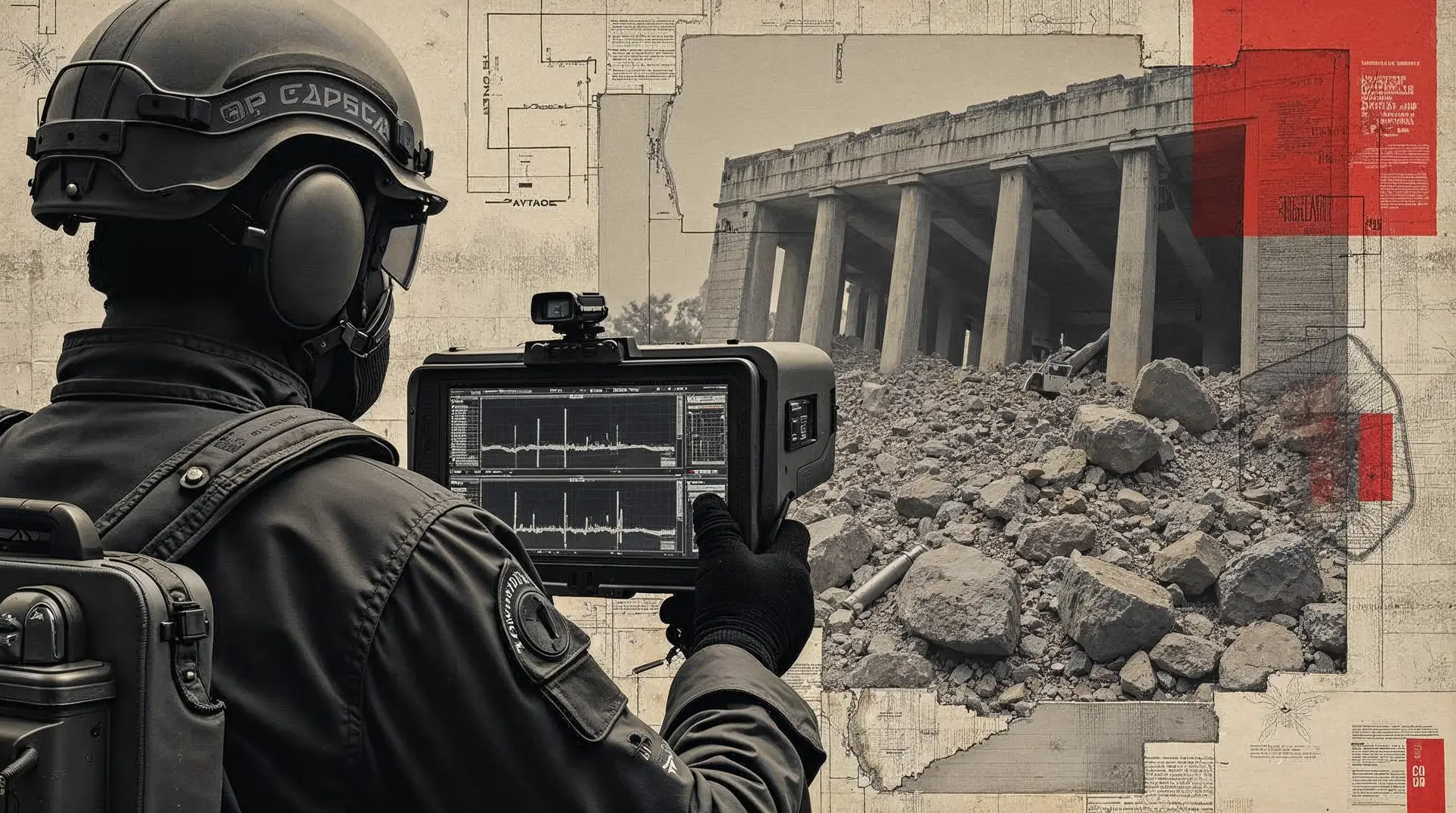
Turkish disaster response teams arrived in La Guaira and immediately began operations at a collapsed 14-story building in La Paez, where 41 of 43 apartments were occupied when the twin earthquakes struck. The deployment comes as the critical 72-hour window for finding survivors approaches its close, with Acting President Delcy Rodríguez reporting at least 1,430 confirmed deaths and over 50,000 people unaccounted for across coastal zones.
The Turkish Armed Forces and AFAD teams are working coordinates provided by a survivor rescued earlier from the La Paez site, representing the most concrete lead in a rescue operation increasingly constrained by time. Over 2,200 international rescue workers are now deployed across Venezuela's coast, but access restrictions imposed by authorities on Sunday—limiting entry to government and authorized vehicles—highlight the tension between coordinated response and the chaotic reality confronting emergency management systems hollowed out by decades of governance failure.
Disparity between casualties and missing reveals assessment gaps
The gap between 1,430 confirmed deaths and 50,000 unaccounted individuals reflects more than the immediate challenges of disaster assessment. It exposes the accumulated deficits in Venezuela's civil defense apparatus, which lacks both the geographic reach and technical capacity to conduct comprehensive damage evaluations across dispersed coastal settlements. Opposition databases suggest the missing figure may approach 69,000, indicating that even government-established tracking mechanisms are capturing only partial information.
The restriction on civilian volunteer access, while operationally justified to prevent congestion, also signals the interim government's struggle to maintain control over a response effort that has overwhelmed its institutional capacity. Venezuela's emergency management system, degraded through budget cuts, personnel emigration, and politicization, faces a operational test it is structurally unprepared to meet.
Members are reading: How the closing survival window reveals institutional failures that will define Venezuela's post-disaster trajectory.
Historical patterns suggest prolonged crisis ahead
Venezuela's 1999 Vargas disaster—which killed an estimated 15,000 to 30,000 people in La Guaira state—offers sobering precedent. Initial government casualty figures severely underestimated the toll, with the true scale emerging only after weeks of recovery operations. That disaster's survivors remained in temporary shelters for years, with comprehensive reconstruction never completed. The institutional capacity that proved inadequate in 1999 has deteriorated further through two decades of economic crisis.
The current earthquake intersects with Venezuela's existing migration crisis, potentially accelerating outflow from coastal zones where reconstruction timelines extend years beyond the interim government's resource capacity. Colombia, hosting over 2.5 million Venezuelan refugees, has already tightened border controls precisely when earthquake displacement creates new humanitarian protection claims.
As international rescue teams work Sunday's operations, the question extends beyond how many survivors remain trapped in La Guaira's rubble. The earthquake has exposed governance deficits that will persist long after the last survivor is found or the last building assessed. Whether Venezuela's interim government can translate international operational assistance into sustained institutional capacity-building will determine not merely reconstruction outcomes, but the country's broader political trajectory.
Subscribe to our free newsletter to unlock direct links to all sources used in this article.
We believe you deserve to verify everything we write. That's why we meticulously document every source.


