


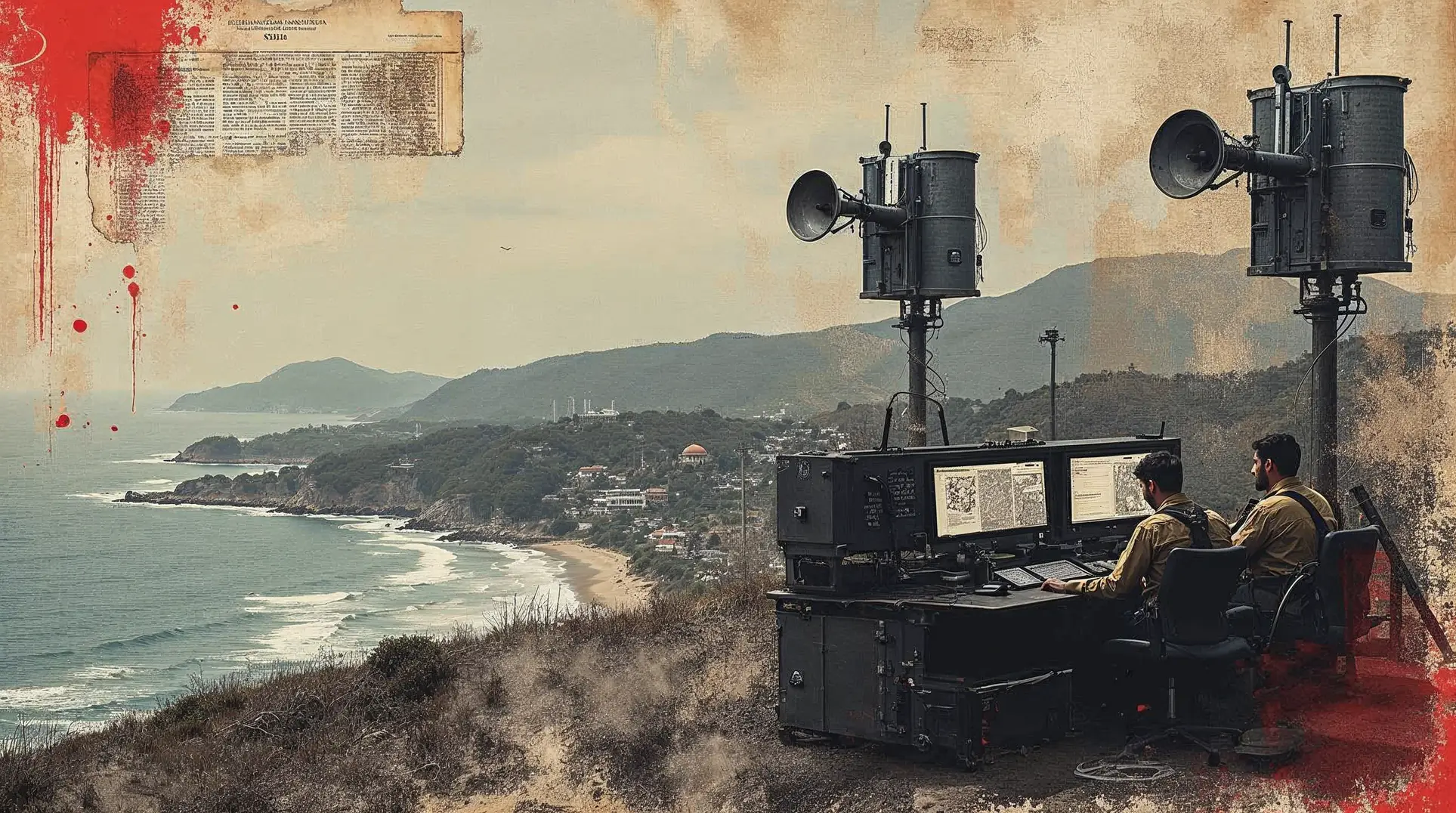
Prime Minister Kamla Persad-Bissessar confirmed on November 27 that U.S. Marines are stationed in Tobago, assisting with radar surveillance upgrades and airport infrastructure work at ANR Robinson International Airport. The acknowledgment came only after citizens reported sightings of American military personnel at a popular hotel and flight-tracking platforms detected at least one U.S. Air Force C-17 Globemaster III—some reports cite two—landing on the island. Her confirmation reversed an earlier denial and marked the first official recognition of active U.S. military presence beyond recently concluded joint exercises.
Persad-Bissessar was emphatic that the mission is technical, not operational. "It is not a military force as such, they are not here on the ground, we are not about to launch any campaign against Venezuela," she told reporters, adding that Trinidad and Tobago "has not been asked to be a base for any war against Venezuela." Yet three conflicting explanations—from the Prime Minister, airport workers, and Chief Secretary Farley Augustine—about why the C-17 landed have widened a credibility gap at a moment when U.S. carrier strike groups and amphibious assets saturate Caribbean waters and Venezuela mobilizes land, air, and naval forces in response. The mismatch between reassuring words and strategic optics raises a core question: Can Port of Spain insulate counter-narcotics cooperation from the escalation dynamics swirling around it?
The credibility gap and its consequences
The government's shifting narrative matters because it erodes domestic trust and feeds regional suspicion. Initial denial gave way to confirmation only under public pressure; the simultaneous arrival of heavy-lift strategic transport aircraft—capable of deploying equipment, vehicles, or personnel at scale—during a week of high-level U.S.-Trinidad defense talks suggests a degree of planning that sits uneasily with the framing of routine technical assistance. "They will help us to improve our surveillance and the intelligence of the radars for the narco-traffickers in our waters and outside our waters," Persad-Bissessar explained, without offering specifics on equipment, timelines, or command-and-control arrangements.
That omission is consequential. Trinidad and Tobago already operates Israeli-made radar systems; integrating U.S. surveillance architecture raises questions about data-sharing protocols, interoperability with U.S. Southern Command networks, and effective sovereignty over intelligence collected in national airspace and territorial waters. Opposition Leader Penelope Beckles has filed a private motion demanding adherence to CARICOM commitments and international law, reflecting wider anxiety that Port of Spain risks drifting from collective Caribbean diplomacy toward bilateral alignment with Washington's militarized counter-narcotics posture.
For Caracas, the distinction between radar technicians and forward-deployed strike assets is academic. Venezuelan officials have denounced recent U.S.-Trinidad joint exercises as destabilizing; President Nicolás Maduro's government frames Operation Southern Spear—under which U.S. forces have struck alleged drug-trafficking vessels—as regime-change theater dressed in counter-narcotics language. From Caracas's vantage point, U.S. Marines upgrading interdiction infrastructure just 11 kilometers from Venezuelan waters look less like partnership and more like preparation.
Members are reading: How radar upgrades create dual-use infrastructure traps that limit small-state sovereignty when great-power rivalry escalates.
Navigating the narrow path
Trinidad and Tobago's challenge is to extract genuine security benefits from U.S. cooperation without surrendering control over when, how, and against whom its infrastructure is employed. That requires transparency mechanisms the government has not yet provided: parliamentary oversight of the SOFA's operational annexes, public reporting on surveillance data-sharing protocols, and clear red lines communicated to both Washington and Caracas about what activities are permissible and what constitutes unacceptable escalation.
CARICOM's collective posture—emphasizing dialogue, respect for sovereignty, and rejection of external military intervention in Venezuela—offers diplomatic cover, but only if Port of Spain actively reinforces regional solidarity rather than pursuing bilateral arrangements that undermine it. Beckles's motion, whatever its partisan motivation, correctly identifies the tension between technical cooperation and strategic alignment. Persad-Bissessar's government must answer not only what the Marines are doing in Tobago, but under what circumstances their mission might expand, who controls the intelligence their radar systems collect, and what off-ramps exist if the U.S.-Venezuela standoff intensifies.
The credibility gap matters because small states navigating great-power competition survive by maintaining trust—domestic and regional—that their decisions reflect national interest rather than external pressure. Shifting explanations, opaque agreements, and reactive confirmations drain that reservoir. Trinidad and Tobago's leadership must recognize that in a militarized Caribbean, even genuinely defensive upgrades carry offensive perceptions, and managing those perceptions through transparency and diplomacy is as important as the hardware itself.
Subscribe to our free newsletter to unlock direct links to all sources used in this article.
We believe you deserve to verify everything we write. That's why we meticulously document every source.


