


The children of El Fasher are eating leaves now. Not as a supplement to meager rations, not as a desperate measure between food deliveries, but as sustenance itself—boiled into a bitter soup that offers the illusion of fullness while their bodies consume themselves from within. This is what famine looks like in 2025, in a city that until recently served as North Darfur's administrative capital, a last refuge for hundreds of thousands who believed that somewhere in Sudan, there might still be sanctuary.
There is no sanctuary left. The Rapid Support Forces seized control of El Fasher this month after an 18-month siege that transformed military strategy into methodical starvation. What the international community euphemistically terms a "humanitarian crisis" is, in fact, a precisely calibrated campaign of civilian destruction—one that has now pushed 375,000 people into confirmed famine conditions across Darfur and Kordofan, with another 6.3 million Sudanese facing what aid agencies call "extreme hunger." These numbers, clinical in their precision, obscure a fundamental truth: this famine was engineered, not inevitable.
The fall of El Fasher represents more than a tactical victory for the RSF. It marks the completion of Darfur's conquest by forces that have perfected the weaponization of hunger, transforming siege warfare into genocide's most efficient instrument. As the Sudanese government warns of unfolding atrocities and pleads for international intervention, the question is no longer whether genocide is occurring in Darfur—it is why the world continues to treat mass starvation as a natural disaster rather than a war crime.
Members are reading: Exclusive analysis of how the RSF transformed siege warfare into systematic starvation, and why international frameworks fail to prosecute famine as genocide.
External fuel for internal fire
The RSF's capacity to sustain an 18-month siege while simultaneously prosecuting multi-front warfare across Sudan cannot be explained through dom⁶estic resources alone. The group's military effectiveness—from the drone strikes that destroy community kitchens to the logistics networks that enable territorial consolidation—depends on external sponsorship that has received insufficient scrutiny in international discourse.
UAE backing has been particularly significant, providing the RSF with military hardware, logistical support, and political cover that enables the group to sustain operations far beyond what its domestic resource base could support. This external interference transforms what might otherwise be a limited insurgency into a force capable of conquering and holding territory the size of western European nations. The drones that strike food distribution points, the communications systems that coordinate sieges, the financial networks that sustain mercenary recruitment—these capabilities flow from external sponsors who bear direct responsibility for the atrocities their proxies commit.
Yet the international community has proven reluctant to confront this external dimension of Sudan's crisis. Diplomatic paralysis grips institutions that might otherwise sanction states fueling genocidal warfare. Regional mechanisms, already weakened by their own internal contradictions, have proven largely ineffective in protecting civilians or constraining external actors. The African Union, which might have been expected to lead continental responses to atrocity crimes in member states, has been rendered marginal by the same geopolitical calculations that empower external sponsors of armed groups.
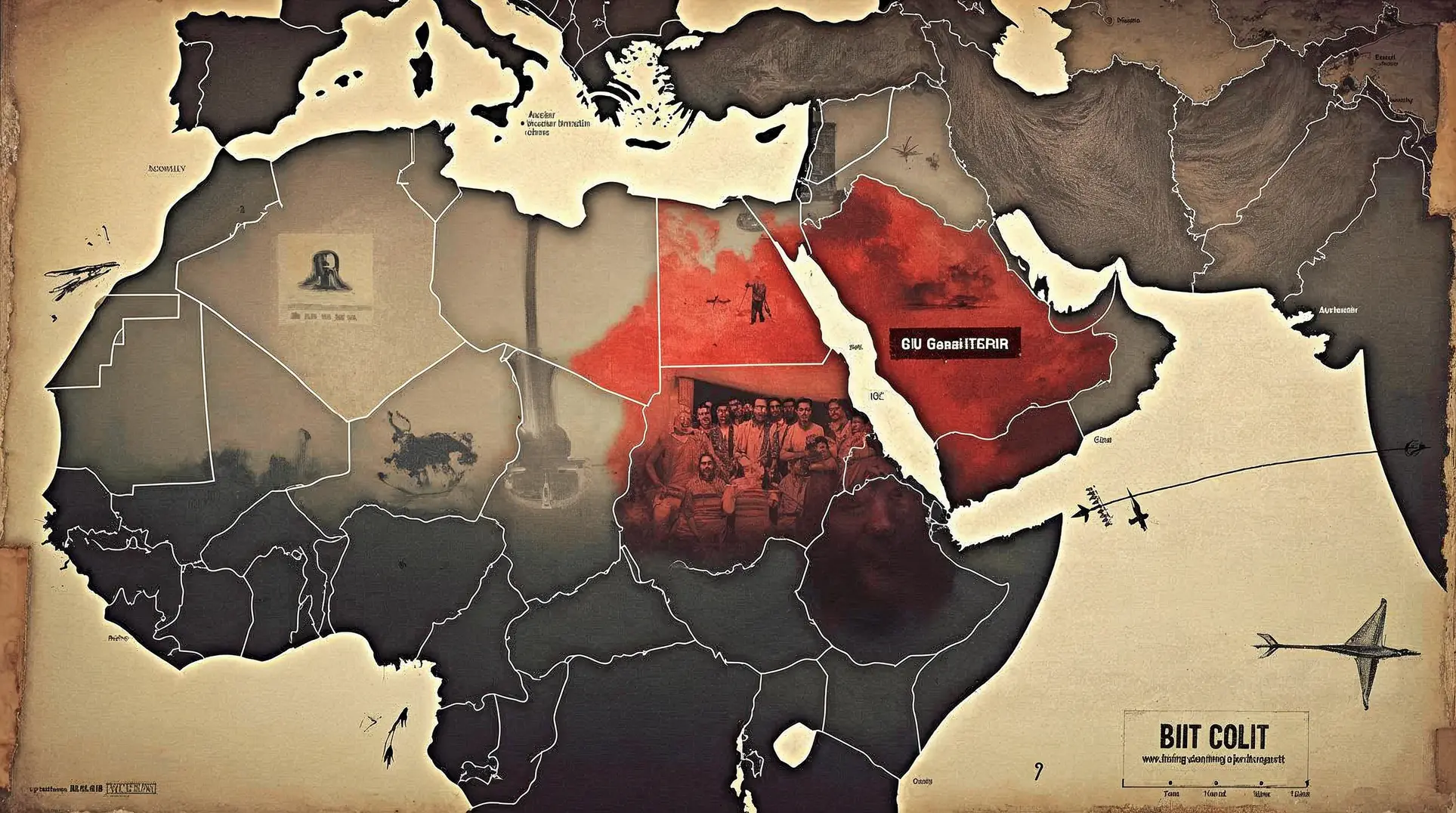
Members are reading: How El Fasher's fall signals Sudan's de facto partition, and why international law may finally treat engineered famine as prosecutable genocide.
The failure of international response
The international community's response to Sudan's crisis has been characterized by rhetorical outrage paired with operational inadequacy. Funding for humanitarian operations falls catastrophically short of requirements, even as aid agencies warn that millions face starvation. The UN's calls for immediate ceasefire and unimpeded humanitarian access have been ignored by belligerents who calculate, correctly, that international attention will prove fleeting and consequence-free.
This pattern reflects a broader crisis in how global institutions address mass atrocity events. The UN Security Council remains paralyzed by geopolitical rivalries that prevent coordinated action. Regional organizations lack either the capacity or political will to constrain member states or armed groups operating within their jurisdictions. The "international community"—that nebulous entity invoked in statements of concern—proves in practice to be a collection of states pursuing narrow interests rather than a coherent force for humanitarian protection.
The result is that Darfuris face genocide while the world watches. The testimonies emerging from El Fasher—of women raped as their families are killed, of children abducted for ransom, of communities systematically destroyed—echo the documentation from Darfur's genocide two decades ago. The international community's failure then led to the creation of new accountability mechanisms and the articulation of responsibility to protect doctrine. Yet when tested again by the same patterns in the same region, these mechanisms and doctrines have proven hollow.
What accountability demands
Preventing further catastrophe in Darfur requires moving beyond humanitarian palliation to address the political and military factors driving the crisis. This means, first, imposing meaningful costs on the RSF and its external sponsors—not merely rhetorical condemnation but sanctions, arms embargoes, and diplomatic isolation that constrains their capacity to prosecute mass atrocity campaigns. It means, second, treating famine creation as a prosecutable war crime rather than a humanitarian challenge, establishing precedents that deter future actors from weaponizing starvation.
Most fundamentally, it requires abandoning the fiction that Sudan's crisis can be resolved through the same frameworks that have proven ineffective for two years. The conflict is not "spiraling out of control"—it is being controlled with brutal efficiency by actors pursuing clear objectives through systematic violence. International intervention that fails to recognize this intentionality, that continues to treat symptoms while ignoring perpetrators, merely prolongs the suffering it purports to address.
The Sudanese government's warning that genocide is unfolding in Darfur should be understood not as hyperbole but as accurate description of observable reality. The Sudanese people—those surviving in El Fasher's ruins, those displaced to camps across the region, those maintaining mutual aid networks despite starvation conditions—have demonstrated extraordinary resilience in the face of orchestrated destruction. What they lack is not agency but support from international institutions designed precisely to prevent the kind of mass atrocity now consuming their homeland.
The children eating leaves in El Fasher deserve more than aid agencies' best efforts to deliver food that armed groups will loot. They deserve a world that recognizes their starvation as a crime, prosecutes those responsible, and constrains the external sponsors who make such crimes possible. Until the international community demonstrates the political will to provide that response, Darfur's genocide will continue—not because it is inevitable, but because it remains profitable and consequence-free for those engineering it.
The question is not whether we have the tools to prevent mass starvation in Darfur. It is whether we have the political courage to use them.
Subscribe to our free newsletter to unlock direct links to all sources used in this article.
We believe you deserve to verify everything we write. That's why we meticulously document every source.


