


At least 33 people have died across seven southern Thai provinces as record-breaking monsoon rains trigger catastrophic flooding, prompting authorities to deploy military aircraft, naval vessels, and ground teams in a coordinated rescue operation. The Flood Crisis Operations Centre confirmed the death toll on November 26, with victims succumbing to electrocution, drowning, and mudslides as floodwaters rose as high as 2.5 meters in some areas.
The deluge has affected approximately 2.7 million people across nine southern provinces, with the business hub of Hat Yai near the Malaysian border recording 335 millimeters of rainfall on November 21, the heaviest single-day total in three centuries according to Royal Irrigation Department records. The crisis reflects a broader pattern of extreme weather overwhelming Southeast Asia; recent weeks saw at least 114 deaths when Typhoon Kalmaegi devastated the central Philippines, followed by mass evacuations as a second storm threatened, while Indonesia's Central Java landslides claimed 30 lives amid persistent rains.
Military assets mobilized as waters persist
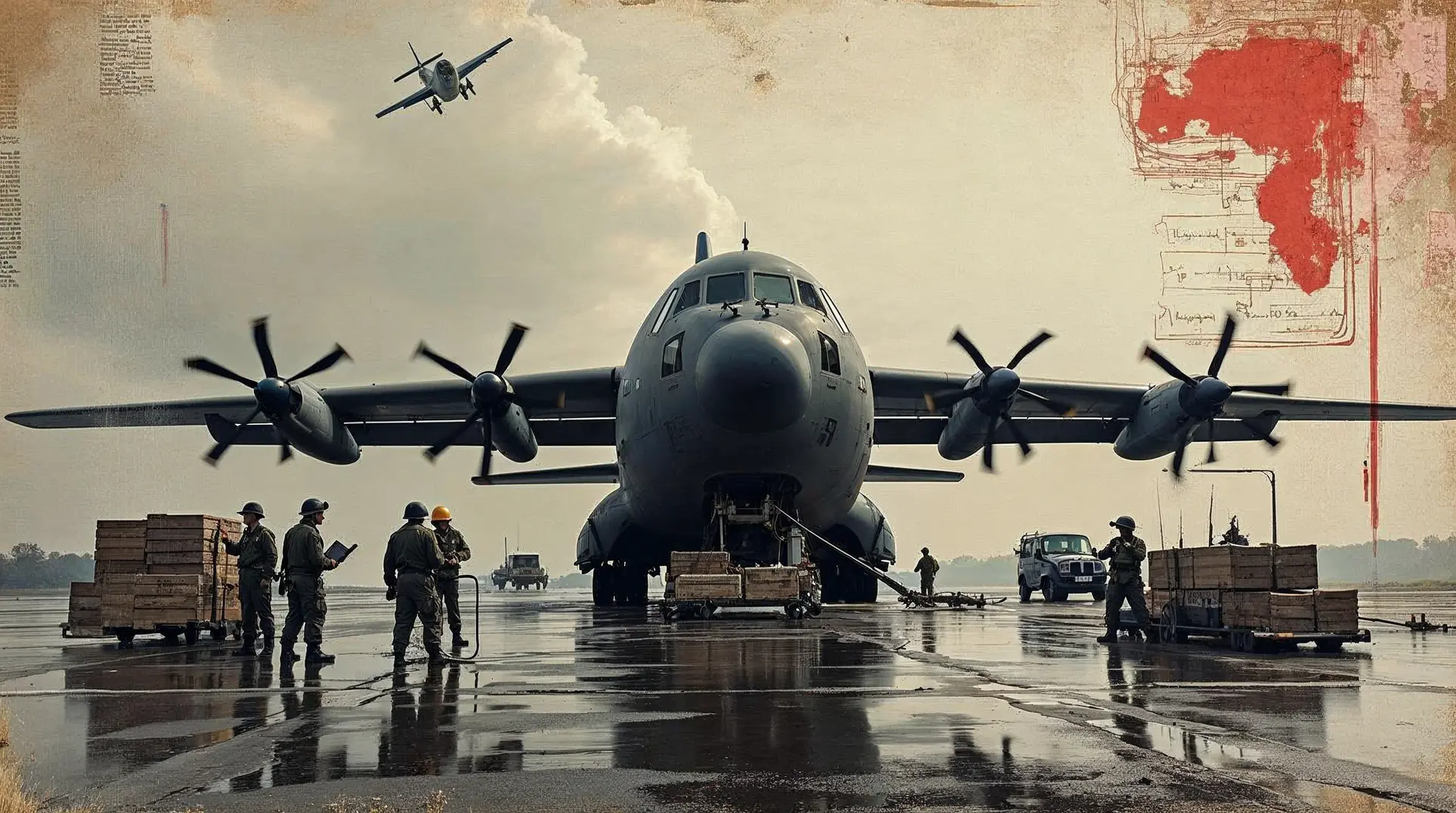
The Royal Thai Air Force is conducting five C-130 transport sorties daily as of November 26, airlifting relief supplies and personnel to cut-off communities, according to official military statements. Ground teams deployed jet skis, speedboats, and high-clearance vehicles to navigate submerged streets where cars sit abandoned and residents signal from rooftops.
The Thai Navy prepared the aircraft carrier Chakri Naruebet with helicopters, medical staff, field kitchens, and emergency supplies by November 25, per a Navy statement cited by Reuters. A flotilla of 14 additional boats stood ready to support the operation. Irrigation authorities installed dozens of pumps and propellers to channel floodwaters toward Songkhla Lake and the Gulf of Thailand, working to reduce water levels that have paralyzed transportation networks and disrupted power and telecommunications in multiple zones.
Imagery from Hat Yai shows vehicles parked on elevated highways and bridge approaches in desperate attempts to escape rising waters. Homes remain submerged across Songkhla province, where water depths reached two to 2.5 meters in the hardest-hit neighborhoods. Military trucks ferried evacuees through waterlogged streets as authorities issued evacuation orders and warnings for Satun and Nakhon Si Thammarat provinces, urging vulnerable residents to move immediately to temporary shelters.
Members are reading: How evacuation refusals and viral misinformation are forcing authorities to split resources between rescue operations and damage control.
Regional spillover strains cross-border response capacity
Thailand's crisis unfolds amid simultaneous flooding across mainland Southeast Asia, stretching regional humanitarian resources and expertise. Malaysia evacuated more than 19,000 people from northern states as of November 26, recording one fatality, according to cross-border reports. Vietnam's death toll from flooding and landslides reached 90 or 91 as of November 24, per multiple reports. The overlapping emergencies limit opportunities for mutual aid and equipment sharing that typically support national disaster responses.
Thailand's government is recruiting volunteers through the Thang Rath mobile application, offering to cover travel, food, accommodation, and fuel costs. Authorities enabled retroactive registration for volunteers already operating in affected zones, formalizing grassroots relief networks. The rubber industry faces potential output cuts of approximately 10,300 tons due to the rains, according to the government rubber agency cited by Reuters, signaling broader economic impacts beyond immediate humanitarian needs.
Outlook: Waters recede slowly as risks persist
Rainfall intensity decreased by November 25–26, but floodwaters remained across all nine affected provinces, with significant inundation persisting in Hat Yai and surrounding areas. Forecasts indicated continued heavy rain through November 26 before further easing, though authorities maintained vigilance for low-lying zones and riverbanks where drainage capacity remains overwhelmed.
Pumps continued working to divert floodwaters, but the volume introduced by the record 335-millimeter deluge—nearly a foot of rain in 24 hours—will take days to clear even under optimal conditions. The seasonal northeast monsoon has driven heavy rainfall across southern Thailand since mid-November, and climate experts note that extreme events of this magnitude test adaptation infrastructure designed for historical norms, not once-in-300-years outliers. Authorities urged strict adherence to official evacuation orders and warned against ignoring safety guidance as rescue operations continue.
Subscribe to our free newsletter to unlock direct links to all sources used in this article.
We believe you deserve to verify everything we write. That's why we meticulously document every source.


