


- October's Aleppo ceasefire bought time but exposed Syria's fragility between Kurdish integration and renewed civil war
- Al-Sharaa's pragmatic approach prioritizes negotiation over military victory to avoid protracted insurgency
- Turkish-Israeli rivalry and competing regional interests critically complicate Syria's path to stability and reconstruction
As Syria's transitional government and US-backed Kurdish forces reach a fragile truce following deadly October clashes, the real test of Ahmed al-Sharaa's vision for a unified Syria has only just begun
The sudden eruption of violence in Aleppo's Kurdish-majority neighborhoods on October 6-7, 2025, served as a stark reminder that Syria's post-Assad transition remains precarious. When Syrian government forces and the US-backed Syrian Democratic Forces (SDF) clashed in Sheikh Maqsoud and Ashrafiyah, the firefights left casualties on both sides and displaced families who had already endured years of conflict. The swift ceasefire that followed—brokered quietly with assistance from American and Turkish intermediaries—prevented the violence from spiraling into a broader conflagration. Yet the incident exposed the fragility of Syria's current political moment and raised an urgent question: Can Ahmed al-Sharaa's transitional government successfully integrate the Kurdish-led SDF into a unified Syrian state, or will the country's ethnic and political fault lines tear it apart once again?
The Aleppo clashes did not emerge in a vacuum. Throughout early October 2025, tensions had been escalating across northern Syria as government forces and the SDF reinforced positions around strategic locations including Dayr Hafir and the Tishrin Dam. Artillery exchanges and small-arms firefights became routine, with both sides denying responsibility for civilian casualties. The Syrian Army's construction of earth berms and barricades in Sheikh Maqsoud and Ashrafiyah signaled an ominous buildup, while the SDF's decision to shut down Euphrates river crossings into government-controlled territories after road closures near Ma'adan and Ithriya demonstrated the escalating contest over strategic transit routes. As UN Special Envoy Geir O. Pedersen cautioned, despite the December 2024 fall of Bashar al-Assad, "the conflict remains unresolved, with persistent violence, especially involving Turkish-backed factions and Kurdish forces in the north."
The violence that engulfed Sheikh Maqsoud and Ashrafiyah on October 6-7 represented the most significant armed confrontation between Syria's transitional government forces and the SDF since the Assad regime's collapse. These Kurdish-majority neighborhoods in Aleppo had long existed as semi-autonomous enclaves, their residents viewing the SDF as protectors against both the former regime and extremist groups. When government forces moved to assert control, the response was immediate and deadly.
According to Hassan Hassan, writing in TIME magazine after meeting with President al-Sharaa, "Just this week, deadly clashes erupted between the Syrian government and Kurdish-led forces in Aleppo's Sheikh Maqsoud and Ashrafieh. A ceasefire followed with quiet help from U.S. and Turkish interlocutors, but the clash is a warning of how fast Syria could slide back into war."
The ceasefire arrangement that emerged reflected the delicate balance of power and interests in post-Assad Syria. The United States, which has maintained approximately 900 troops in Syria primarily to counter Islamic State resurgence, has a strategic interest in preserving the SDF as a partner. Turkey, conversely, views Kurdish autonomy with deep suspicion, fearing it could embolden separatist Kurdistan Workers' Party (PKK) elements. Al-Sharaa's government, caught between these competing pressures, needed to demonstrate authority without triggering a wider conflict it could not afford.
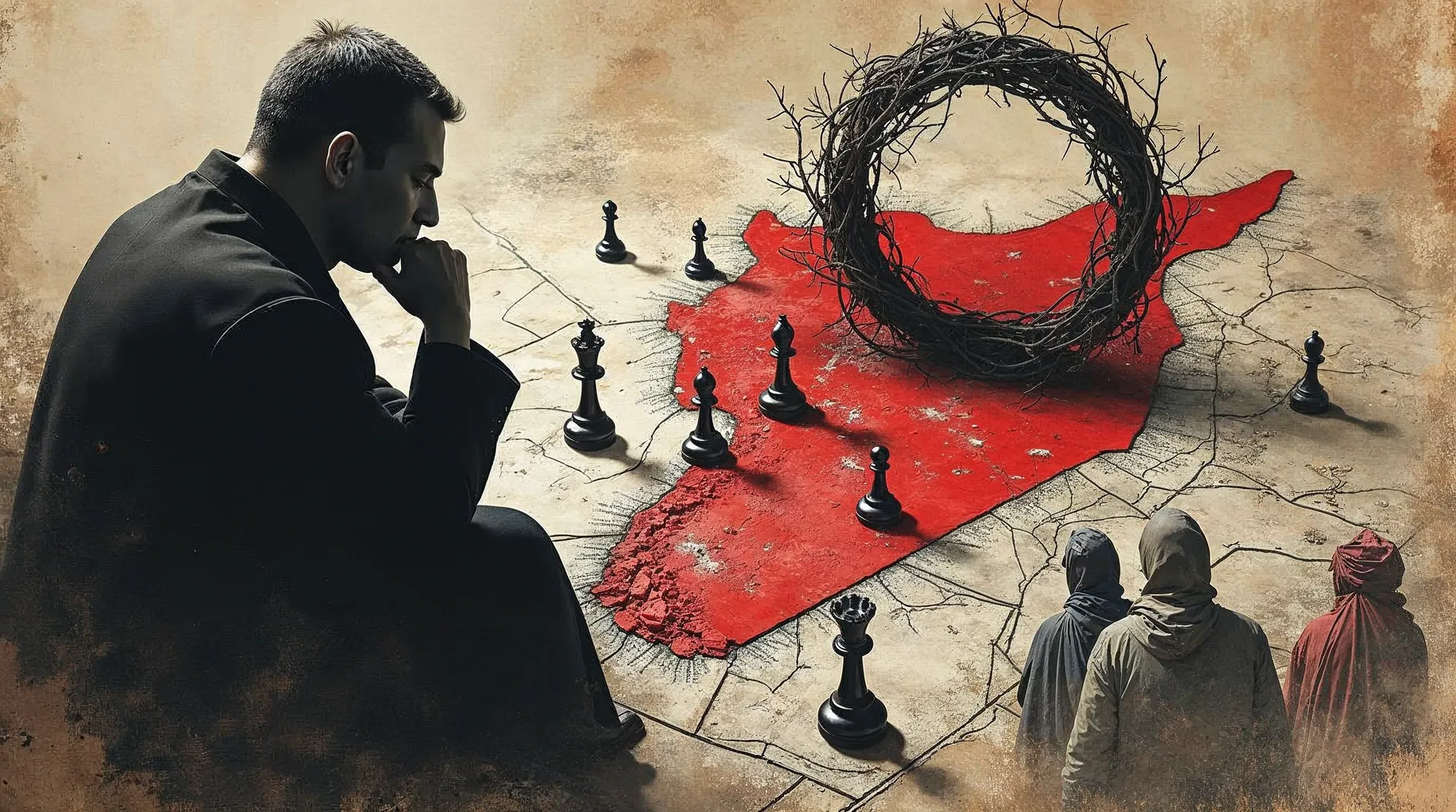
What exactly did American and Turkish diplomats promise behind closed doors to halt the bloodshed? The classified ceasefire terms reveal a shocking power-sharing formula that could either unite Syria or ignite its next civil war.
The SDF integration challenge: More than just military logistics
The fundamental challenge facing Syria's transitional government extends far beyond the immediate cessation of hostilities. The Syrian Democratic Forces represents not merely a military organization but a political project—one built on principles of multi-ethnic governance, gender equality, and local autonomy that differ markedly from the centralized vision many in Damascus envision for post-Assad Syria.
The SDF's origins lie in the chaos of Syria's civil war, when Kurdish militias joined with Arab, Assyrian, and other minority fighters to combat the Islamic State. With American backing, this coalition proved remarkably effective, eventually controlling approximately 25 percent of Syrian territory, including the resource-rich northeast. The SDF's governance model in these areas, while imperfect, established local councils, women's protection units, and administrative structures that many residents came to depend upon.
Integrating such an entity into Syria's national military and security apparatus presents profound challenges. The SDF currently fields an estimated 100,000 fighters, many of whom have spent years operating with significant autonomy. Simply absorbing this force into a centralized command structure risks alienating the Kurdish population while potentially creating internal tensions within Syria's reconstituted military.
Turkey's position further complicates matters. Ankara has consistently opposed Kurdish autonomy in Syria, viewing it as a threat to Turkish national security given the SDF's historical connections to the PKK. Turkish President Recep Tayyip Erdoğan has made clear that Turkey "will not permit Syria's territorial breakup or the emergence of a Kurdish-led entity if ongoing diplomacy to integrate the Syrian Democratic Forces into Damascus's state apparatus fails," according to recent statements reported by Reuters.
Yet al-Sharaa appears committed to finding a negotiated solution. His recent interviews with international media have emphasized Syria's rebuilding efforts and the importance of inclusive political dialogue in addressing the country's complex challenges, signaling a preference for diplomatic rather than military approaches to the SDF question.
Regional powers and the stakes of Syrian stability
Syria's transition is unfolding against a backdrop of shifting regional dynamics that will profoundly influence whether integration succeeds or fails. The fall of the Assad regime represented a major strategic setback for Iran, which had invested heavily in propping up Damascus as a crucial link in its "axis of resistance." Russia, too, lost a key client, though Moscow has pragmatically sought to maintain its military foothold by engaging with Syria's new leadership.
Al-Sharaa's visit to Moscow on October 15, 2025—his first as Syria's interim president—underscored the complex legacy relationships that will shape Syria's future. As reported by Syrian state news agency SANA, the meeting addressed "regional and international developments of mutual interest and explore ways to develop cooperation to serve the common interests of both countries." Despite having backed opposite sides during the civil war, both Damascus and Moscow have adopted pragmatic approaches to their relationship.
Turkey has emerged as perhaps the most influential external actor in post-Assad Syria. Ankara's support for opposition forces during the civil war, including HTS, positioned it as a key powerbroker when the regime fell. Turkey's priorities—preventing Kurdish autonomy, facilitating the return of Syrian refugees, and expanding its regional influence—align in some respects with al-Sharaa's stated goals of maintaining territorial integrity and rebuilding the economy.
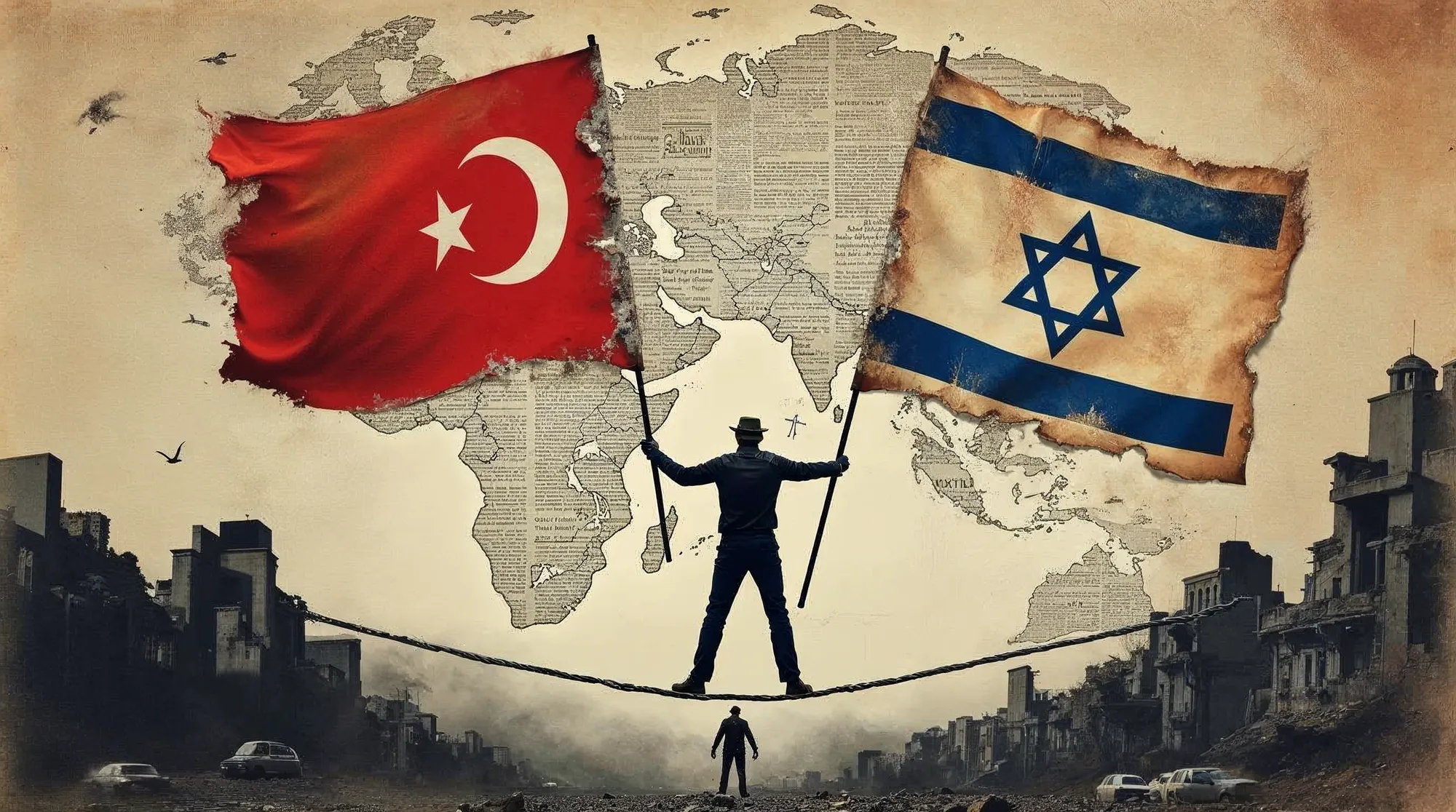
Israel and Turkey are secretly fighting over Syria's future—and al-Sharaa knows one wrong move could trigger a regional war. Discover the explosive intelligence on how this hidden rivalry threatens to shatter Syria's fragile peace.
The humanitarian imperative: Why integration cannot wait
Beyond the geopolitical calculations and military logistics, the urgency of SDF integration stems from Syria's catastrophic humanitarian situation. According to the UN Office for Coordination of Humanitarian Affairs, 16.5 million Syrians—71 percent of the population—require humanitarian assistance in 2025. More than 7.4 million remain internally displaced, while over 6 million Syrian refugees live in neighboring countries.
The humanitarian crisis intersects directly with the integration challenge. Areas under SDF control in northeast Syria host significant displaced populations, including the notorious al-Hol camp, which houses families of former Islamic State fighters. The SDF has struggled to manage these populations with limited resources, creating both humanitarian emergencies and security risks.
Since December 2024, approximately 1.2 million people have returned to their homes in Syria, including 885,000 internally displaced persons and 302,000 refugees. UNHCR projects that up to 3.5 million refugees and IDPs may return in 2025—a movement that will test Syria's fragile governance structures. Successful reintegration of these populations requires functional state institutions capable of providing security, basic services, and economic opportunities. A protracted conflict between Damascus and the SDF would make such reintegration impossible, potentially trapping millions in indefinite displacement.
The economic devastation compounds these challenges. Syria ranks as the fourth most food-insecure country globally, with 14.5 million people requiring food assistance. The price of a standard food basket was 133 times higher in 2023 than in 2013, according to UNOCHA. Over 70 percent of Syrian refugees in neighboring countries live in poverty, with more than 90 percent unable to meet basic needs without humanitarian assistance.
Children have borne a particularly heavy burden. More than 47 percent of Syrian refugees in the region are under 18, and over a third lack access to education. Inside Syria, 2.4 million children are out of school, with 1.6 million more at risk of dropping out. Child labor has surged, with cases in Lebanon nearly doubling in a single year.
These humanitarian realities create both moral imperatives and practical constraints for Syria's leadership. Al-Sharaa cannot afford a prolonged conflict with the SDF when millions of Syrians lack food, shelter, and medical care. Every resource devoted to military confrontation is a resource unavailable for reconstruction and service delivery. Moreover, renewed large-scale violence would likely trigger fresh displacement, overwhelming already strained humanitarian systems and potentially destabilizing neighboring countries hosting Syrian refugees.
What comes next: The path toward integration or fragmentation
The October ceasefire in Aleppo has bought time, but it has not resolved the fundamental questions about Syria's political future. Recent reporting suggests that negotiations between the SDF and Damascus have progressed, with SDF Commander Mazloum Abdi confirming a preliminary deal to integrate SDF forces into the central government's Defense and Interior Ministries. This agreement, building on a US-brokered accord from March 10, 2025, represents significant progress—if it can be implemented.
The devil, as always, lies in the details. Key issues remain unresolved, including control of oil infrastructure in SDF-held areas, the degree of autonomy Kurdish regions will maintain, and Turkey's role in overseeing implementation. The presence of non-Syrian fighters backing transitional government forces, as reported in clashes around Dayr Hafir and Tishrin Dam, adds another layer of complexity, raising questions about foreign influence in Syria's security sector.
Al-Sharaa's broader political project also faces critical tests. His stated vision of "a Syria for all Syrians" must translate into concrete governance structures that provide meaningful representation for Kurds, Alawites, Christians, Druze, and other minorities. The violent clashes in Sweida province between Druze militias and Bedouin tribes in July 2025, which killed over 350 people, demonstrated the risks of sectarian violence in the absence of inclusive governance and effective state authority.
The international community's role will prove crucial. The European Union has allocated €202.5 million in humanitarian aid for Syria in 2025, building on more than €4.4 billion provided since 2011. Yet humanitarian assistance alone cannot address Syria's structural challenges. Reconstruction will require sustained economic engagement, sanctions relief, and political support for inclusive governance—all of which depend on demonstrable progress toward stability.
The United States faces particularly consequential decisions. While President Trump has declared that Syria is "not an American fight," the US maintains troops in Syria and continues supporting the SDF. The recent agreement between Damascus and the SDF occurred "under American auspices," according to reporting, highlighting Washington's continued leverage. Whether the US chooses to actively facilitate integration or adopt a more hands-off approach will significantly influence outcomes.
Conclusion
The October clashes in Aleppo and the swift ceasefire that followed encapsulate Syria's current moment: a country balanced precariously between integration and fragmentation, between hope and renewed conflict. Ahmed al-Sharaa has demonstrated pragmatism in recognizing that military solutions to the SDF challenge would prove counterproductive. His willingness to negotiate, to resist pressure for decisive military action, and to engage with both American and Turkish intermediaries suggests a leader aware of the stakes involved.
Yet pragmatism alone may not suffice. Syria's transition requires not just the absence of war but the construction of inclusive institutions capable of accommodating diverse communities and interests. It demands economic reconstruction that provides tangible benefits to populations exhausted by deprivation. And it necessitates a regional environment where external powers support rather than undermine stabilization efforts.
The next six to twelve months will prove critical. If negotiations between Damascus and the SDF yield genuine integration—with Kurdish communities receiving meaningful political representation and security guarantees—Syria may yet avoid renewed civil war. If, however, talks collapse or produce arrangements that leave fundamental grievances unaddressed, the Aleppo clashes could prove a preview of far worse violence to come. The international community, regional powers, and above all Syria's own leaders must recognize that the cost of failure would be measured not just in renewed conflict but in the dashing of an entire nation's hopes for peace after fourteen years of devastating war.


