


The fiery destruction of an Ilyushin Il-76 military transport at Port Sudan's Osman Digna Air Base on 9 December killed all crew aboard, according to AFP and Al Jazeera citing Sudanese military sources. The crash—attributed to a technical malfunction during landing approach—eliminated a vital heavy-lift airframe at the moment SAF's logistics network faces its gravest challenge. Aviation safety databases report ten fatalities, though the Sudanese Armed Forces have not officially disclosed crew numbers.
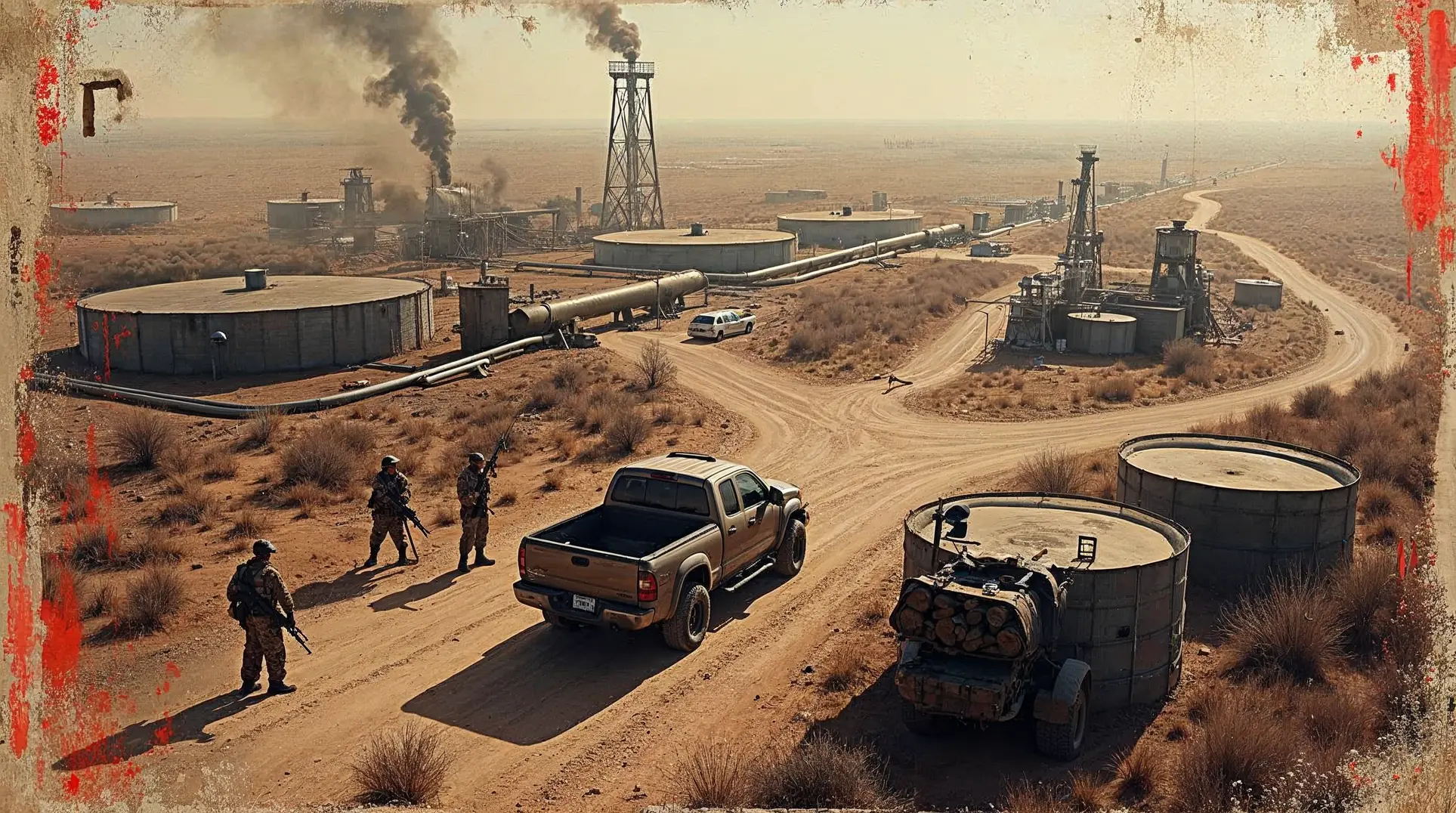
The timing is devastating. Days earlier, the Rapid Support Forces seized Heglig, Sudan's largest oil field processing 80,000–100,000 barrels daily for Sudan and South Sudan. The facility anchors the export pipeline to Port Sudan; its loss severs the government's primary cashflow artery while SAF's principal logistics hub smolders on the tarmac. This convergence—revenue strangulation inland and airlift attrition on the coast—illustrates how the RSF's economic warfare strategy is tightening around a regime already struggling to sustain operations across multiple fronts.
Logistics as the hidden front line
Sudan's Il-76 fleet performs the unglamorous but irreplaceable work of modern war: hauling troops, fuel, ammunition, and medical supplies across a bisected country where road convoys risk ambush or mine strikes. Each hull lost contracts the SAF's operational radius and tempo. On 4 November, a separate Il-76 crashed near Babanusa in West Kordofan, killing five. Together, the incidents underscore cumulative fleet strain—high sortie rates, scarce maintenance capacity, limited access to certified spares under sanctions, and airframes pushed beyond peacetime service intervals.
Port Sudan has functioned since April 2023 as the SAF's eastern anchor: diplomatic seat, arms-delivery point, and supply conduit for forces in Khartoum, the Gezira, and besieged garrisons in Darfur and Kordofan. Losing a heavy-lift aircraft here does not merely subtract one airframe; it degrades the hub's throughput at the precise moment RSF advances threaten to sever the regime's east–west axis. Military sources report SAF withdrawals from Babanusa; analysts now watch whether the RSF will pivot north toward the El-Obeid–Kadugli–Dilling corridor, potentially splitting government-held territory into isolated pockets dependent on airlift for survival.
The Osman Digna base itself has been targeted before—drone strikes hit Port Sudan in May—but no evidence links the 9 December crash to hostile action. The reported technical malfunction is entirely plausible in an environment of wartime stress, deferred maintenance, and aging Soviet-era platforms. Yet the operational context matters: each sortie carries heightened risk when mechanics work with improvised parts, pilots fly extended missions, and infrastructure operates without adequate safety redundancy.
Members are reading: How Heglig's oil revenue loss traps SAF in a fiscal dependency spiral that reshapes Red Sea geopolitics.
The civilian toll of collapsing logistics
Logistics failures do not remain confined to military operations. Over 12 million people have been displaced since April 2023. The World Food Programme warns that approximately 20 million face acute food insecurity, with 6 million on the brink of starvation. SAF's shrinking airlift capacity and RSF's territorial gains around key agricultural and transport corridors compound humanitarian access constraints. Aid convoys face RSF checkpoints; regime-held areas risk isolation if airlift degrades further. The United Nations has described the aftermath of El Fasher's siege as a "crime scene," emblematic of mass atrocities and engineered deprivation across Darfur and Kordofan.
On 9 December, the International Criminal Court sentenced Ali Kushayb to 20 years in prison for war crimes and crimes against humanity, including murder, rape, and torture committed in Darfur between August 2003 and April 2004. The conviction underscores cyclical impunity: patterns of siege starvation, ethnic targeting, and resource predation persist, enabled by actors—both SAF remnants and RSF networks—rooted in Sudan's long history of externally-backed proxy violence.
What comes next
Watch whether SAF alters flight operations or disperses remaining Il-76s from Port Sudan to reduce concentration risk. Monitor RSF movements along the El-Obeid–Kadugli–Dilling axis after Heglig, and any attempts to interdict Red Sea supply lines. Externally, enforcement of the U.S. Colombia sanctions, movement on the reported Russian naval base, and renewed mediation—particularly around humanitarian corridors—will signal whether international actors shift from rhetorical concern to tangible pressure. For now, the smoldering wreckage at Osman Digna stands as a stark emblem of a regime losing both its revenue sources and the means to project force, while millions face starvation in the resulting vacuum.
Subscribe to our free newsletter to unlock direct links to all sources used in this article.
We believe you deserve to verify everything we write. That's why we meticulously document every source.


