


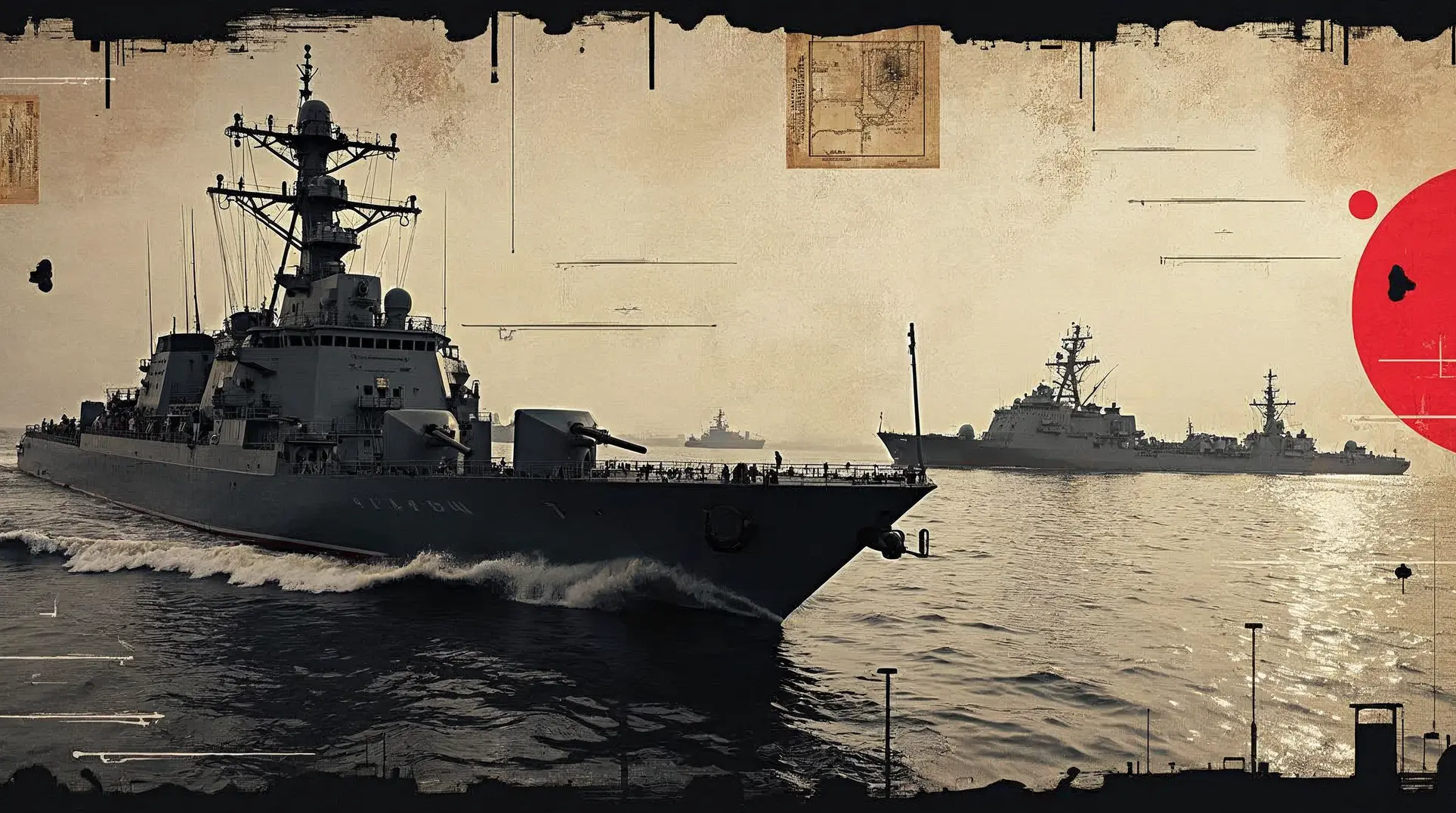
Saudi Arabia's Defence Ministry convened military representatives from 43 countries and the European Union in Riyadh on July 30 to establish a Multinational Maritime Defense Alliance, reviewing a draft charter for a body intended to cover the Bab al-Mandeb Strait, the Red Sea and the Gulf of Aden. Fourteen states — including Saudi Arabia, Egypt, Turkey, Pakistan and Yemen's internationally recognized government — signed a joint statement of support; Egypt, Sudan, Djibouti and Somalia have already agreed to participate, according to the ministry.
The announcement caps a ten-day sequence of escalation that began with the Houthis' naval blockade declaration against Saudi Arabia on July 20. What has changed since then is not simply the intensity of Houthi attacks, but Riyadh's posture: from absorbing strikes quietly to convening the architecture meant to answer them.
Coalition launched, membership unresolved
The Saudi Defence Ministry said the alliance will "increase defence cooperation in the Bab al-Mandeb strait, Red Sea and the Gulf of Aden" and "counter threats targeting maritime navigation and global trade," with headquarters planned for Riyadh. Kuwait's Chief of Staff, General Khaled al-Shuraian, met coalition representatives in the kingdom the same day, signaling Gulf military engagement beyond diplomatic statements.
But the framework remains unfinished. Reuters reported the coalition's composition is still under negotiation with dozens of countries, and the United States, Germany, France and Italy — all invited — have not committed. Washington's position is described as pivotal and unconfirmed; without it, the alliance's naval credibility is limited to regional and Gulf-aligned navies.
Observers are reading: how the Houthi toll plan threatens to replicate Iran's Hormuz model at Bab al-Mandeb.
Become an Observer — it's free. Get full access to all Crisis.Zone analysis, briefings and breaking coverage.
What the coalition is answering
Yemeni Information Minister Moammar al-Eryani has called the toll plan "a dangerous escalation aimed at transforming one of the world's most strategic maritime corridors into a permanent source of funding for the militia's military and terrorist activities." Foreign Minister-designate Afrah al-Zouba warned the Houthis "want to copy the Iranian model and this will shut down two main straits."
The market impact is already visible: Saudi Arabia is redirecting nearly half its crude exports away from the Red Sea route, according to maritime data firm Windward, and Brent crude traded near $89.78 a barrel on July 30 after surpassing $100 the previous week. For now, the Multinational Maritime Defense Alliance remains a draft charter, not a deployed force — its test will be whether Washington, and the broader signatory list, converts declared support into operational commitment.
Become an Observer — it's free — to unlock direct links to all sources used in this article.
We believe you deserve to verify everything we write. That's why we meticulously document every source.


