


Key takeaways
- Reuters reports China is staging a weeks-long drill in Fujian that links civilian vessels into a floating bridge about 800 m long.
- ingeniSPACE says no purpose-built bridging equipment was seen, suggesting China may be honing the use of existing civilian shipping to improvise landing infrastructure.
- A senior security official cautioned against overstating the drill's battlefield value, saying barges would be live targets in wartime.
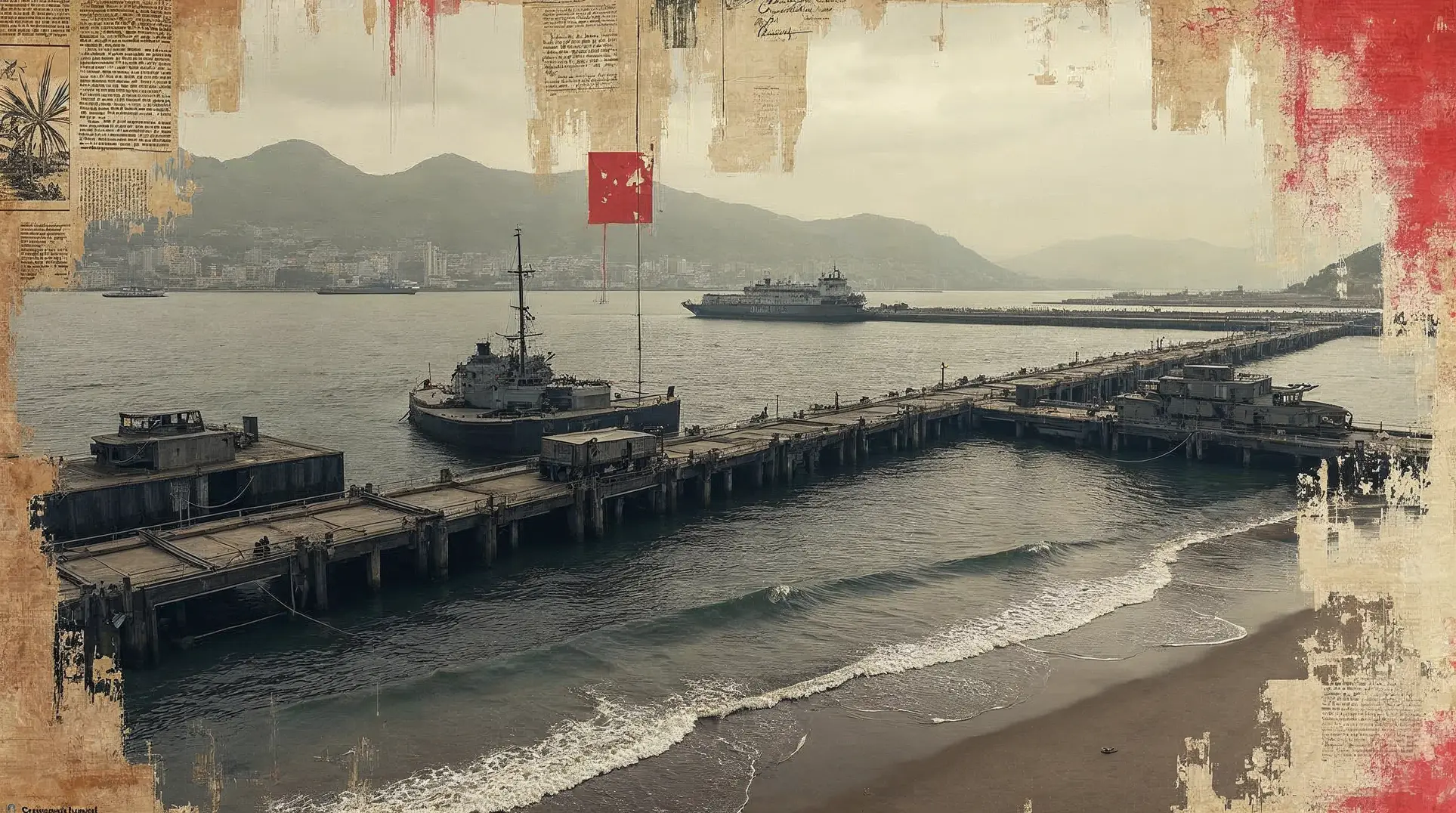
China is staging a weeks-long amphibious landing drill in Dacheng Bay, Fujian. Civilian vessels there have been linked into a makeshift floating bridge about 800 m (2,600 ft) long, Reuters reported on Friday, citing satellite images and a research report. A senior security official briefed on the drill, who spoke on condition of anonymity, confirmed the report's details. The official said the drill was still in progress on Friday. The bay lies just 280 km (175 miles) from Taiwan's main island.
The geospatial data company ingeniSPACE first spotted the activity on 1 November. Its analysis of images from the first 16 days of the month showed vessels manoeuvring around the bay, forming and dismantling a floating bridge about 800 metres (2,600 feet) long, Reuters reported. Images from the commercial providers Vantor and Planet Labs showed the same activity. The drill is near Dongshan Island. Taiwan holds local elections on Saturday, and the official made no direct link between the drill and the vote.
What the imagery shows
ingeniSPACE identified eight civilian vessels in the formation: four barges, two semi-submersibles and two powered ships. Four landing craft took part, with smaller support vessels and Chinese navy ships nearby.
The notable finding is an absence. According to ingeniSPACE, no purpose-built bridging equipment was observed. ingeniSPACE said this suggests China's military may be honing its use of existing civilian maritime resources to improvise landing infrastructure in a combat scenario, according to Reuters.
Jason Wang, the company's chief operating officer, said the People's Liberation Army (PLA) "appeared to be rehearsing low-signature methods to provide logistical support to forces that could be involved in a first island chain invasion scenario." Reuters describes the first island chain as the arc of islands stretching from Japan through Taiwan and the Philippines.
The senior official said the drill appeared to be part of this year's "All-Military Strategic Exercise" and was routine but held later than in previous years. Taiwan's defence ministry said it was aware of Chinese military activity in Dacheng Bay, including the use of civilian vessels in exercises, and was weighing the implications for security in the Taiwan Strait and peace in the region. China's defence ministry did not respond to Reuters' request for comment.
Observers are reading: how the improvised causeway compares with China's purpose-built Shuiqiao barges, and what a senior official says about its limits.
Become an Observer, it's free. Get full access to all Crisis.Zone analysis, briefings and breaking coverage.
Rehearsal, not proof
The bay carries history. Dongshan Island, which Xi Jinping visited in 2024, is where China's military fought off an attempted invasion in 1953 by Republic of China forces. Those forces had fled to Taiwan in 1949 at the end of the civil war with Mao Zedong's communists.
The timing invites questions, but the sources answer few. The senior security official, who spoke to Reuters on condition of anonymity, described the exercise as routine but held later than in previous years, and made no direct link to the election. The activity began in the same weeks as a separate, unannounced naval exercise that Taiwanese officials described to Reuters, and no source connects the two. China's defence ministry said on Thursday, when asked about recent PLA drills in the region, that its training was "entirely legitimate and reasonable". Reuters did not tie that remark to this drill.
The lasting signal is structural. Civilian maritime fleets are becoming a routine part of PLA rehearsals. Whether the practice scales beyond one bay, and whether Taiwan's planning adapts, are the markers worth tracking in the months ahead.
Become an Observer (it's free) to unlock direct links to all sources used in this article.
We believe you deserve to verify everything we write. That's why we meticulously document every source.


