


Key takeaways
- A senior Taiwanese security official told Reuters China massed more than 100 vessels in an unannounced exercise around Taiwan and the western Pacific.
- A foreign intelligence source told Reuters the absence of an announcement appeared deliberate, allowing pressure without a diplomatic backlash.
- Vessel numbers fell to about 70 by 13 November, while Taiwan says Chinese naval groups remain east of the Philippines.
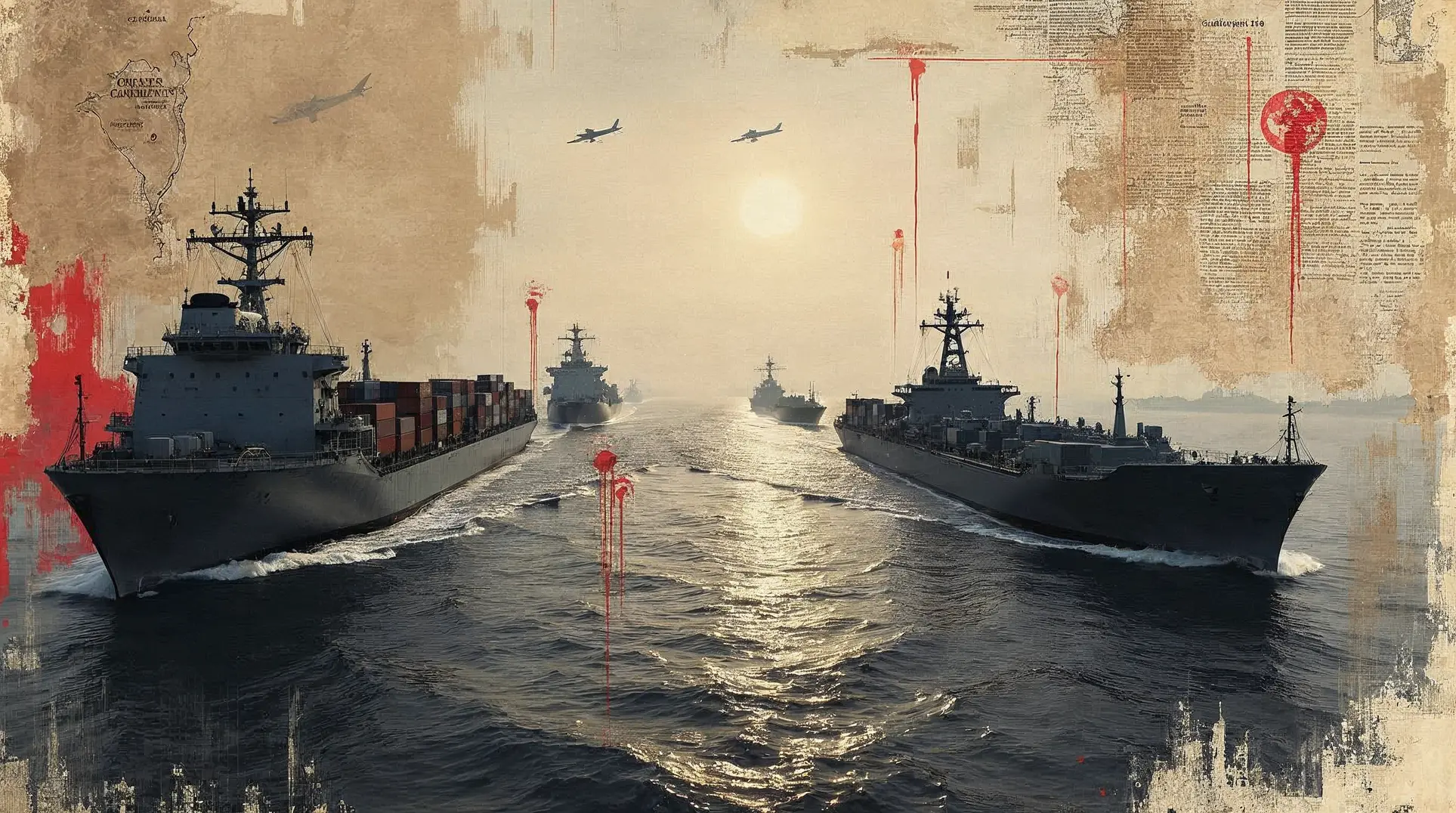
China carried out a large, unannounced military exercise across the western Pacific and around Taiwan in early November, Taiwanese officials told Reuters on 13 November. A senior Taiwan security official, speaking anonymously because of the sensitivity of the matter, said China's military and coast guard had at one point massed more than 100 vessels in the region. Officials in Taipei described the activity as a campaign of "silent intimidation" aimed at pressuring Taiwan and other governments before major international meetings.
The official called it "a silent exercise" and, "in effect, silent intimidation." The official compared it to "a robber hiding a gun in the pocket of a coat," with "the muzzle pointed at the bank teller." Such a threat scares the teller into handing over the money, the official said, while avoiding the alarm and a large police response. China's defence ministry did not respond to a request for comment, Reuters reported. These are Taiwan's accounts, and Beijing has not confirmed them.
What Taiwan's officials say happened
The official said the drills included simulated attacks on other militaries and on cities, including Taiwan's. They involved coordinated naval forces from China's eastern, northern and southern theatre commands (the regional headquarters of the People's Liberation Army). The official said the naval deployment was larger than "Justice Mission 2025", China's last formally named drills targeting Taiwan, held nearly a year ago.
The official said this scale suggested Beijing was rehearsing not only a Taiwan blockade scenario but broader operations across the western Pacific. It also suggested an effort to integrate regional fleets into a single far-seas operational force.
The official made one further claim. A Chinese submarine, the official said, launched an intercontinental ballistic missile from the Yellow Sea into the Chinese mainland. The claim rests on that one anonymous official, and Reuters did not report any independent confirmation of it.
The numbers have since fallen. Two Taiwan security officials told Reuters about 70 vessels were operating within the first island chain on Friday 13 November. Joseph Wu, Secretary-General of Taiwan's National Security Council, wrote on X late on 12 November that vessel numbers had decreased. He said the Northern, Eastern and Southern Theater Command groups plus the Liaoning carrier strike group "remain operating in waters east of the Philippines." He added that Chinese air force activity near Taiwan remained high. The reporting does not say the drills have ended.
Observers are reading: How the G7 text, Xi's speech and the 29-aircraft patrol fit one pattern of pressure below the diplomatic threshold.
Become an Observer, it's free. Get full access to all Crisis.Zone analysis, briefings and breaking coverage.
What comes next
China hosts the APEC leaders' summit in Shenzhen next week, on November 18 and 19. Reuters reported that Trump and Xi are expected to meet, for the third time this year, and Taiwan also attends APEC. Taiwan's local elections are a little more than two weeks away. A fleet at sea gives Beijing leverage. It may also buy calm for the summit. The evidence does not say which.
Taipei's concern has a Washington dimension. Al Jazeera reported that Washington paused a $14bn Taiwanese weapons purchase in May, with Trump calling it a "very good negotiating chip." That raised fears that Taiwan's security could be traded away. On 13 November, the Global Times, a state-backed Chinese newspaper, warned that if Taiwan's ruling party persists in seeking independence by relying on external forces or military means, it will "inevitably face a harsh reckoning."
Beijing has said the carrier is on "routine" exercises that are not directed at any country. Crisis.Zone described that pattern in June as calibrated normalization. The open question is whether quiet pressure becomes a baseline. A named exercise gives partners a date, a map and a reason to respond; an unnamed one gives them none of those.
Become an Observer (it's free) to unlock direct links to all sources used in this article.
We believe you deserve to verify everything we write. That's why we meticulously document every source.


