


Developing story
We are following this story for new developments and will update this article when significant news emerges. See the updates below.
Monitored since 23 November 2026 | last update 24 November 2026, 08:19 CET
Key takeaways
- Lublin prosecutors said debris of Kh-101 cruise missiles was found at all three Polish impact sites, revising the first assessment.
- Poland will ask NATO's Council for stronger air defence and faster pilot decisions, and will not invoke Article 4.
- A Swedish Gripen pilot with fire authorisation could not identify the target in bad weather, according to Polish commanders.
The North Atlantic Council is due to hold an extraordinary meeting in Brussels on Monday, three days after Russian missiles fell in southeastern Poland. The Council is the main decision-making body of the North Atlantic Treaty Organization (NATO). Poland has said it will propose that NATO strengthen air defences on the eastern flank, according to rbc.ua. It has also said it will not invoke Article 4 of the NATO treaty, the clause that provides for allied consultations.
Prosecutors in Lublin said on Sunday that debris of Kh-101 cruise missiles was found at all three impact sites: Nowy Lipowiec, Rudnik nad Sanem and Mołodycz. That revises Poland's first assessment on Friday of two missiles and a probable jet-powered drone. Ambassadors of the member states are meeting, with Poland represented by Deputy Defence Minister Paweł Zalewski. No outcome had been reported by Monday morning.
Three minutes in Polish airspace
Russia launched a mass attack on western Ukraine overnight into Friday. President Volodymyr Zelenskyy said it involved more than 400 attack drones and over 110 missiles. Poland's military tracked 11 aerial objects that could threaten its airspace, and three crossed the border, Militarnyi reported, citing Poland's Ministry of National Defence. Defence Minister Władysław Kosiniak-Kamysz said the Kh-101 identified on Friday spent about three minutes over Polish territory. Nobody was hurt, and no significant damage was reported.
Polish F-16s and Swedish Gripens flew sorties, and Patriot, Poprad and Pilica+ ground-based systems were activated, Militarnyi reported. A Swedish Gripen pilot flying under NATO command received authorisation to shoot down a suspected cruise missile but did not fire. Lt. Gen. Ireneusz Nowak, operational commander of the Polish armed forces, cited extremely difficult weather conditions and said pilots could not confirm the identity of the objects in time.
Prosecutors said their preliminary findings indicate that all the missiles were manufactured in the fourth quarter of 2026 at a plant in Dubna, in Moscow Oblast. Work at Mołodycz was suspended because of darkness and was due to resume on Monday. Russia had not commented, Notes from Poland reported. Prime Minister Donald Tusk said on Friday that it appeared Poland was dealing with an intentional provocation. Hromadske reported that Polish authorities have not established that the missiles were deliberately directed at Polish targets.
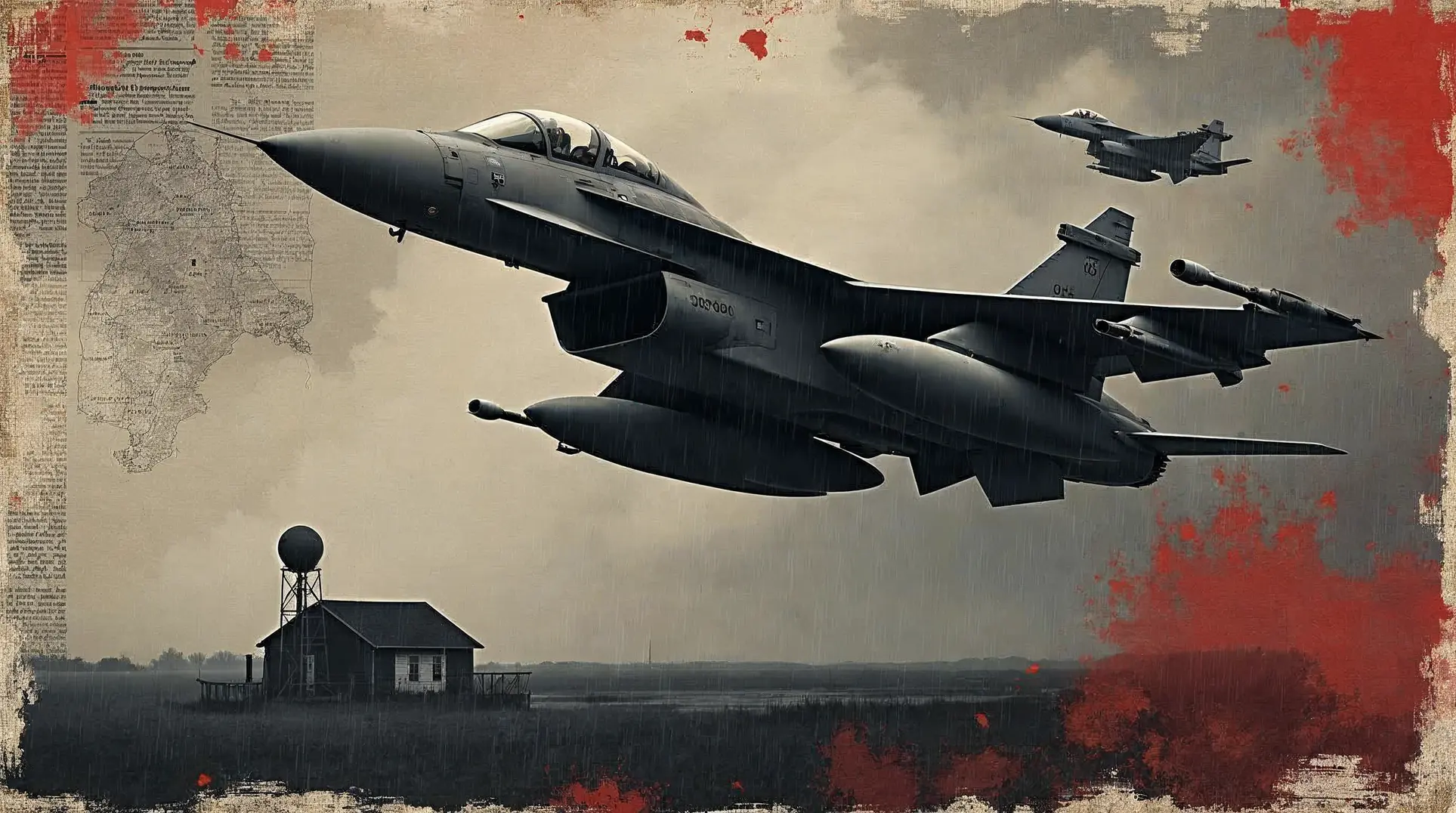
Observers are reading: analysis of how the Gripen episode and the Kh-101's short detection window shape what Warsaw is asking NATO to deliver.
Become an Observer, it's free. Get full access to all Crisis.Zone analysis, briefings and breaking coverage.
What to watch
NATO Secretary General Mark Rutte is expected to make a statement after the meeting. The Polish side does not expect a separate joint communiqué, UNN reported. In Warsaw on Saturday, Rutte said: "I can guarantee that NATO will defend every inch of Polish territory." Kyiv Post reported that he also said Supreme Allied Commander Europe, Gen. Alexus Grynkewich, would determine where the threats to NATO's deterrence and defence system lie, so that changes can be made if necessary. On Saturday, Moldova and Finland separately reported airspace violations the same day.
Five markers will show what the meeting produced. The first is what Rutte says afterwards. The second is whether Eastern Sentry receives new assets, such as AWACS. The third is whether the review of engagement procedures is adopted. The fourth is whether Moscow responds. The fifth is what the specialist analysis of fragments at Mołodycz finds.
Updates
24 November 2026, 08:19 CET
NATO confirmed that Supreme Allied Commander Europe Gen. Alexus Grynkewich has authorised the forward deployment of an AWACS aircraft and is examining the deployment of additional assets, spokesperson Allison Hart said after Monday's North Atlantic Council meeting, at which ambassadors said Russia bears full responsibility. Late on Monday, a Russian drone briefly entered Polish airspace near Dorohusk during an attack on western Ukraine. Poland's Operational Command said a shootdown was authorised, but it held fire after the drone turned east, citing the risk to civilians.
23 November 2026, 21:43 CET
Zalewski said further Polish proposals to strengthen air defence on the eastern flank will be considered next week, when NATO foreign ministers meet, TVN24 and Polsat News reported. Defence Minister Władysław Kosiniak-Kamysz wrote on X that allied early-warning aircraft are already reinforcing the protection of Polish airspace.
23 November 2026, 20:59 CET
NATO will make an AWACS early-warning aircraft available to Poland, Deputy Defence Minister Paweł Zalewski said on Monday after the North Atlantic Council met in Brussels. Zalewski said the aircraft would give Warsaw deeper operational awareness of possible future incursions.
23 November 2026, 20:58 CET
NATO Secretary General Mark Rutte said in Berlin on Monday: "It is clear that this is a dangerous incident. It comes from Russia." Whether it was intentional is for the authorities to decide, he said, adding: "I will never speculate." Poland's Foreign Ministry said it will summon the Russian ambassador once the military and security services complete their checks. No outcome of the North Atlantic Council meeting had been reported by Monday afternoon.
Become an Observer (it's free) to unlock direct links to all sources used in this article.
We believe you deserve to verify everything we write. That's why we meticulously document every source.


