


Poland's six-month withdrawal from the 1997 Anti-Personnel Mine Ban Treaty will take legal effect on 20 February 2026, clearing the way for Warsaw to resume manufacturing anti-personnel (AP) mines for the first time since the mid-1980s. Deputy Defence Minister Paweł Zalewski confirmed to Reuters on 17 December that production will begin in 2026 as part of the "East Shield" border fortification programme, with potential exports to Ukraine contingent on meeting Poland's own requirements first.
The decision marks a sharp institutional break with three decades of European humanitarian disarmament architecture and reflects Poland's assessment that credible ground denial along its 800-kilometre eastern frontier—bordering Belarus and Russia's Kaliningrad Oblast—requires layered obstacles including minefields. It also places Warsaw at the forefront of a regional trend: Lithuania, Finland, Latvia, and Estonia are all pursuing domestic AP mine production or treaty withdrawal, signalling a broader eastern-flank shift toward hard infrastructure and deterrence-by-denial.
Industrial capacity and procurement timeline
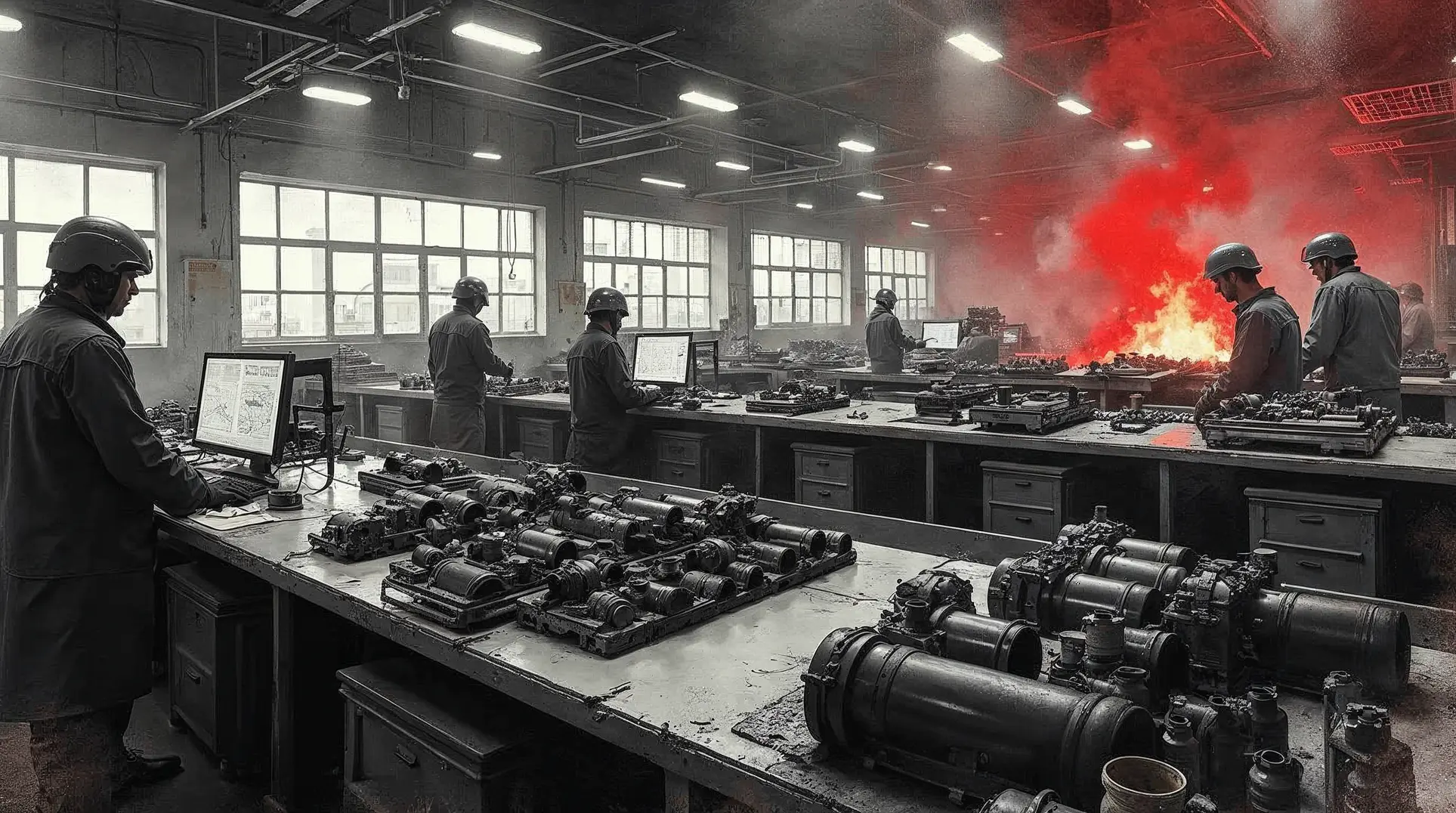
State-owned BELMA, Poland's primary mine manufacturer, currently produces approximately 100,000 mines per year across various types. Company representatives told Reuters the firm can scale up to roughly 1.2 million mines of all types in 2026 and is preparing for total demand of 5–6 million mines—including anti-personnel variants—to meet East Shield requirements. No formal Ministry of Defence production order has yet been placed, but Zalewski emphasised urgency: "We are interested in large quantities as soon as possible."
Poland submitted its formal withdrawal notice on 20 August 2025, triggering the Ottawa Convention's mandatory six-month delay before legal effect. Once the withdrawal becomes operative in February, Warsaw will no longer be bound by the treaty's prohibition on production, stockpiling, or use of AP mines. Poland last manufactured such weapons in the mid-1980s and reported to the United Nations in 1995 that exports had ceased; under treaty obligations, Warsaw destroyed more than one million AP mines by 2016, according to Human Rights Watch documentation.
BELMA's projected scale-up is substantial but not unprecedented in the current European context. Lithuania and Finland both plan to start domestic AP mine production in 2026, and Latvia and Estonia are moving through their own withdrawal processes. The regional cluster reflects shared threat perceptions driven by Russia's full-scale invasion of Ukraine and persistent hybrid activities along the EU's eastern border, including infrastructure sabotage and migrant instrumentalization by Belarus.
Deployment doctrine and Ukraine export contingency
East Shield was launched in mid-2024 and is broadly scheduled through 2028, encompassing anti-tank barriers, shelters, bunkers, and surveillance infrastructure designed to fortify approximately 800 kilometres of Poland's eastern border with Belarus and along approaches to the Kaliningrad enclave. Importantly, it does not include the Polish-Ukrainian border, contrary to some secondary reporting. Funding for the project remains under discussion through national and EU channels.
Anti-personnel mines fit a broader deterrence-by-denial logic: slowing or channelling potential incursions from Belarus or Kaliningrad to buy time for reinforcement and maximize the effectiveness of anti-tank obstacles. Poland's shift mirrors its wider pivot to a standing hybrid-threat posture, including the deployment of 10,000 troops to guard critical infrastructure following railway sabotage incidents and plans to train 400,000 citizens in military skills by 2026.
Zalewski described exports to Ukraine as "absolutely a priority," but contingent on excess capacity after meeting Polish needs. Ukraine announced in June 2025 its intent to withdraw from the Ottawa Convention, though the legal efficacy and timing of that withdrawal remain subject to treaty Article 20 constraints, particularly in the context of active armed conflict. No formal export contracts have been confirmed, and any transfers would depend on production volume, Polish stockpile targets, and clearance from Warsaw's own procurement cycle.
Members are reading: How Poland's minefield deployment tests EU cohesion and the future of European humanitarian disarmament norms.
What comes next
The immediate operational question is when the Ministry of Defence will formalize its production order and what specifications—including self-neutralization features, if any—will be required. BELMA's timeline suggests initial deliveries could begin in late 2026, with deployment phased across East Shield sectors through 2028. Equally important will be Poland's approach to environmental planning, clearance protocols, and civilian access restrictions—measures that could partially address humanitarian concerns even outside the treaty framework.
Regionally, coordination with the Baltic states on minefield doctrine, marking standards, and clearance commitments could harmonize practices and reduce fragmentation risk within NATO. Conversely, divergence on these issues could complicate joint operations and strain political cohesion within the alliance and the EU. Poland's next steps will clarify whether its withdrawal represents a pragmatic adaptation to acute threat or a broader unraveling of European disarmament architecture under pressure from resurgent hard security competition.
Subscribe to our free newsletter to unlock direct links to all sources used in this article.
We believe you deserve to verify everything we write. That's why we meticulously document every source.


