


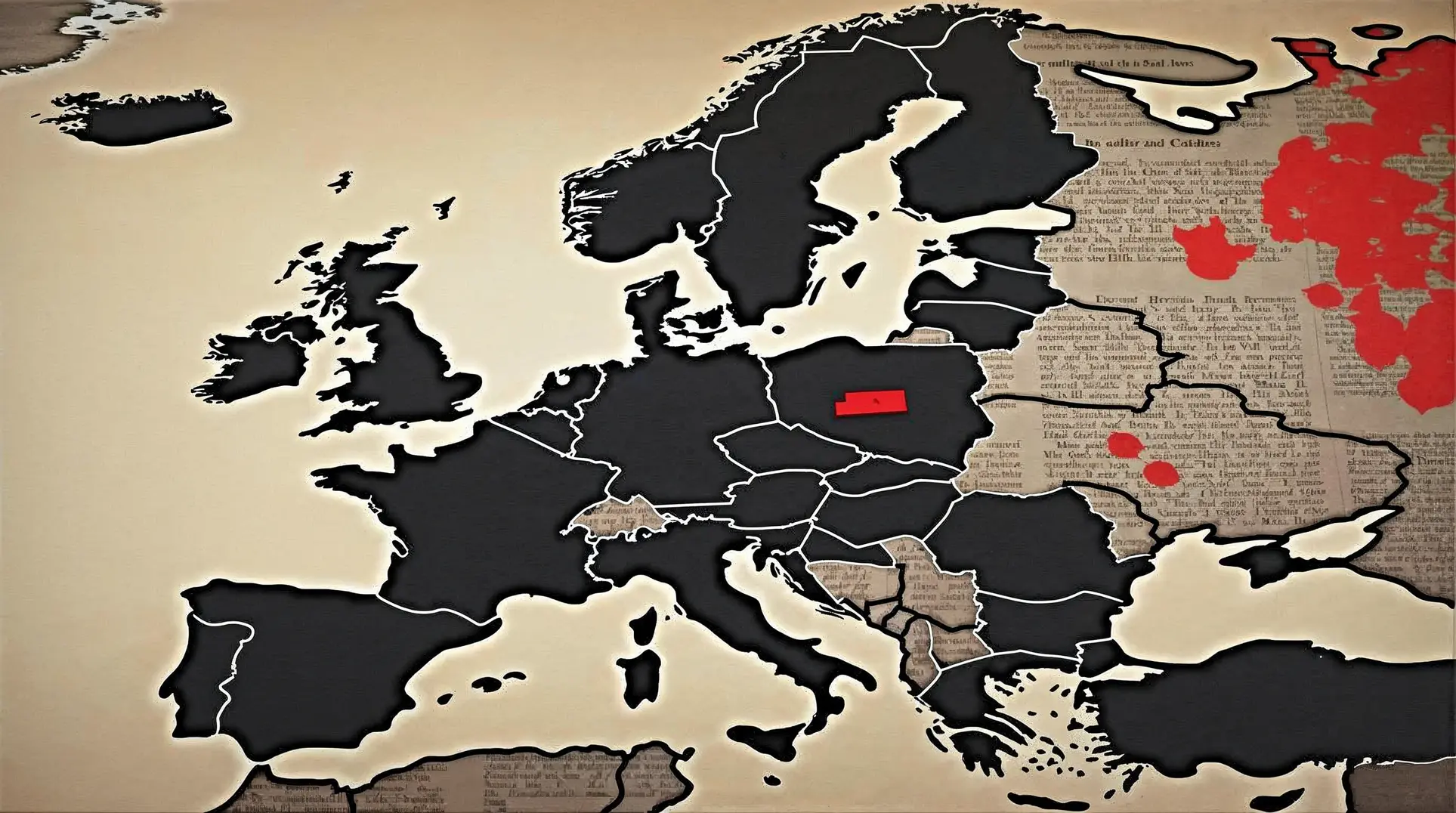
Poland and Germany signed a new bilateral defense cooperation agreement, establishing an expanded framework for military collaboration focused on the Baltic Sea region and emerging security threats. The signing, which coincides with the 35th anniversary of the 1991 Polish-German Treaty on Good Neighborliness, represents a significant deepening of defense ties between NATO's eastern flank anchor and Europe's largest economy as both confront heightened Russian aggression.
The agreement updates a 2011 framework and establishes practical cooperation mechanisms across cybersecurity, military mobility, infrastructure development, logistics, aerospace capabilities, space-related activities, and emerging technologies. Both governments emphasized that the pact operates within existing NATO and EU structures, specifically noting it creates no new mutual defense obligations beyond Article 5 and EU Article 42(7) commitments, nor does it involve permanent German troop stationing in Poland.
Baltic Sea coordination takes priority
The agreement places particular emphasis on Baltic Sea security, a region where NATO has progressively strengthened command architecture to address potential Russian aggression scenarios. The pact establishes coordination mechanisms within NATO's Baltic Sea command structure and provides for joint exercises and training operations designed to improve interoperability and rapid response capacity.
Poland has emerged as a critical logistics hub for Ukraine and maintains defense spending exceeding 4% of GDP, making it one of NATO's most substantial contributors relative to economic size. Germany, meanwhile, has begun revitalizing the Bundeswehr after decades of underinvestment, though its defense industrial base still faces significant modernization challenges. The bilateral framework allows both nations to leverage complementary capabilities—Polish forward positioning and operational tempo combined with German industrial capacity and institutional depth.
Members are reading: Why Poland's calibrated approach to German defense cooperation reflects strategic hedging against transatlantic uncertainty.
European defense integration accelerates
The Poland-Germany agreement represents one data point in a broader pattern of European defense cooperation intensifying as allies confront both Russian threat escalation and American reliability questions. The practical focus on military mobility and infrastructure coordination addresses critical vulnerabilities: NATO's ability to move forces rapidly across Central Europe remains constrained by infrastructure gaps, bureaucratic obstacles at border crossings, and insufficient logistics capacity. Addressing these bottlenecks through bilateral agreements creates cumulative improvements to alliance readiness even when political consensus on broader initiatives remains elusive.
Whether this pragmatic approach proves sufficient to deter Russian aggression will depend on execution and sustained political commitment from both governments. The agreement provides institutional architecture; translating that framework into operational capability requires sustained investment, regular exercises, and political will to activate cooperation mechanisms when crises emerge.
Subscribe to our free newsletter to unlock direct links to all sources used in this article.
We believe you deserve to verify everything we write. That's why we meticulously document every source.


