


- PKK's 3,500-fighter withdrawal to Iraq may disband the Turkish organization while affiliated groups like Syria's YPG and Iran's PJAK continue operating independently.
- Turkey's Development Road project strategically bypasses Kurdish territories, revealing Ankara's regional ambition to sever Kurdish territorial contiguity across four states.
- Success depends on Turkey offering constitutional reforms matching PKK concessions—without legal protections, disarmament risks repeating the failed 2013-2015 peace process.
The Kurdistan Workers' Party's announcement to withdraw all forces from Turkey to northern Iraq and formally disband represents far more than a tactical retreat. It marks a potential restructuring of the Middle East's most durable insurgency—one that has persisted precisely because it transcended the artificial borders imposed by Sykes-Picot. But as Abdullah Ocalan's call for disarmament reverberates across the Kurdish political landscape, a harder question emerges: is Turkey negotiating an end to the PKK, or engineering a new regional architecture that marginalizes Kurdish autonomy across four countries?
The timing reveals much. This process unfolds as Turkey positions itself as the primary external broker in Syria's transition, as Baghdad labels the PKK a "banned organization," and as Ankara advances the Development Road project—a transportation corridor designed explicitly to bypass the Kurdistan Regional Government. The peace process, viewed through this lens, becomes inseparable from Turkey's broader ambition to displace Iranian influence in Iraq and prevent Kurdish territorial contiguity from the Mediterranean to the Zagros Mountains.
What remains unclear is whether Turkey's legal and constitutional reforms will match the scale of the PKK's concession—or whether Ankara views disarmament as sufficient in itself, requiring no reciprocal political accommodation. The answer will determine whether this becomes a genuine transformation or merely a rebranding of conflict under different terms.
The mechanics of disbandment: 3,500 fighters and a fragmented process
Turkish intelligence estimates place approximately 3,500 PKK members in northern Iraq, concentrated in the Qandil, Gara, Sinjar, and Makmur regions. The planned withdrawal involves phased movement to verification centers, coordinated by Turkey's National Intelligence Organization (MIT) and Armed Forces. Roughly 100 senior leaders are expected to relocate to third countries, while 2,000 members without active arrest warrants or serious criminal records would return to Turkey—subject to counterterrorism laws that remain undefined in their application.
This relatively modest number of combatants makes disarmament operationally feasible, unlike larger insurgencies that have collapsed into warlordism. Yet the transnational dimension introduces complications absent from typical post-conflict DDR processes. The PKK's organizational reach extends across Turkey, Iraq, Syria, and Iran, with affiliated groups maintaining distinct operational autonomy. The People's Protection Units (YPG) in Syria and the Free Life Party of Kurdistan (PJAK) in Iran have responded to Ocalan's call with conspicuous ambiguity.
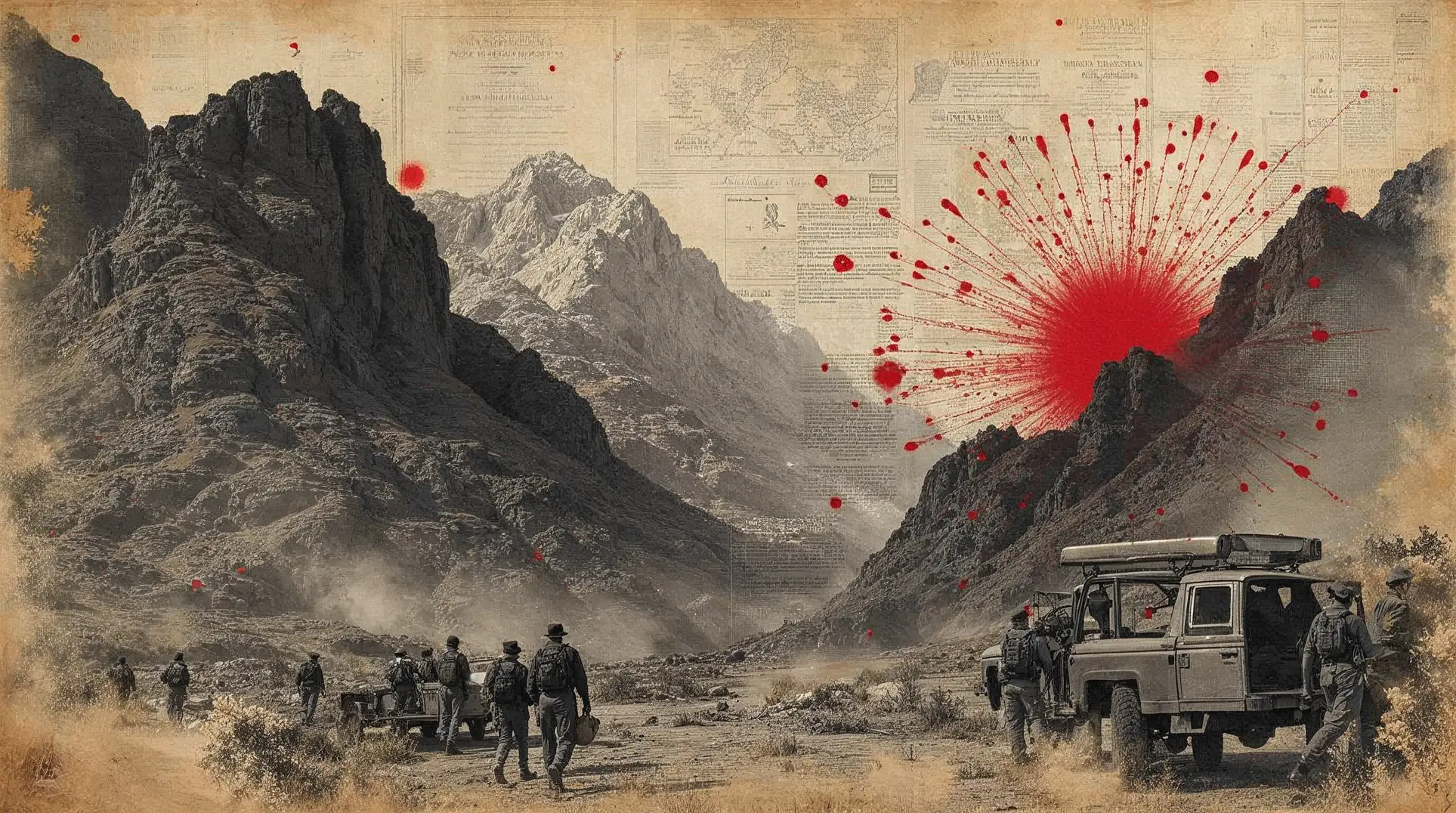
Why Turkey's massive infrastructure gambit is actually designed to sever Kurdish territorial links forever—and the shocking Iranian contingency plan that could reignite the entire conflict.
Ankara's legal framework: Constitutional promises and authoritarian precedent
The PKK's May 12 announcement referenced the end of armed struggle in favor of "democratic political struggle," but offered no explicit roadmap for weapons handover or legal protections for returning fighters. This ambiguity places the burden on Turkey to define terms—a politically fraught process given Ankara's systematic dismantling of Kurdish political representation since 2016.
President Erdogan appointed a team of legal experts on May 27 to draft a new constitution, signaling that reforms are under consideration. But Turkey's recent record suggests profound obstacles. Following the 2016 coup attempt, Erdogan's government arrested Peoples' Democratic Party (HDP) officials on terrorism charges, removed elected Kurdish mayors, and criminalized cultural expression of Kurdish identity. These actions occurred during a period when Turkey claimed to support Kurdish rights within a unitary state framework.
The contradiction is structural. Turkey's counterterrorism laws grant prosecutors sweeping authority to charge individuals with PKK affiliation based on social media activity, attendance at funerals, or participation in cultural events. Reintegration of 2,000 former PKK members into Turkish society under this legal architecture requires either mass amnesty—politically toxic for Erdogan's nationalist coalition—or selective prosecution that risks appearing arbitrary and fueling grievance.
The alternative model involves constitutional recognition of Kurdish identity and decentralization of governance, potentially creating autonomous administrative structures within Turkey's existing provinces. This was the implicit promise of Ankara's 2013 "Kurdish Opening," which collapsed after a 2015 suicide bombing attributed to ISIS and subsequent PKK retaliation. Turkey responded with a counterinsurgency campaign that displaced hundreds of thousands and leveled entire urban districts.
That history informs current Kurdish skepticism. The PKK's statement that it awaits "Ankara's response" reflects awareness that disarmament without legal guarantees has historically preceded state repression, not reconciliation. Ocalan remains imprisoned under conditions of near-total isolation. His "call for disarmament" emerged from this context, raising questions about whether it represents genuine strategic recalibration or coercion under duress.

The hidden test: How Syria's SDF integration exposes whether Erdogan wants peace or total Kurdish subordination—and why one wrong move could trigger Turkish tanks rolling into Damascus's backyard.
The shadow of Sykes-Picot: Why borders matter more than disarmament
The PKK's endurance across four decades stems from its ability to exploit the artificiality of borders imposed by the 1916 Sykes-Picot Agreement. Kurdish populations divided among Turkey, Iraq, Syria, and Iran share linguistic, cultural, and historical ties that predate modern state structures. The PKK positioned itself as a transnational movement challenging not just Turkish authoritarianism but the entire post-Ottoman settlement.
This ideological framing allowed the PKK to retreat across borders when pressured militarily, rebuild in sanctuaries beyond Ankara's reach, and maintain legitimacy among Kurdish populations who viewed state repression in one country as connected to repression in others. The group's shift from demanding an independent Kurdish state to advocating for "democratic confederalism"—a form of decentralized self-governance within existing states—reflected recognition that redrawing borders was unachievable, but challenging centralized authority was not.
Turkey's counterinsurgency adapted to this reality. Operations in northern Iraq since 2018 established permanent military outposts, effectively creating a buffer zone that Baghdad protests but cannot prevent. The Development Road project extends this logic by creating economic and infrastructure networks that bypass Kurdish-controlled territories, reducing their strategic importance and marginalizing their political leverage.
Yet this approach contains risks. Marginalization without accommodation historically produces renewed insurgency, particularly when demographic and economic grievances persist. Turkey's Kurdish regions remain among its poorest, with youth unemployment exceeding 30 percent and state investment concentrated in western provinces. The peace process offers Ankara an opportunity to address these structural inequalities through targeted development, language rights, and political representation.
Whether Turkey seizes this opportunity will depend on internal political dynamics. Erdogan's alliance with the Nationalist Movement Party (MHP), led by ultranationalist Devlet Bahçeli—who initially proposed Ocalan's conditional release—constrains his ability to offer substantive concessions without fracturing his coalition. Constitutional reforms will require parliamentary supermajorities or referendums, both vulnerable to opposition from hardline nationalists who view any recognition of Kurdish identity as a step toward separatism.
The international dimension also matters. European Union membership negotiations, long stalled over human rights concerns, could provide external incentive for Turkey to implement genuine reforms. But the EU's leverage has diminished as Turkey's strategic importance to NATO and its role managing refugee flows have increased. Washington's relationship with the SDF complicates Ankara's position, but the Trump administration's transactional approach and Biden's reluctance to confront Turkey over human rights suggest limited external pressure for accommodation.
Reintegration as political transformation—or controlled demobilization?
The reintegration of 2,000 former PKK members into Turkish society is not merely a security question but a political one with implications for Turkey's democratic trajectory. Successful reintegration requires employment opportunities, social services, and legal protections—investments that signal state commitment to reconciliation. Failure produces alienated former combatants vulnerable to recruitment by successor organizations or criminal networks.
Turkey's model will likely involve selective amnesty tied to cooperation with authorities, combined with prosecution of individuals accused of specific violent acts. This approach balances accountability with pragmatism, but risks appearing arbitrary if criteria for amnesty remain opaque or politically influenced. Transparency, broad parliamentary oversight, and civil society involvement are essential to legitimacy.
The broader question is whether former PKK members can participate in legal politics. If they face lifelong exclusion from political activity—as current counterterrorism laws suggest—reintegration becomes controlled demobilization, not political transformation. If they can join pro-Kurdish parties, contest elections, and advocate for constitutional reforms, the process opens space for genuine democratization.
This is where Turkey's legal framework will be tested. The HDP, rebranded as the Peoples' Equality and Democracy Party (DEM) after legal challenges, represents Kurdish political aspirations within the existing system. Its continued existence and ability to operate without systematic repression is the clearest indicator of whether Turkey seeks integration or merely pacification.
Early signs are mixed. Erdogan removed pro-Kurdish officials and mayors even as peace talks progressed, suggesting his government views political accommodation and security crackdowns as compatible. This dual approach may reflect tactical flexibility—offering concessions to facilitate disarmament while maintaining pressure to prevent Kurdish consolidation. But it also risks repeating the failures of 2015, when violence resumed after brief progress.
The test will come in implementation. If Turkey's new constitution includes meaningful decentralization, language rights, and protections against arbitrary detention, the peace process could redefine Turkish politics and serve as a model for Syria and Iraq. If constitutional reforms prove cosmetic and repression continues under new legal architecture, the PKK's disbandment will simply redistribute Kurdish political mobilization to other organizations and geographies.
From insurgency to influence: What success requires
The PKK's announcement is a pivotal moment, but only an initial one. Genuine transformation requires several conditions to align: comprehensive DDR with transparent monitoring, constitutional reforms that address structural grievances, Iraqi Kurdish facilitation of demobilization without exploitation, Syrian Kurdish integration into national forces without renewed Turkish military intervention, and Iranian restraint from exploiting Kurdish fragmentation for regional leverage.
None of these conditions is guaranteed. Turkey's track record on Kurdish rights is one of cyclical repression and tactical accommodation, not sustained liberalization. Baghdad's willingness to label the PKK a "banned organization" reflects Iraqi pragmatism, not a principled commitment to Kurdish rights. The SDF's integration into Syria's army remains theoretical until command structures, territorial control, and external patronage are resolved. Iran's strategic interests in maintaining a corridor through Iraq and Syria create incentives to preserve Kurdish fragmentation as a hedge against Turkish and Saudi influence.
Yet the alternative to successful implementation is not status quo ante, but escalation. The PKK's operational failure to achieve autonomy in Turkey, combined with its military weakening under Turkish airpower and loss of public legitimacy after civilian-targeting attacks, means the group cannot return to insurgency on the same scale. But it can metastasize into splinter organizations, become entangled with transnational criminal networks, or serve as Iranian proxies in a broader regional cold war.
Turkey's peace process is therefore not a bilateral negotiation but a test of whether Middle Eastern states can adapt their constitutional frameworks to accommodate ethnic and sectarian diversity without fragmenting. The region's borders, drawn by external powers a century ago, have proven durable not because they reflect organic political communities, but because the states they created developed coercive capacity to suppress alternative identities.
The question now is whether Turkey can transcend coercion and build legitimacy through inclusion—or whether it will settle for a managed defeat of the PKK while leaving the underlying Kurdish question unresolved, transferring the problem to Syria, Iraq, and the next generation. Ocalan's call for disarmament has provided Ankara an opening. What Turkey builds with that opening will shape Kurdish politics, regional stability, and the broader viability of multi-ethnic states across the Middle East for decades.
Subscribe to our free newsletter to unlock direct links to all sources used in this article.
We believe you deserve to verify everything we write. That's why we meticulously document every source.


