


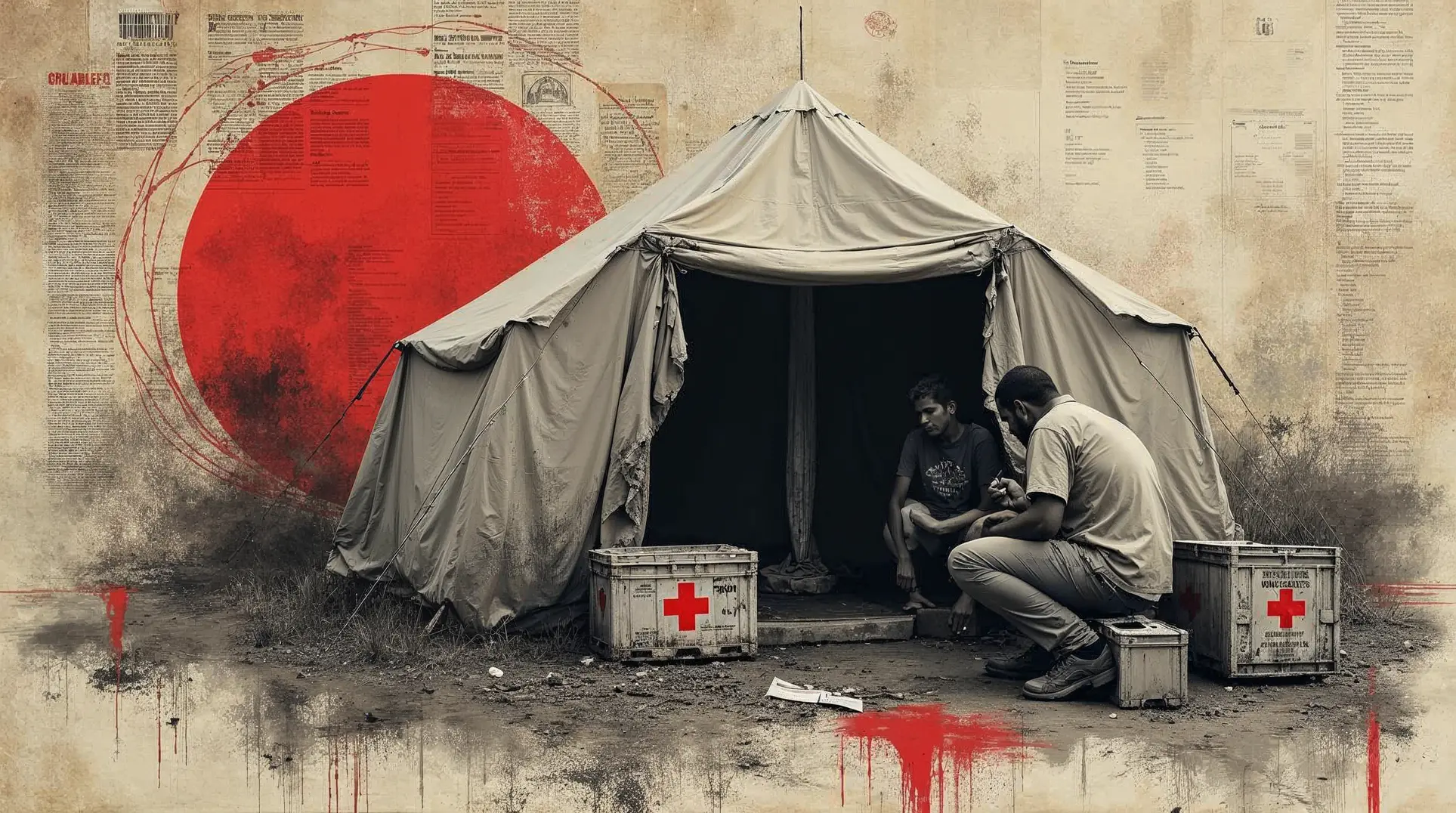
The Pan American Health Organization declared Wednesday that Venezuela's earthquake response has entered a new and more precarious phase: the primary danger to survivors is no longer traumatic injury but the risk of infectious disease spreading through 87 transitional camps housing nearly 18,000 displaced people.
"In the coming weeks, the greatest health risks may stem not only from injuries caused by the earthquakes, but also from disruptions to health services, overcrowded conditions, deficiencies in water and sanitation and reduced access to vaccination and routine healthcare," PAHO Director Jarbas Barbosa said. The declaration marks a formal shift from PAHO's trauma-surge posture to one focused on stabilization and disease surveillance—an acknowledgment that, as documented in the earthquakes' initial aftermath, Venezuela's degraded infrastructure was never equipped to absorb a disaster of this scale, let alone its aftermath.
Camps become the epidemiological front line
National Assembly President Jorge Rodrigues reported 3,889 dead and 16,740 injured as of July 9, with 17,907 people displaced across the camps PAHO is now tracking through an early warning surveillance system integrated into field hospitals and shelters—figures that run higher than tolls reported by international agencies, including the IOM's count of 3,535 dead on July 6 and the WFP's estimate of 2,954 on July 5. The surveillance system is watching for diarrheal disease, respiratory infections, febrile syndromes and vaccine-preventable illness—precisely the conditions overcrowding and failed sanitation tend to produce.
In Catia La Mar, in La Guaira state, doctors report rising cases of skin conditions and diarrhea, alongside a surge in requests for chronic-illness medication, as survivors improvise showers and toilets on beaches. UN relief chief Tom Fletcher told the Associated Press that "people are turning up because they haven't been able to get their other treatments… they're not turning up with just the fractures now, they're turning up with those longer-term health needs."
Observers are reading: Why the IMF's SDR discussions with Caracas could determine whether Venezuela outruns the outbreak clock.
Become an Observer — it's free. Get full access to all Crisis.Zone analysis, briefings and breaking coverage.
The test ahead
Unusual cooperation between NGOs and the interim government—a marked departure from Maduro-era restrictions—suggests political actors understand the stakes. "When you have a crisis of this magnitude, people put the politics to one side," Fletcher said. But cooperation alone will not resolve a structural deficit built over a decade. As initial reporting on the June quakes showed, Venezuela's institutional capacity was already strained before displacement reached six figures. Whether surveillance triggers intervention faster than disease spreads through the camps will now determine whether this becomes a second, quieter catastrophe.
Become an Observer — it's free — to unlock direct links to all sources used in this article.
We believe you deserve to verify everything we write. That's why we meticulously document every source.


