


On December 8, 2025, Niger State Governor Umaru Bago received 100 schoolchildren at the state capital in Minna, 17 days after their abduction from St. Mary's Catholic Private Primary and Secondary School in Papiri. The handover, facilitated by representatives of Nigeria's National Security Adviser, brought relief to some families—but 165 students and teachers remain captive, and the mechanism behind the release remains undisclosed. Whether the children were freed through negotiation, ransom payment, or security operation, authorities have not said, a silence that underscores the contradictions at the heart of Nigeria's approach to kidnapping for profit.
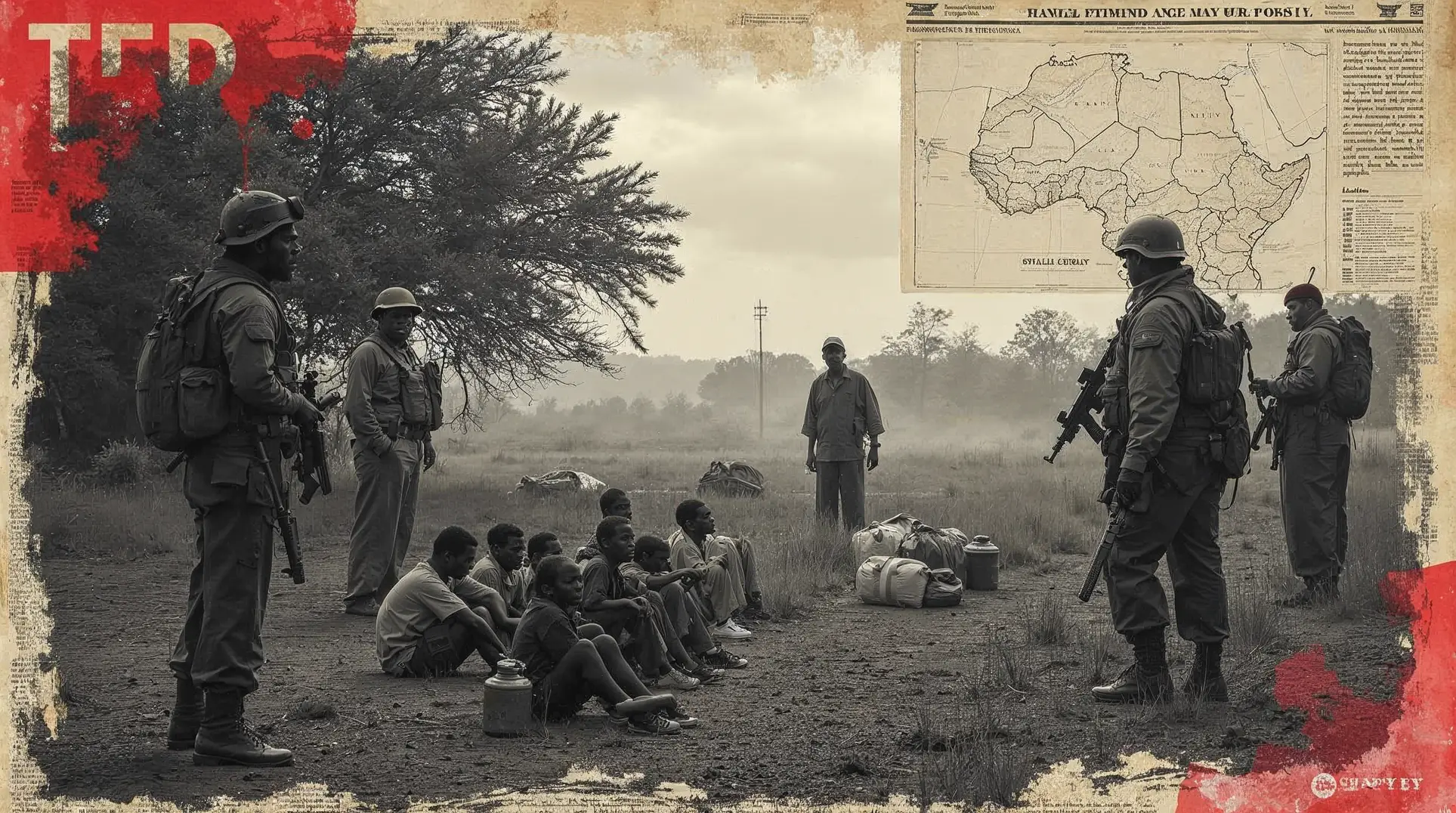
The November 21 attack on St. Mary's was one of the largest school abductions in recent years. Gunmen seized 315 people—303 students and 12 teachers—from the rural Catholic boarding school in Agwara local government area. About 50 students escaped in the hours after the raid. National Security Adviser Nuhu Ribadu visited Papiri and pledged an imminent rescue; nearly three weeks later, a third of the hostages arrived in Minna aboard buses, handed over to state officials with minimal public explanation. Bishop Bulus Dauwa Yohanna confirmed the release but said reunification processes and support would be needed before families could take their children home. Parents reported scant official communication, many still uncertain whether their children were among the freed.
The ransom-policy paradox
Nigeria's federal government criminalized ransom payments in 2022, explicitly to choke the economics of banditry. Yet the policy has collided with operational reality: families and communities, often with tacit state involvement, continue to pay because rescue operations are rare, dangerous, and frequently unsuccessful. The Papiri partial release illustrates the dilemma. Authorities have not disclosed the terms, but the selective freeing of 100 while 165 remain suggests calibrated negotiation—a dynamic that armed groups understand well.
This opacity matters for deterrence. If the state negotiated and paid—whether directly or through intermediaries—without acknowledging it, the precedent is set without the policy discussion. If security forces extracted some hostages by force, silence about tactics leaves communities with no model for protection. Either way, partial releases can recalibrate incentives: kidnappers demonstrate leverage, the state demonstrates limited reach, and the transaction remains profitable.
The kidnap economy in Nigeria's northwest and north-central zones has industrialized. Armed groups operate across porous borders, holding dozens or hundreds at a time, releasing in tranches, managing risk and reward. Safe Schools commitments have repeatedly failed to translate into hardened perimeters or rapid-response capacity in rural boarding schools, leaving institutions vulnerable and families exposed to extortion.
Members are reading: Why the partial release reveals Nigeria's impossible choice between negotiation that fuels more kidnappings and force that risks mass casualties.
Cross-faith victimization and external narratives
The Papiri attack was part of a November surge. Days earlier, gunmen abducted 25 students in Kebbi state (later freed) and 38 worshippers in Kwara (also freed). In the week before the handover, at least 20 more people were taken in separate incidents—churchgoers in Kogi, a wedding convoy in Sokoto. Perpetrators remain publicly unidentified, but most analysts attribute northwest mass kidnappings to criminal bandit networks driven by ransom, not ideology. A presidential spokesman suggested jihadist links; that attribution has not been independently confirmed.
Critically, victims cut across faiths. Muslim communities have been targeted as frequently as Christian ones, a reality obscured by recent external commentary. U.S. political rhetoric, including threats of intervention by President Donald Trump and a congressional delegation visit, has amplified a narrative of Christians uniquely persecuted. Local Nigerian officials and analysts dispute that framing. Congressman Riley Moore stated on December 8, 2025, that there is a joint task force established between Nigeria and the US, a development confirmed by Nigerian National Security Advisor Nuhu Ribadu, who also mentioned hosting the US congressional delegation as part of ongoing security consultations between both countries. The risk is that externally imposed narratives distort local realities, feeding sectarian division where the driver is predatory economics, not religious war.
What comes next
Immediate priorities are verification, medical screening, psychosocial care, and family reunification for the 100 freed. For the 165 still captive, sustained pressure and coordination between federal and state security agencies are essential. Transparency—on who was freed, health status, and next steps—would help manage public anxiety and political accountability. Silence, by contrast, feeds rumor and mistrust.
Longer term, Nigeria faces structural questions. Can the state afford the fiscal and reputational cost of continued ransom payments, acknowledged or not? Can overstretched security forces mount effective operations without external intelligence and air support? And can Safe Schools commitments finally produce tangible protection, or will rural boarding schools remain extraction points for armed groups fluent in the economics of leverage? The 100 children who returned to Minna are safe, for now. The 165 still missing are a test of whether Nigeria's government can reconcile policy with practice—and protect its most vulnerable before the next abduction.
Subscribe to our free newsletter to unlock direct links to all sources used in this article.
We believe you deserve to verify everything we write. That's why we meticulously document every source.


