


Supreme leader's distinction between protesters and rioters signals regime strategy amid unprecedented dual crisis from street unrest and geopolitical isolation
Iran's Supreme Leader Ayatollah Ali Khamenei delivered a calculated message on January 3rd, declaring that "rioters must be put in their place" while authorities should "talk to protesters." The semantic distinction, delivered as demonstrations against the Islamic Republic enter their second week, reflects the regime's attempt to manage simultaneous crises on two fronts: the most sustained internal unrest in years and mounting external pressure from the United States, dramatically amplified by the recent capture of Venezuelan President Nicolás Maduro.
The protests, initially triggered by the rial's collapse, have evolved beyond economic grievances to direct challenges to the regime's legitimacy. Chants of "Death to the dictator" echo through Iranian cities as demonstrators openly call for the end of the Islamic Republic. For a leadership that has weathered regional upheaval and international sanctions, the convergence of domestic revolt with heightened US intervention threats creates a strategic dilemma without clear resolution. Khamenei's speech is less an offer of dialogue than a blueprint for managing an increasingly untenable position.
The rhetoric of division
Khamenei's careful parsing of "protesters" versus "rioters" follows a familiar authoritarian playbook. By creating two categories of dissent, the regime attempts to legitimize a violent crackdown on those demanding systemic change while offering superficial concessions to citizens expressing purely economic frustrations. The strategy aims to fracture a unified opposition movement by suggesting that reasonable grievances deserve a hearing, while political demands warrant suppression.
This rhetorical maneuver serves multiple purposes. It allows the regime to claim restraint and openness to criticism, projecting an image of responsiveness to domestic and international audiences. Simultaneously, it provides legal and ideological cover for security forces to escalate violence against those designated as "rioters"—a category that, in practice, the state can expand to encompass anyone whose demands threaten the Islamic Republic's foundation. The distinction is a fiction designed to shrink the revolution by redefining its participants, separating economic desperation from political transformation.
The tactic also reveals the regime's assessment of its vulnerability. If authorities believed they could simply crush all dissent without consequence, no such distinction would be necessary. The acknowledgment that some protesters deserve dialogue, however cynical, signals recognition that the current unrest has reached a scale and intensity that demands more sophisticated management than pure repression.
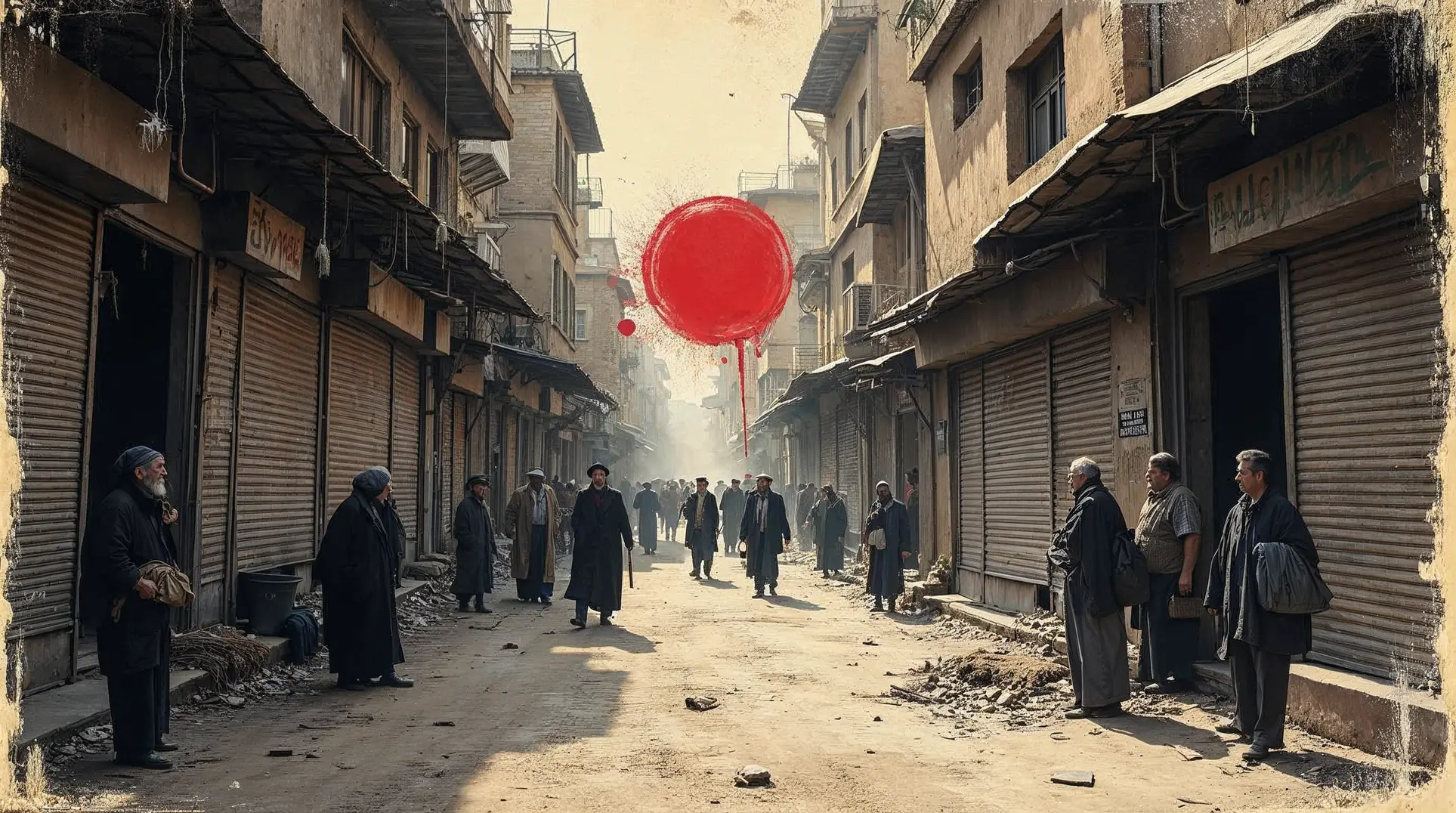
Members are reading: How the bazaar's defection signals a foundational crisis that threatens the regime's core social contract and survival strategy.
The shadow of Maduro's capture
The external dimension of Iran's crisis cannot be understated. The capture of Nicolás Maduro, a key node in Iran's network of anti-US alliances, delivers a psychological and strategic blow to Tehran's regional posture. For a regime that has built its foreign policy around projecting power through an "axis of resistance," the fall of a major partner demonstrates the limits of that strategy and the reach of American power.
President Trump's subsequent threats against Iran, including his claim that the US is "locked and loaded", create a dangerous dynamic. While Trump's humanitarian rhetoric is transparently opportunistic, designed to exploit Iran's internal vulnerability rather than reflecting genuine concern for protesters, the threats nonetheless constrain the regime's options. A brutal crackdown risks providing justification for the very intervention Trump is threatening, yet appearing weak invites both internal and external challenges.
The timing amplifies Tehran's isolation. With Maduro captured and traditional partners like Russia distracted by their own regional concerns, Iran faces this dual crisis with fewer diplomatic options than in previous confrontations with Washington. The regime must project strength domestically while avoiding provocations that could trigger external intervention—a nearly impossible balance.
The tightrope narrows
Khamenei's speech represents the verbal manifestation of an increasingly precarious strategic position. The regime must crush dissent sufficiently to maintain control, but avoid a crackdown so brutal it galvanizes international intervention or fractures the security apparatus itself. The distinction between protesters and rioters is an attempt to thread this needle, offering just enough concession to deflate the movement while preserving the option for escalated violence.
The sustainability of this approach remains questionable. The structural economic problems driving the protests have no quick solution, particularly under intensified US pressure. The broader pattern of crisis suggests that tactical repression and rhetorical maneuvering may only delay rather than resolve the regime's legitimacy crisis. Iran's leadership faces an unprecedented convergence of pressures that challenges the fundamental stability of the Islamic Republic in ways that neither pure force nor superficial dialogue can adequately address.
Subscribe to our free newsletter to unlock direct links to all sources used in this article.
We believe you deserve to verify everything we write. That's why we meticulously document every source.


