


- ICJ rules Israel must facilitate UN humanitarian aid to Gaza including through UNRWA, rejecting allegations against the agency
- Court's advisory opinion adds to pattern of ignored ICJ rulings as humanitarian blockade continues into its eighth month
- Major arms suppliers maintain weapons flow despite binding legal obligations to prevent violations of humanitarian law
The International Court of Justice has spoken—again. On October 22, 2025, the UN's highest legal authority issued an advisory opinion declaring that Israel, as an occupying power, bears an unequivocal obligation to ensure the "basic needs" of Gaza's civilian population are met. The 11-judge panel ruled that Israel must support relief efforts by the United Nations and its entities, including UNRWA, the UN agency for Palestinian refugees that Israel has systematically sought to dismantle.
"As an occupying power, Israel is obliged to ensure the basic needs of the local population, including the supplies essential for their survival," ICJ President Yuji Iwasawa stated in delivering the opinion. The court further found that "Israel has not substantiated its allegations that a significant part of UNRWA's employees are 'members of Hamas … or other terrorist factions.'"
This ruling comes at a moment of acute crisis. Since March 2, 2025, Israel has imposed what UN officials describe as a near-total humanitarian blockade on Gaza, denying access to food, medicine, and other essential supplies. The World Food Programme, World Health Organization, and International Committee of the Red Cross have been barred from entering. By mid-April, more than 4,600 children had been diagnosed with acute malnutrition. On the eve of the ICJ hearings last week, a baby girl named Janan starved to death.
The advisory opinion is not legally binding in the strictest sense—the ICJ has no enforcement mechanism. But it carries what the court itself describes as "great legal weight and moral authority." It is also the latest in a series of international legal interventions that have sought, with limited success, to constrain Israel's conduct in Gaza. The question now is not whether Israel has legal obligations—the court has made that clear—but whether the international community has the will to enforce them.
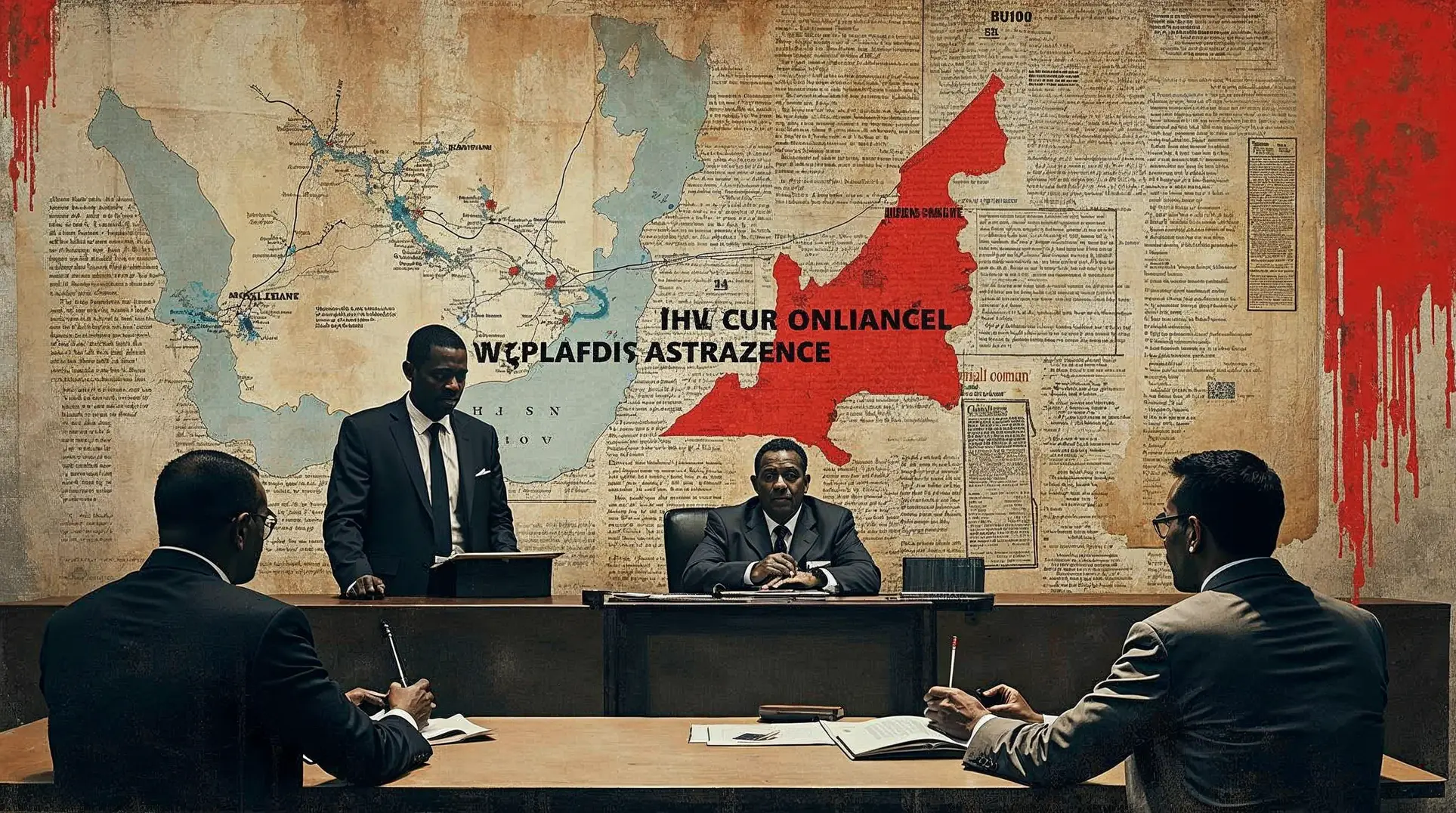
REVEALED: Why Israel's UNRWA ban violates binding UN treaty obligations—and the absolute legal duty to feed Gaza that has no military exceptions. The full legal architecture exposed.
A pattern of non-compliance: The gap between law and reality
The ICJ's October 2025 advisory opinion is not the first time the court has sought to clarify Israel's legal obligations in the Occupied Palestinian Territory. In July 2024, the ICJ issued a comprehensive advisory opinion declaring that Israel's continued presence in the OPT is unlawful and must end "as rapidly as possible." That opinion found that Israel's policies constitute violations of the prohibition on racial segregation and apartheid, and that all states have an obligation not to recognize or support the illegal situation.
The response from Israel and its allies was instructive. Israel categorically rejected the ruling. The United States, United Kingdom, and Germany—while expressing varying degrees of rhetorical support for international law—took no meaningful action to enforce compliance. The UN General Assembly adopted a resolution in September 2024 demanding that Israel end its unlawful presence within 12 months. That deadline has now passed. Israel remains.
The pattern repeats with the genocide case brought by South Africa. In January 2024, the ICJ issued provisional measures ordering Israel to prevent genocidal acts, prevent and punish incitement to genocide, and "take immediate and effective measures to enable the provision of urgently needed basic services and humanitarian assistance." In March 2024, the court issued additional measures, unanimously ordering Israel to ensure "the unhindered provision at scale" of humanitarian assistance, "including by increasing the capacity and number of land crossing points."
Human Rights Watch found that in the month following the January 2024 order, fewer trucks entered Gaza than in the weeks preceding it. Amnesty International documented that Israel had "failed to take even the bare minimum steps to comply." By February 2024, UN Special Rapporteur Francesca Albanese stated that Israel appeared to be in breach of the ICJ orders, with Israeli forces having killed at least 1,755 Palestinians in the two weeks following the ruling while continuing to block humanitarian aid.
The October 2025 advisory opinion arrives in this context. It is not a novel legal finding—it is a restatement and clarification of obligations that Israel has systematically violated for years. The question is whether this time will be different.
The UNRWA crisis: Dismantling the lifeline
UNRWA is not simply another aid agency. Established by the UN General Assembly in 1949, it has for more than seven decades provided education, healthcare, and social services to Palestinian refugees across the Middle East. In Gaza, where 80% of the population relied on humanitarian aid even before October 2023, UNRWA has been the backbone of civilian survival.
Since October 7, 2023, UNRWA has delivered two-thirds of all food assistance in Gaza and provided shelter to over one million displaced persons. More than 200 UNRWA staff members have been killed in the conflict—the highest death toll for UN personnel in any single conflict in the organization's history. Israeli forces have destroyed numerous UNRWA facilities, including schools and health clinics that were serving as shelters for displaced families.
Israel's campaign against UNRWA intensified in January 2024, when it alleged that 12 of the agency's employees had participated in the October 7 attacks. The allegations prompted 16 countries to suspend or pause funding, totaling approximately $450 million. The UN Secretary-General appointed an Independent Review Group to assess UNRWA's neutrality framework. The resulting Colonna Report, released in April 2024, concluded that Israel had not provided evidence to support its broader claims that many UNRWA employees were affiliated with terrorist organizations. UNRWA dismissed nine staff members, and several major donors resumed funding.
But Israel was not satisfied. In October 2024, the Knesset passed legislation banning UNRWA from operating within Israel and occupied East Jerusalem, effectively crippling the agency's ability to function in Gaza. Israeli officials described UNRWA as "infested with terror activities" and accused it of "colluding with Hamas."

EXPOSED: The $17.9 billion secret—how U.S. weapons flow continues despite binding legal obligations, and why powerful allies are choosing geopolitics over genocide prevention.
The humanitarian reality: Children dying while aid sits miles away
The legal abstractions of the ICJ opinion collide with brutal reality on the ground. Since March 2, 2025, Israel has prevented food, medicine, and other essential supplies from reaching Gaza's civilian population. Trucks loaded with aid sit at crossings, their contents desperately needed by a population on the brink of famine. The World Food Programme reports that it has delivered more than 6,700 metric tons of food since the fragile ceasefire began in October 2025—enough for close to half a million people for two weeks. But WFP's target is 2,000 metric tons daily. The current flow of around 750 metric tons per day is less than half of what is needed.
The consequences are measured in children's lives. By mid-April 2025, 4,692 children had been diagnosed with acute malnutrition. UNICEF reported in February 2024 that 90% of children under age two and 95% of pregnant and breastfeeding women faced "severe food poverty." The Integrated Food Security Phase Classification (IPC) concluded in late December 2023 that over 90% of Gaza's population was at crisis level of acute food insecurity or worse, with the population facing famine if conditions persisted. Those conditions did persist. They worsened.
Medical professionals describe conditions that are almost unimaginable. Doctors Without Borders has documented patients dying from preventable diseases because basic medicines are unavailable. Burn victims require significantly more calories to heal, but are placed on subsistence rations. Premature infants die because incubators lack power. Surgical procedures are performed without anesthesia because supplies have run out.
The reported Israeli plan to allow limited food distribution—creating six hubs in South Gaza serving 5,000 to 6,000 households each with 44-pound parcels every week or two—has been denounced by UN officials as wholly inadequate. The plan would leave civilians in North and Central Gaza to starve. It would provide standard-size parcels regardless of household size or specific needs. It is, as the UN Secretary-General, Under-Secretary-General for Humanitarian Affairs, and the Humanitarian Country Team stated, an arrangement that "does not fully respect the humanitarian principles." They have refused to participate.
This is the context in which the ICJ's advisory opinion must be understood. The court is not issuing abstract legal pronouncements. It is attempting to save lives. The question is whether anyone is listening.
What happens next: The limits of law without power
The ICJ's advisory opinion will now be transmitted to the UN General Assembly, which requested it. The Assembly could adopt a resolution demanding compliance, as it did following the July 2024 opinion on the illegality of Israel's occupation. That resolution demanded Israel end its unlawful presence within 12 months—a deadline that has passed without consequence.
The UN Security Council could also act, but is unlikely to do so. The United States has consistently used its veto to shield Israel from binding Security Council action. Russia and China have called for enforcement of ICJ rulings, but their own records on international law compliance undermine their credibility. The council remains paralyzed.
Individual states could take unilateral action. Some have imposed sanctions on Israeli settlers involved in violence in the West Bank. The number of states doing so has increased, but the measures remain limited and largely symbolic. A comprehensive arms embargo—the most effective tool to compel compliance—remains politically unthinkable for Israel's major arms suppliers.
Civil society and international organizations will continue to document violations and advocate for accountability. Humanitarian agencies will continue their work under impossible conditions, risking their staff's lives to deliver aid. Legal experts will continue to build the evidentiary record for future accountability mechanisms. But none of this will stop children from starving today.
The ICJ has done its job. It has clarified the law. It has identified Israel's obligations. It has rejected Israel's justifications. The court has spoken with clarity and authority. But the court has no army, no sanctions regime, no enforcement power. It has only the weight of law—and law, without political will, is merely words on paper.
The deeper crisis: When international law becomes optional
The Gaza crisis exposes a fundamental flaw in the architecture of international law: the system depends entirely on voluntary compliance and collective enforcement. When powerful states choose to ignore or actively undermine legal obligations, the system collapses. When geopolitical interests override legal commitments, the rule of law becomes a façade.
This is not unique to Israel and Palestine. The same dynamic plays out in Myanmar, where the ICJ is hearing a genocide case brought by Gambia, and in Sudan, where the court is considering allegations against the UAE. In each case, the legal questions are clear. The factual records are well-documented. The court issues authoritative rulings. And then—nothing. Or very little.
The danger is not merely that individual violations go unpunished. The danger is that the entire system of international law loses credibility. If states can systematically violate the Geneva Conventions, ignore ICJ rulings, and face no meaningful consequences, then what is the point of the law? If humanitarian obligations are treated as optional, subject to political calculation and strategic interest, then the protection of civilians becomes contingent on the goodwill of the powerful—a return to a pre-legal order where might makes right.
The ICJ's October 2025 advisory opinion on Israel's obligations to facilitate UN aid to Gaza is important. It is legally sound. It is morally necessary. But it will not, on its own, feed a single hungry child or save a single life. That requires something the international legal system cannot provide: the political will to enforce the law, even when it is inconvenient, even when it challenges powerful allies, even when it demands sacrifice.
Until that will emerges—if it ever does—the gap between law and reality will remain. And children will continue to die while aid sits in trucks, miles away, waiting for permission that may never come.
Subscribe to our free newsletter to unlock direct links to all sources used in this article.
We believe you deserve to verify everything we write. That's why we meticulously document every source.


