


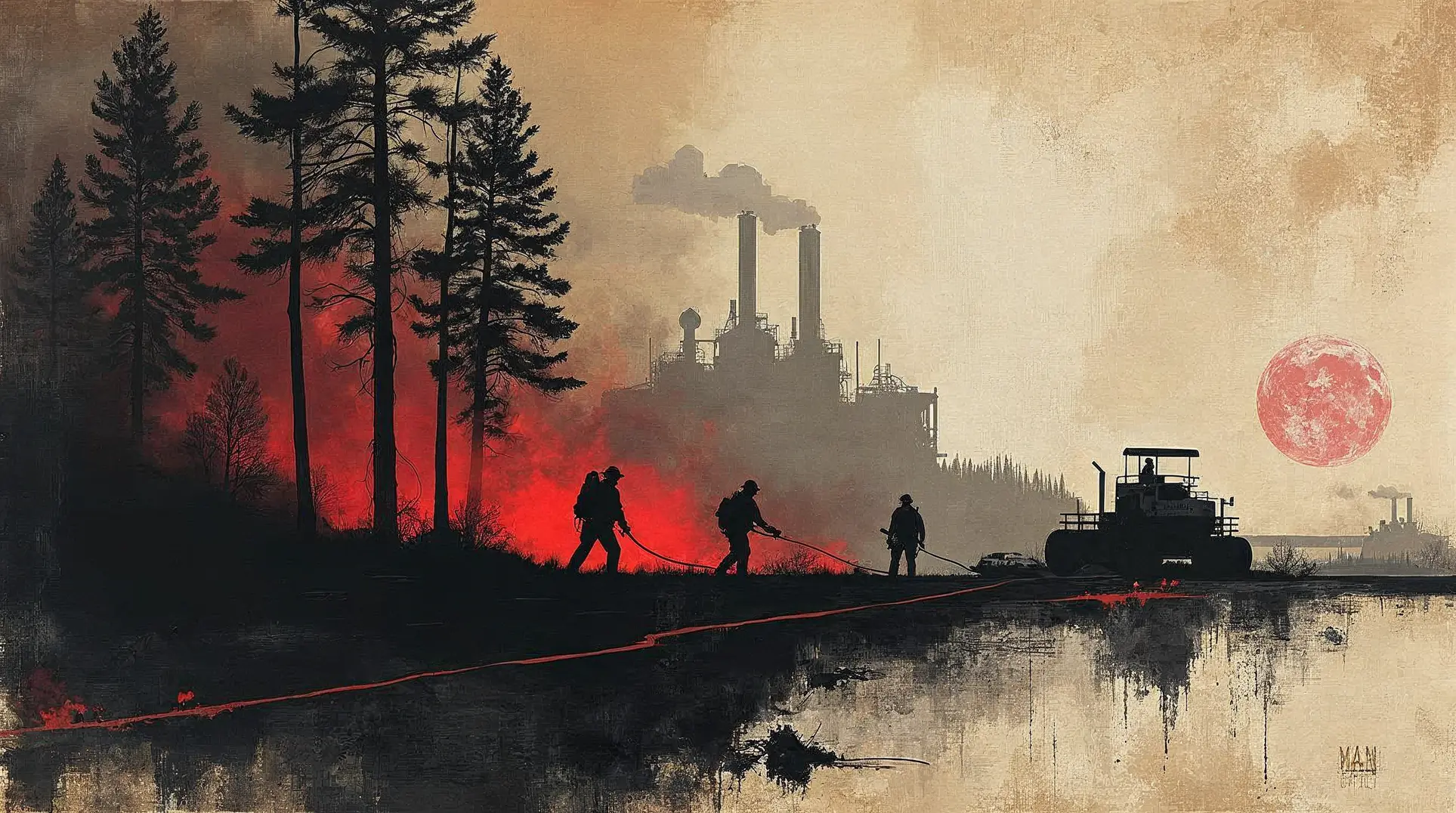
The Gironde megafire remains "stabilized but not contained" after a second consecutive calm night, with 42,000 hectares burned — an area four times the size of Paris — and the fire front sitting 15 kilometers from the Bordeaux metropolitan area, according to the Gironde prefecture as of Tuesday morning. Light rain and higher humidity overnight slowed the blaze's advance, but officials have not declared any measure of containment.
The window is narrow. Météo-France forecasts show a fourth major heatwave arriving Wednesday, with temperatures reaching 37-40°C across the Bordeaux region — conditions that could reverse the fragile gains firefighters have made since Crisis.Zone reported nearly 270,000 combined evacuations across France and Spain on July 25. Evacuation figures in Gironde alone have since grown to 220,000, now described by officials as the largest peacetime evacuation in modern French history.
The fire "has a life of its own"
Interior Minister Laurent Nuñez said the blaze "has a life of its own," generating its own winds and advancing erratically toward Bordeaux. Marc Vermeulen, director of fire and emergency services in Gironde, confirmed that a pyrocumulonimbus — a fire-generated thunderstorm capable of producing its own lightning and unpredictable winds — formed over the weekend and spawned additional ignitions. The phenomenon, rare in France but documented in Canada and Australia, means the fire can flare regardless of ground-level conditions.
FNSPF spokesperson Eric Brocardi called the overnight rain a "reprieve," adding: "It's a race against time" to cut firebreaks before temperatures rise again. President Emmanuel Macron, visiting the crisis coordination center in Bordeaux, said "the coming weeks will be tough and we have to hold out," describing the situation as "the toughest since the Second World War."
Observers are reading: What the fire's proximity to nuclear-fuel production sites means if Wednesday's heatwave shifts the wind.
Become an Observer — it's free. Get full access to all Crisis.Zone analysis, briefings and breaking coverage.
Spain faces a parallel deadline
In Spain, roughly 116,000 people have been evacuated nationwide, with 170,000 hectares burned in 2026 — a sixfold increase over the same period last year. Madrid's fire is "gradually improving," according to regional authorities, who have allowed some elderly evacuees to return. Valencia and Castellón present the opposite trend: a new blaze has forced 15,000 evacuations and burned over 6,500 hectares, prompting a visit from Prime Minister Pedro Sánchez. Spain's Interior Minister Fernando Grande-Marlaska called Monday and Tuesday "absolutely crucial days" before Spain's own fourth heatwave begins Wednesday and runs through at least Sunday.
The dual national emergencies follow directly from the pattern Crisis.Zone documented on July 13, when water-bombers were deployed to the Paris region for the first time after a June heatwave that killed roughly 1,000 people in France and left the country's forests critically dry.
Wednesday's heatwave is the story's hinge. Whether the fire remains "stabilized" or spreads again will be determined within 48 hours, and no return of evacuees is possible in Gironde until officials say otherwise.
Become an Observer — it's free — to unlock direct links to all sources used in this article.
We believe you deserve to verify everything we write. That's why we meticulously document every source.


