


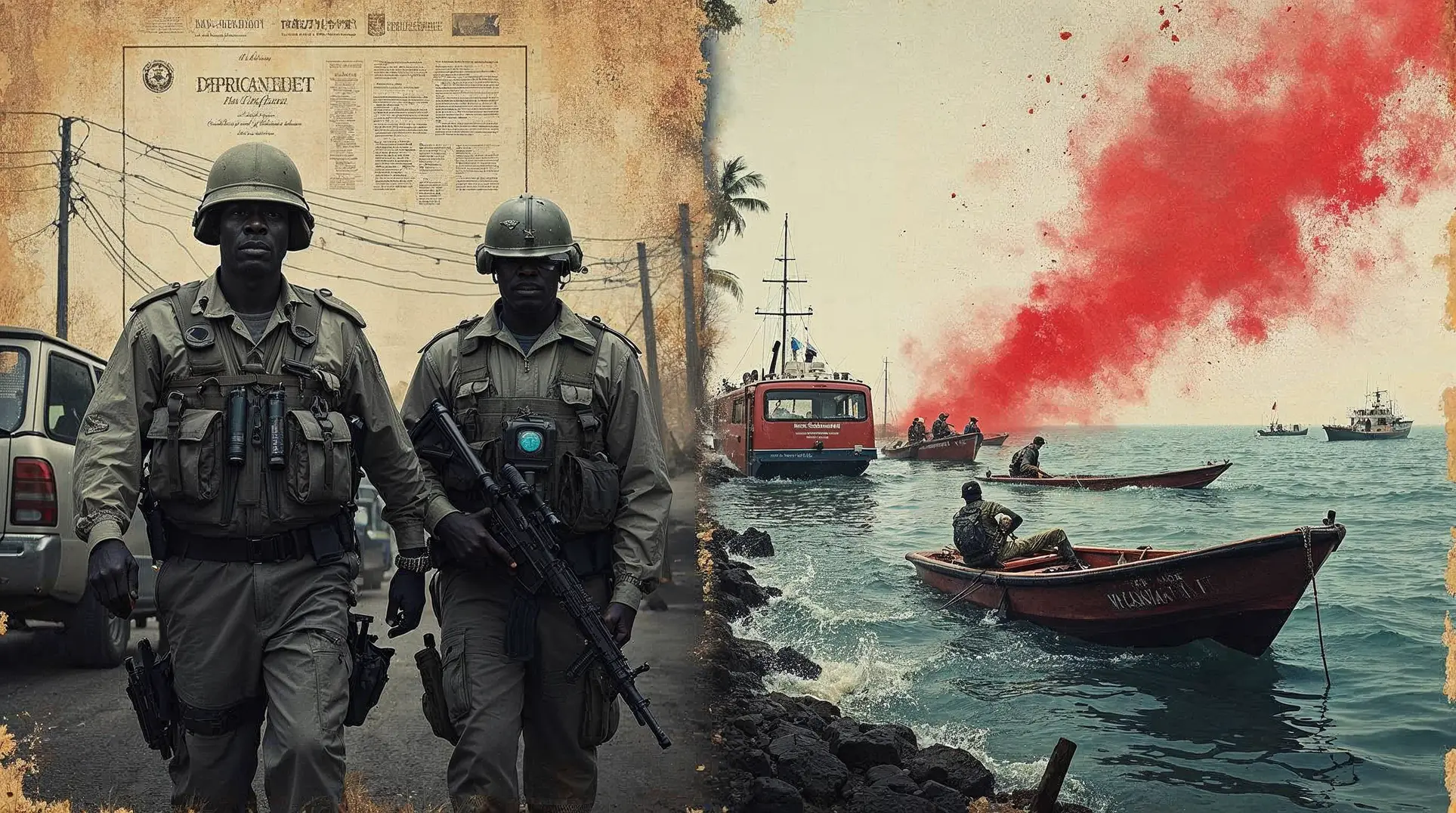
The overnight capsizing of a migrant boat off Gambia's northwest coast on January 1, 2026, has left at least seven people dead and more than 100 missing, according to the country's defence ministry. Rescue teams pulled 96 survivors from the Atlantic waters, ten of whom remain in critical condition, but the vessel was believed to be carrying over 200 people. Search and recovery operations continue, though the chances of finding survivors diminish with each passing hour. This tragedy unfolds on what has become the world's deadliest migration route—the Atlantic passage to Spain's Canary Islands.
This is not an aberration. It is the entirely predictable outcome of a system designed to manage symptoms rather than address causes. The bodies recovered from Gambian waters represent not random misfortune but the human cost of policies that criminalize movement while leaving the conditions that compel it untouched.
A route defined by death
The statistics surrounding the Atlantic route reveal a crisis of staggering proportions. Over 46,000 migrants reached the Canary Islands in 2024, setting a new European Union record. But these arrivals tell only part of the story. According to Spanish NGO Caminando Fronteras, more than 10,000 people died attempting this journey in 2023 alone—a 58% increase from the previous year. The mathematics are brutal: for every two people who successfully make landfall, approximately one dies trying.
Gambia has emerged as a primary departure point for this deadly passage. Just eight months before this latest disaster, in August 2025, another boat departing from Gambian shores capsized, killing 70 people. The repetition is the pattern. These are not isolated incidents but regular occurrences along a route where overcrowded, unseaworthy vessels navigate over 1,500 kilometers of open ocean toward the Canaries. The boats are designed to carry perhaps 30 people; smugglers pack them with 200 or more, maximizing profit while externalizing risk onto bodies that African states and European powers have deemed expendable.
Members are reading: Why December's smuggler arrests predicted January's mass drowning, and what the enforcement paradox reveals about who migration policies actually serve.
Connecting dots to continental crisis
This capsizing cannot be understood in isolation from broader West African dynamics. The same structural forces driving displacement across the Sahel—documented in the 4 million people displaced as schools and hospitals collapse—are propelling people onto these boats. When JNIM blockades in Mali drive thousands to Mauritania, those displaced populations don't simply stop moving at the first border. They join migration streams flowing toward perceived safety and opportunity, increasingly concentrated along the Atlantic coastal route as Saharan pathways become more militarized.
The Gambian state's inability to provide alternatives for its youth mirrors failures across the region. This is not about individual state weakness but about the post-colonial economic architecture that positions West African countries as labor exporters and resource extraction zones rather than sites of productive investment and opportunity. When the formal economy offers nothing, the informal migration economy—with its smugglers, agents, and facilitators—becomes the only visible pathway to a different future.
Predictable tragedies, chosen policies
Another boat will leave Gambian shores within days, likely before the bodies from this disaster are fully recovered. More interceptions will follow, accompanied by press releases celebrating state vigilance. And more people will drown, their deaths catalogued as tragedies rather than policy outcomes.
This pattern will continue until West African governments and their European partners acknowledge what the evidence has long demonstrated: enforcement alone cannot stop people from moving when remaining in place offers no viable future. The choice is not whether migration will happen, but whether policymakers will continue managing it through criminalization and death, or finally address the structural conditions that make a 20% mortality rate seem like acceptable odds.
Subscribe to our free newsletter to unlock direct links to all sources used in this article.
We believe you deserve to verify everything we write. That's why we meticulously document every source.


