


Bamako's fuel stations stood empty through much of November 2025, their pumps dry as queues stretched for blocks and rolling blackouts dimmed the Malian capital's nights. The cause was not a supply chain glitch but deliberate economic warfare: Jama'at Nasr al-Islam wal Muslimin (JNIM) had spent three months systematically destroying fuel convoys from Senegal, Côte d'Ivoire, and Guinea, torching over a hundred tankers and forcing schools to close as the junta rationed scarce diesel for government and military use. By early December, JNIM had extended its interdiction zone to Niger's border, signaling an intent to seal every supply route into the heartland of the Alliance of Sahel States.
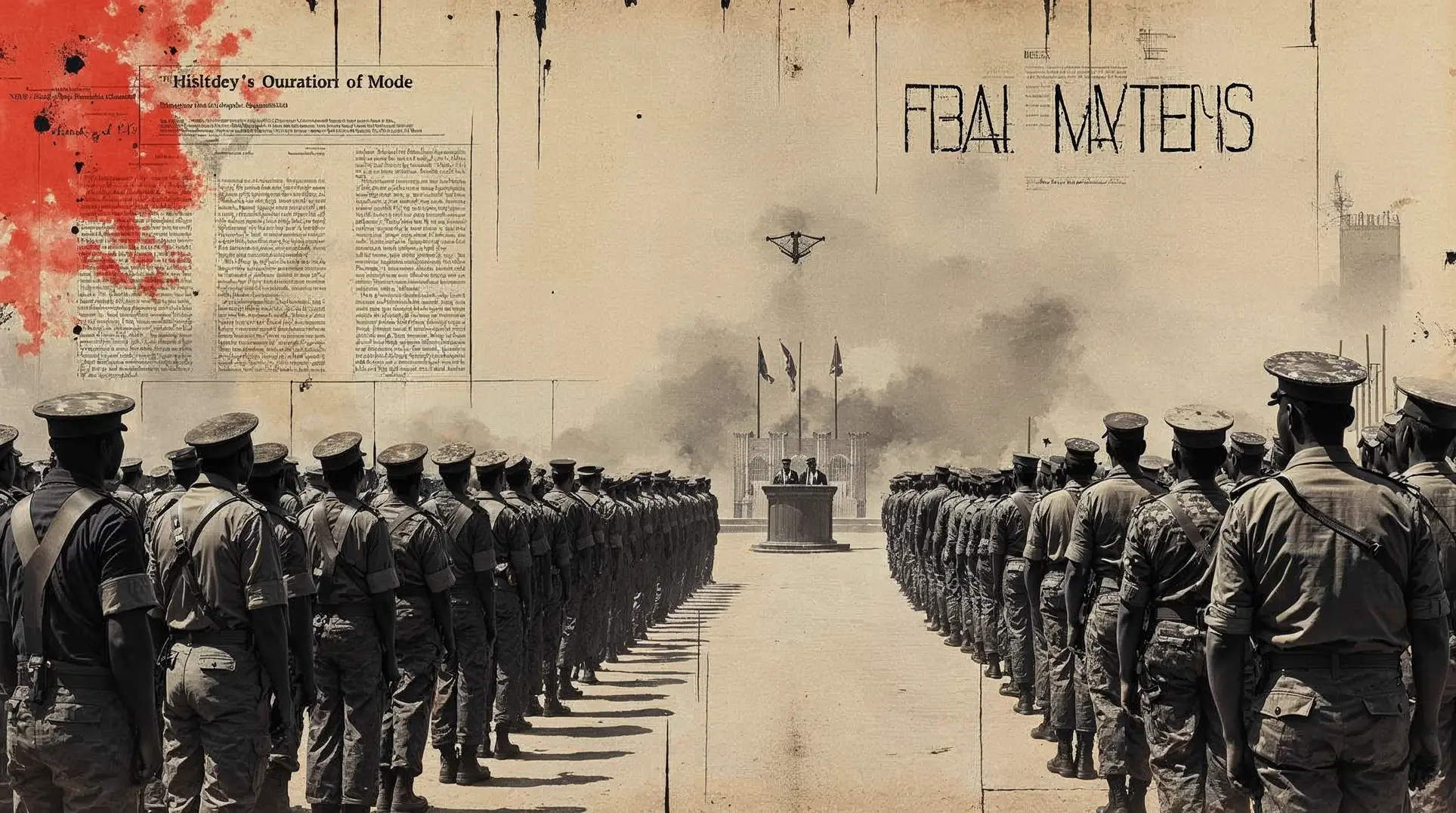
The siege worked. On December 20–21, Mali, Burkina Faso, and Niger unveiled a 5,000-strong joint security force at a Bamako ceremony attended by defense ministers and diplomats—a high-profile riposte to an insurgency that now wields veto power over commerce. Yet the move arrives amid a fractured regional architecture: the AES trio withdrew from ECOWAS earlier in 2025, severing the intelligence-sharing and cross-border legal frameworks coastal neighbors need most as JNIM and the Islamic State Sahel Province (ISSP) probe southward into Benin, Togo, and northern Nigeria. The result is a paradox of concentrated manpower in the Sahel's interior and widening coordination gaps along the borderlands where jihadist expansion is already underway.
Economic strangulation as insurgent statecraft
JNIM's blockade, launched in early September 2025, transformed fuel from a commodity into a weapon of strategic coercion. Ambushes targeted the principal corridors: the Kayes–Bamako highway carrying Senegalese imports, the Sikasso–Zégoua axis from Côte d'Ivoire, and secondary routes through Koulikoro. Satellite imagery confirmed large convoy burn sites through October; field reports tallied scores of charred tankers and drivers killed or forced to abandon loads. The consequences rippled fast—fuel stations shuttered, prices spiked, and the junta imposed strict rationing, prioritizing state vehicles and military logistics. Schools across Mali closed for two weeks in late October as authorities diverted fuel from civilian transport, while Bamako's nighttime lights visibly dimmed in satellite data as blackouts intensified.
The blockade did more than disrupt supply; it demonstrated insurgent governance. By controlling movement and commerce on major arteries, JNIM mimicked state functions—taxation, arbitration, and the issuance of safe passage—while the junta scrambled for workarounds. In October, Malian officials explored localized negotiations with JNIM intermediaries, securing a protected convoy into Bamako, but attacks resumed within weeks. The optics were damaging: relief brokered by insurgents undercut the junta's authority while entrenching JNIM's role as gatekeeper. Thousands of Malians, facing fuel scarcity, service collapse, and escalating insecurity, fled toward Mauritania, with over a thousand registered at the Fassala crossing in late October alone, adding to a broader refugee surge that has tested neighboring states' absorption capacity since 2024.
The tactic reflects a broader shift in jihadist strategy across the Sahel. Where earlier phases emphasized territorial conquest and spectacular violence, JNIM now leverages economic pressure and civilian coercion to hollow out state presence without the cost of sustained urban offensives. Fuel interdiction is labor-efficient, politically potent, and replicable—a model that ISSP has mirrored with pipeline sabotage in Niger's Dosso region, targeting the Benin–Niger energy corridor to strangle government revenue and coastal export flows.
Members are reading: How the ECOWAS–AES schism hands JNIM and ISSP the coordination gap they need to entrench along Africa's most vulnerable coastline.
Forward indicators and the southern drift
The AES force will be tested not by ceremony but by deployment choices in the coming months. Can Mali, Burkina Faso, and Niger sustain large-scale convoy escorts on the Kayes–Bamako and Sikasso–Bougouni axes without hollowing garrisons in rural zones where JNIM thrives on state absence? Will the juntas resume or broaden talks with insurgent intermediaries, trading tactical relief for strategic concession? And can any confidence-building measure—intelligence liaisons, corridor task forces, joint patrols—emerge between AES and coastal ECOWAS members before JNIM replicates fuel interdiction tactics against Beninese or Togolese logistics networks?
The answers will determine whether the Sahel's crisis remains contained or cascades into the littoral belt. JNIM and ISSP have already demonstrated their capacity to exploit coordination vacuums, embed in cross-border economies, and turn infrastructure into leverage. The AES joint force addresses one dimension of the threat—manpower at chokepoints—but the center of gravity has shifted south into terrain where troop aggregation alone cannot substitute for the intelligence exchange, legal cooperation, and political trust that regional fragmentation has destroyed. Bamako's fuel queues were a siege in microcosm; the risk now is that the blockade model migrates to Cotonou, Lomé, and Niamey's southern corridors, where state response capacity is thinner and the hinterland deeper. African agency will shape that trajectory—through AES capitals' willingness to restore dialogue with estranged neighbors, coastal states' investment in border hardening and community resilience, and regional blocs' ability to repair institutional sinews faster than insurgents can sever them.
Subscribe to our free newsletter to unlock direct links to all sources used in this article.
We believe you deserve to verify everything we write. That's why we meticulously document every source.


