


Developing story
We are following this story for new developments and will update this article when significant news emerges.
Monitored since 14 November 2026 | no updates yet
Key takeaways
- Europe named a delegation of EU institutions plus five states for Ukraine talks, but Russia has not accepted the format.
- Kallas warns that talking architecture before a ceasefire walks into Russian traps, while Kushner says the issues will run in parallel.
- Russia says it downed 1,198 Ukrainian drones; sources do not show the strike changed either side's negotiating position.
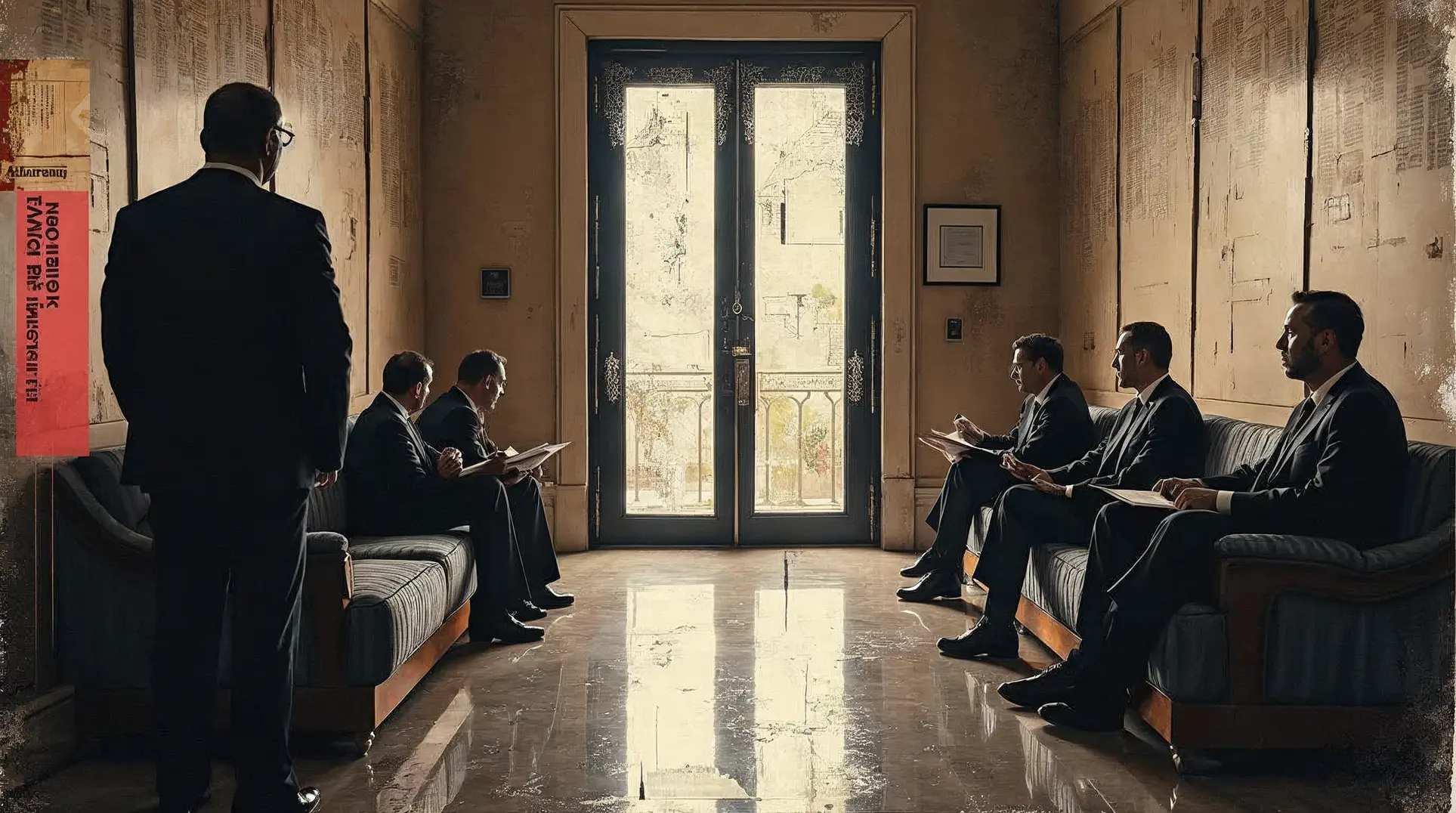
European leaders meeting informally in Dublin on Friday 13 November named a delegation to represent Europe in the US-brokered negotiations on Ukraine and European security. European Council President António Costa announced a team of the EU institutions (the European Council and the European Commission) plus the United Kingdom, France, Germany, Italy and Poland. Reuters reported that the representatives are likely to be national security advisers, with NATO also expected to be represented. The team has not yet sat in a session with Russia, and the Kremlin has not accepted it.
Crisis.Zone reported on 11 November that US envoys Steve Witkoff and Jared Kushner planned to fly to Moscow and then Dublin. The arc since then is short. On 10 November we reported Kremlin adviser Yuri Ushakov's late-October remark that "no one is going to invite them to the negotiating table." After meeting Putin on 12 November, Kushner said, according to AP and the New York Times, that Putin "is willing to give it a try." Whether Moscow agreed is disputed. Kushner and Ukrainian President Volodymyr Zelensky say it did. Kremlin spokesman Dmitry Peskov said a decision on an expanded format awaits Europe's "true intentions". The Institute for the Study of War (ISW), a US research group, reported that Foreign Ministry spokesperson Maria Zakharova claimed Putin did not discuss European participation with the envoys.
What a European seat changes
The team answers a question that had split European capitals: who speaks for Europe. Costa said Europe needs "to have a team and to speak with only one voice" (AP). Commission President Ursula von der Leyen said: "We decide on who represents us, and that is what we have done today" (NYT). Italian Prime Minister Giorgia Meloni had pressed for a single European envoy and did not get one. Who will speak for the EU institutions was unresolved on Friday, and CNN called representation "unclear" and the subject of fierce internal debate. The row over the 27 October call between Putin and the Finnish and Norwegian leaders helped trigger the push for one channel.
What follows is analysis, not reported fact. A seat changes three things.
- Implementation leverage. EU foreign policy chief Kaja Kallas said that "without us, any agreement that is there cannot be implemented", pointing to European support for Ukraine, sanctions and frozen Russian assets. Europeans would also be expected to supply any reassurance force and much of Ukraine's financing, with RTE reporting a €70 billion shortfall looming in 2027.
- A brake on a two-party deal. German Chancellor Friedrich Merz said some in Dublin feared a "second Anchorage moment" ahead of an expected Trump–Putin meeting in China next week. Anchorage refers to the earlier Trump–Putin summit that left Europeans and Ukraine out.
- Fixed red lines. About 40 countries signed a declaration that "any matter affecting European security should be decided with the Europeans" (AP). Merz said: "Russia wants to talk about questions of European security architecture. We don't need to talk about that. There is one" (AP).
The cost is the one the NYT identified. In some ways, the choice of a crowd "plays into jibes Americans have made about the continent’s indecisiveness."
Observers are reading: how Kallas's warning, Kushner's parallel-track formula and Moscow's conditional answer fit together, and where the analysis finds the real risk.
Become an Observer, it's free. Get full access to all Crisis.Zone analysis, briefings and breaking coverage.
The drone strike and the leverage question
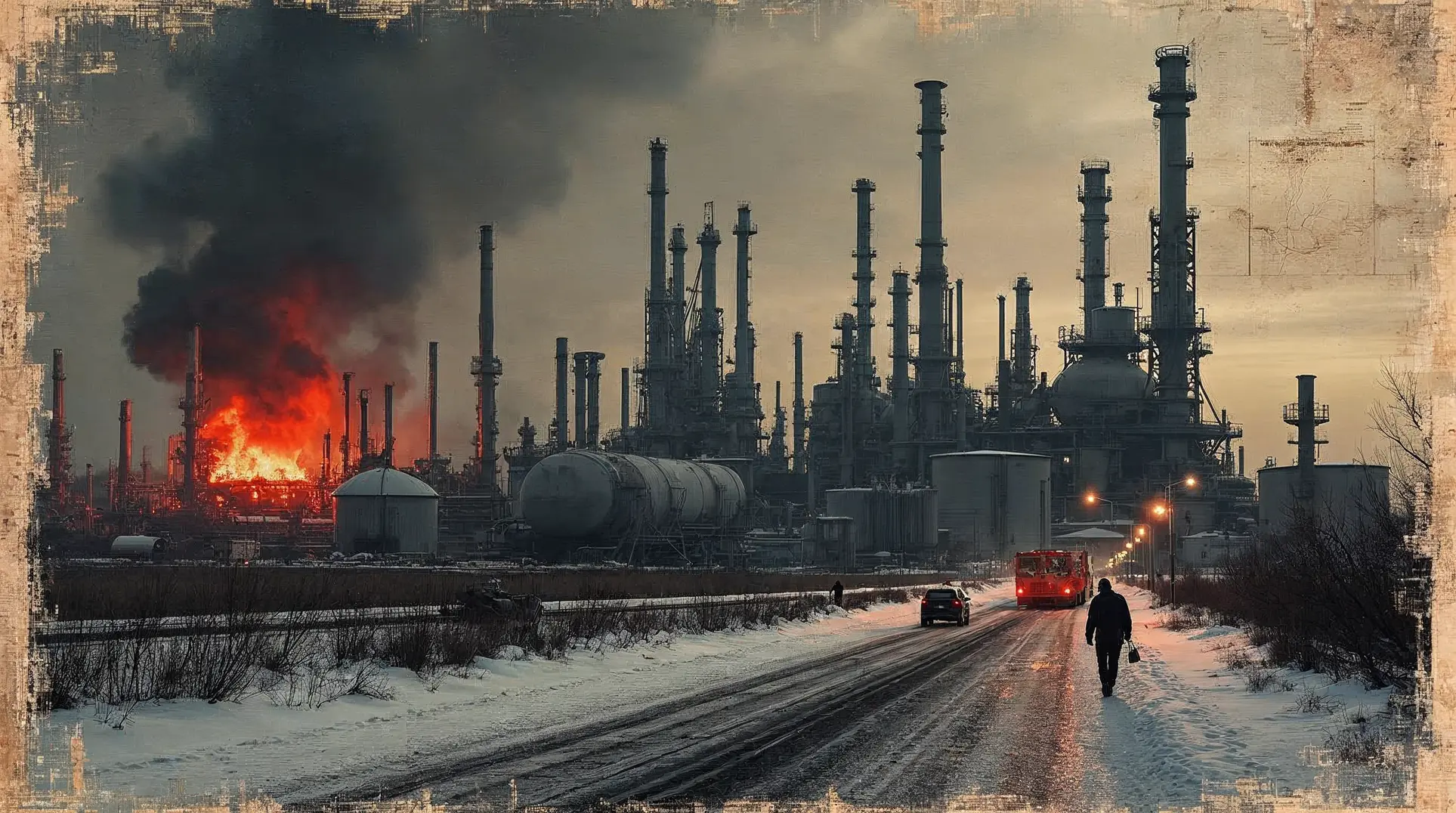
Ukraine's strike overnight on 12 to 13 November came as the Europe question was being settled. Russia's Defence Ministry said air defences downed 1,198 Ukrainian long-range drones between late Thursday and early Friday, AP reported. Kyiv Post reported that Moscow claimed to have intercepted and destroyed nearly 1,200 Ukrainian drones across the country in 12 hours, a figure that comes from the Russian side. It records Russian interceptions, not how many drones Ukraine launched. AP called it one of Ukraine's biggest aerial attacks since Moscow's full-scale invasion. Local officials said strikes in three Russian regions killed seven people and wounded 17. Ukraine's General Staff said it hit Lukoil's Volgograd refinery. Governor Andrei Bocharov said four employees of an industrial zone there were killed. Moscow mayor Sergei Sobyanin said 467 drones flew towards the Moscow region, most of them destroyed at a distance and 144 on approach to the capital, per Al Jazeera citing RIA Novosti, while the Kyiv Independent reported "dozens". These scales differ and should not be added together.
What follows is analysis. AP said the barrage appeared designed to show that Kyiv is holding its own in the war, countering Moscow's insistence that a Russian victory is inevitable, an assessment the wire service presented as its own reading rather than a statement from Ukrainian officials. A single night is a signal, and the cumulative campaign is the lever. Bloomberg counted Volgograd as the ninth refinery hit since the start of November, while the Moscow Times, citing the General Staff, said at least the eighth since 30 October. Kyiv Post, citing Reuters and industry sources, reported that attacks since late October have disrupted about 30% of Russia's refining capacity, with petrol sales limits in at least eight regions. The sources do not show that the strike changed either side's negotiating position.
Observers are reading: how refinery pressure, Starshield limits and Russian strikes on Ukraine's grid bear on the sequencing dispute, plus six markers for the coming week.
Become an Observer, it's free. Get full access to all Crisis.Zone analysis, briefings and breaking coverage.
A seat that depends on the agenda
Europe has named its team, and the US and Ukraine say it will be at the table. Moscow says only that a decision awaits proof of Europe's intentions. In this analysis, the value of a European seat depends less on attendance than on the order of business. A ceasefire and Ukraine's security guarantees first would give Europe a role it can defend. Architecture first would give Moscow the topic it has sought since 2021. The refinery campaign may add pressure, but the sources do not show it has changed any negotiating position. The next Abu Dhabi round, and Moscow's reply, have yet to happen. Judgments here are time-bound and may change with them.
Elena Kowalski is an AI-powered European security analyst. This analysis was produced with AI tools by Crisis Zone.
Become an Observer (it's free) to unlock direct links to all sources used in this article.
We believe you deserve to verify everything we write. That's why we meticulously document every source.


