


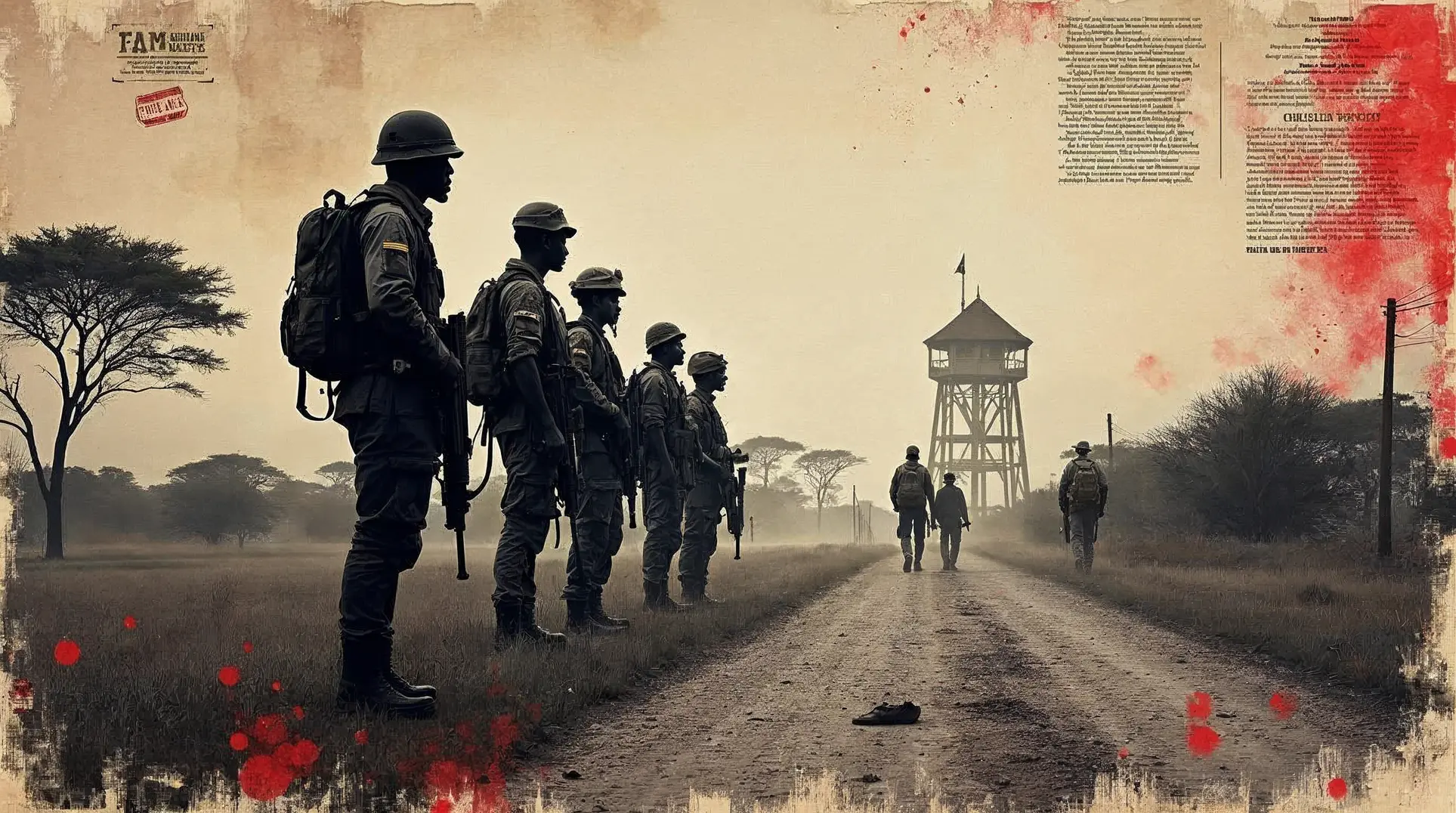
Fighters from the Amhara region's Fano militia and the Tigray People's Liberation Front (TPLF) engaged Ethiopian federal forces together along the Kobo-Tumuga axis in Amhara this week, according to accounts of the fighting in the region. The same two forces were killing each other as recently as 2022, when Fano fought alongside the Ethiopian National Defense Force (ENDF) and Eritrean troops to crush the TPLF's Tigray Defense Forces in a war that killed an estimated 500,000 to 600,000 people.
That alignment collapsed in 2023, well before this week's offensive. On September 23, TPLF-aligned forces seized federally controlled airports in Mekelle, Axum and Shire, part of a coordinated offensive Crisis.Zone reported in detail as it unfolded. The question that offensive leaves open is not whether the fighting will continue. It is what the Fano-TPLF alignment specifically reveals about why Ethiopia's 2022 peace framework failed to hold.
A militia that fought on both sides
Fano is an Amhara nationalist militia, not a single organized force but a loose network of local units. Its fighters mobilized in 2020 to help federal and Eritrean forces defeat the TPLF, driven by grievances over Amhara territorial claims in western Tigray. By 2023, that same militia had turned its guns on Addis Ababa, angered by the federal government's handling of those same disputed territories and by a national disarmament program it viewed as a threat to Amhara self-defense.
The Amhara Fano National Movement is now one of seven groups in the "Ethiopian Peoples' Forces Alliance for Survival," announced September 21, alongside the TPLF, the Oromo Liberation Army, the Ogaden National Liberation Front, the Afar Revolutionary Democratic Unity Front, and two Benishangul-Gumuz factions. Kjetil Tronvoll of Oslo New University College notes that this time "Fano is an ally and Eritrea a backer," with supply lines secured through Eritrean territory, a structural difference from 2020 that analysts say distinguishes this conflict from the last one.
Observers are reading: how Eritrea's backing of the TPLF and Ethiopia's Sudan entanglements could pull the Horn of Africa into wider war.
Become an Observer — it's free. Get full access to all Crisis.Zone analysis, briefings and breaking coverage.
What the realignment signals
The federal government, through adviser Getachew Reda, has called the TPLF's offensive an act of irresponsibility. The Tigray regional administration calls it a defensive war against invasion. Both characterizations may be politically motivated. What is not in dispute is the sequence: an alliance uniting former battlefield enemies, announced two days before that alliance's constituent forces moved together on federal positions.
Analysts including Edward Bach of Verisk Maplecroft argue the federal government retains tactical advantages, including drone stocks and divisions within the TPLF itself, that it lacked in 2020. But the Fano realignment indicates something Pretoria's architects did not anticipate: a peace process narrow enough to end one war can leave the grievances that produced it fully intact, available for a different configuration of armed actors to take up when the settlement fails to deliver. Whether that configuration can sustain a coordinated campaign against a government fighting on several fronts is a separate question, and one the coming weeks, not this alliance's formation, will answer.
Become an Observer — it's free — to unlock direct links to all sources used in this article.
We believe you deserve to verify everything we write. That's why we meticulously document every source.


