


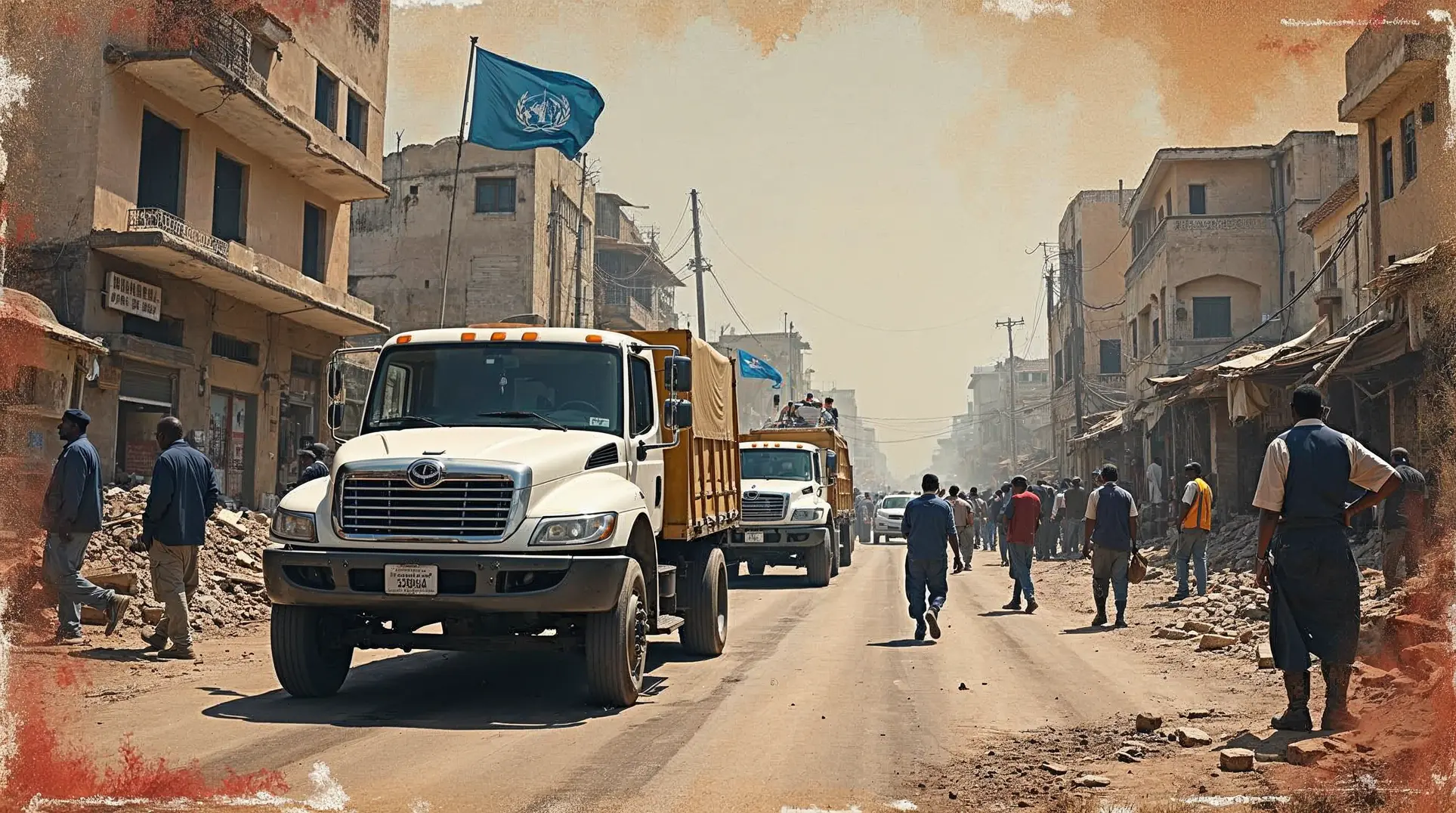
On December 29, 2024, a United Nations humanitarian team entered el-Fasher for the first time since the Rapid Support Forces overran Sudan's last government-held Darfur stronghold in October. What they found—deserted villages, traumatized civilians, rice selling for $100 per kilogram—was described by UN Humanitarian Coordinator Denise Brown as a "massive crime scene." But this was no revelation. The international community did not lack information about the atrocities unfolding in el-Fasher; it lacked the will to prevent them.
The visit's significance lies not in what it uncovered, but in what it confirms: that the world watched, documented, and ultimately permitted a foreseeable catastrophe. For months, reports detailed the RSF's rampage through the city—mass killings, sexual violence, the deliberate targeting of hospitals. The attack on Saudi Maternity Hospital alone reportedly killed over 460 patients and companions. The UN's presence simply timestamps an atrocity that was broadcast in real time, ignored by a global order increasingly selective about which civilian populations merit protection.
The Janjaweed's second genocide
The RSF's campaign in el-Fasher is not an aberration but a continuation. These forces are the institutional descendants of the Janjaweed militias that orchestrated Darfur's genocide two decades ago, rebranded and legitimized through their integration into Sudan's security apparatus. The ethnic targeting, the systematic sexual violence, the scorched-earth tactics—these are not new developments but refined repetitions of a documented playbook.
What has changed is the international response, or rather, its absence. In the 2000s, Darfur galvanized global attention, however belated. Student movements mobilized, celebrities advocated, and the International Criminal Court issued warrants. Today, as UN official Tom Fletcher observed, there is "blood on the sand, blood on the hands" and a "crisis of apathy" marked by a "very different global reaction." The EU's emergency air bridge to Chad represents crisis management, not prevention—a distinction that matters profoundly to the hundreds who died and the thousands now trapped in makeshift shelters without sanitation or medicine.
Members are reading: How external patronage networks and geopolitical calculations systematically disabled the mechanisms meant to prevent predictable genocide.
The price of selective outrage
The UN team's findings in el-Fasher—civilians sheltering in bombed-out buildings, bodies along evacuation routes to Tawila, entire villages emptied—represent the human cost of international hierarchy. These outcomes were foreseeable. The RSF's history, capacity, and intent were well-established. What was missing was not early warning systems or situational awareness, but the political will to act on available information.
Fletcher's characterization of "blood on the hands" implicates not just perpetrators but the global system that creates conditions for impunity. When the world demonstrates through inaction that certain populations can be targeted without meaningful consequence, it provides implicit authorization for future atrocities. El-Fasher becomes both victim and precedent, a test case proving that in Africa, even genocide repeated is genocide tolerated. The humanitarian team's visit, however necessary for coordinating aid, cannot absolve the international community of its failure to prevent the carnage it now seeks to document. The crime scene existed long before the investigators arrived.
Subscribe to our free newsletter to unlock direct links to all sources used in this article.
We believe you deserve to verify everything we write. That's why we meticulously document every source.


