


The International Atomic Energy Agency (IAEA) confirmed in a statement on X on Friday, September 18, that a drone struck the cooling tower of an operational reactor unit at Russia's Kursk Nuclear Power Plant in the early hours of Thursday, September 17. The reactor was operating at the time of impact. No fire broke out, the reactor's operating mode did not change, and radiation levels have remained normal, the agency said.
IAEA Director General Rafael Mariano Grossi called for "maximum military restraint to prevent the risk of a nuclear accident," describing any strike on nuclear facilities as "unacceptable." The plant sits roughly 450 kilometers south of Moscow, near the Russia-Ukraine border, and comprises four reactors built in the 1970s. Neither Kyiv nor Moscow had commented on the IAEA's statement as of this writing. Ukraine has not claimed or denied responsibility, and the agency assigned no blame.
A trajectory toward the core of the plant
This is not the first drone incident at Kursk. In August 2025, a combat drone detonated near the plant, damaging an auxiliary transformer and sparking a structural fire, with radiation again reported normal. In July 2026, the governor of Kursk region accused Ukraine of striking a cooling tower at Kursk II, the adjacent plant still under construction. Thursday's strike hit a cooling tower attached to an operational reactor unit, the closest any confirmed incident has come to active reactor infrastructure since Russia's full-scale invasion began in February 2022.
The strike landed amid one of the larger single-night drone exchanges of the war. Russian air defenses reportedly intercepted 629 Ukrainian fixed-wing drones across multiple regions, the Black Sea and the Sea of Azov, a figure that cannot be independently verified. Kursk region governor Alexander Khinshtein said 196 of those were shot down over his region alone. Poland's own recent decision to fortify engineers along Ukraine border crossings reflects the same underlying pattern: drone activity at this scale makes proximity incidents near sensitive infrastructure statistically more likely, independent of deliberate targeting.
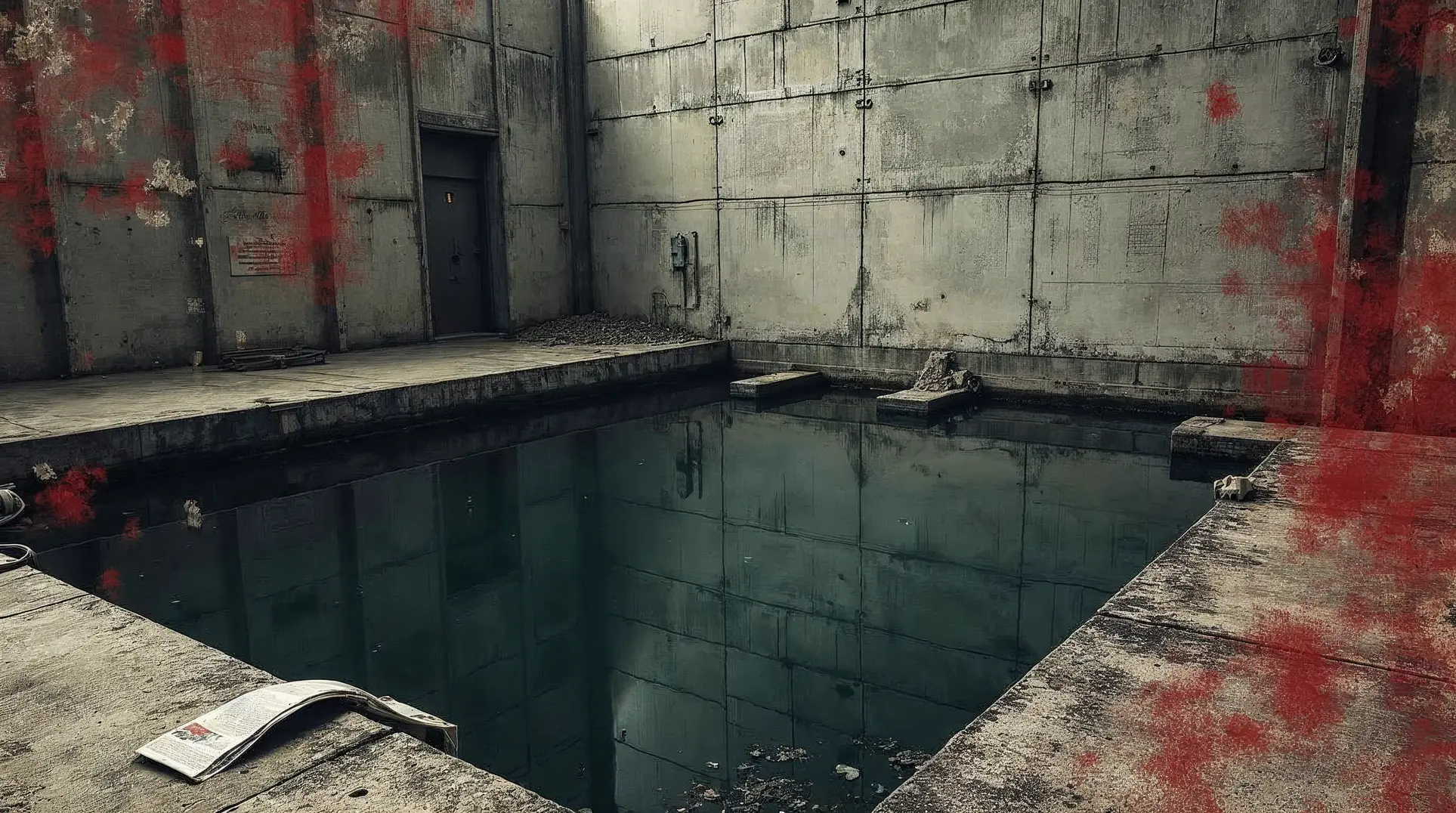
Observers are reading: how the Zaporizhzhia cooling pool data complicates the IAEA's authority to enforce restraint on Russian soil.
Become an Observer — it's free. Get full access to all Crisis.Zone analysis, briefings and breaking coverage.
What comes next
The Kursk incident produced no casualties and no confirmed radiological consequence, and it should not be read as evidence of an imminent nuclear accident. But each incident that fails to become a catastrophe lowers the perceived cost of testing proximity to reactor infrastructure again, a dynamic the IAEA's pillars were built to prevent, not manage indefinitely. Energy infrastructure targeting has recurred throughout the war, including the killing of three power plant workers in Ukraine's Donetsk region in February; nuclear sites now sit inside that broader pattern.
For European security planners, the relevant geography spans Kursk, Zaporizhzhia and Chernobyl, where a Russian drone damaged the containment arch in February 2025. The IAEA can warn and monitor. It cannot enforce. That gap will be tested again before Zelenskyy, who has said he plans to raise an energy ceasefire with Trump, meets him at the UN General Assembly, September 21-23, and before the next GUR update on Zaporizhzhia's cooling pool.
Become an Observer — it's free — to unlock direct links to all sources used in this article.
We believe you deserve to verify everything we write. That's why we meticulously document every source.


