


Developing story
We are following this story for new developments and will update this article when significant news emerges.
Monitored since 15 November 2026 | no updates yet
Key takeaways
- EFE reports 1,488 people reached the Canary Islands on 14 cayucos on Saturday, a provisional daily high for the route.
- El Hierro received 12 of the boats with 1,235 people, four days after Madrid declared a migratory emergency.
- Madrid approved €15.18 million and €1 million for the Red Cross on Tuesday, but no timetable exists for business compensation.
- Sources do not say how much new reception capacity is operating on El Hierro or what Torres's visit on Sunday found.
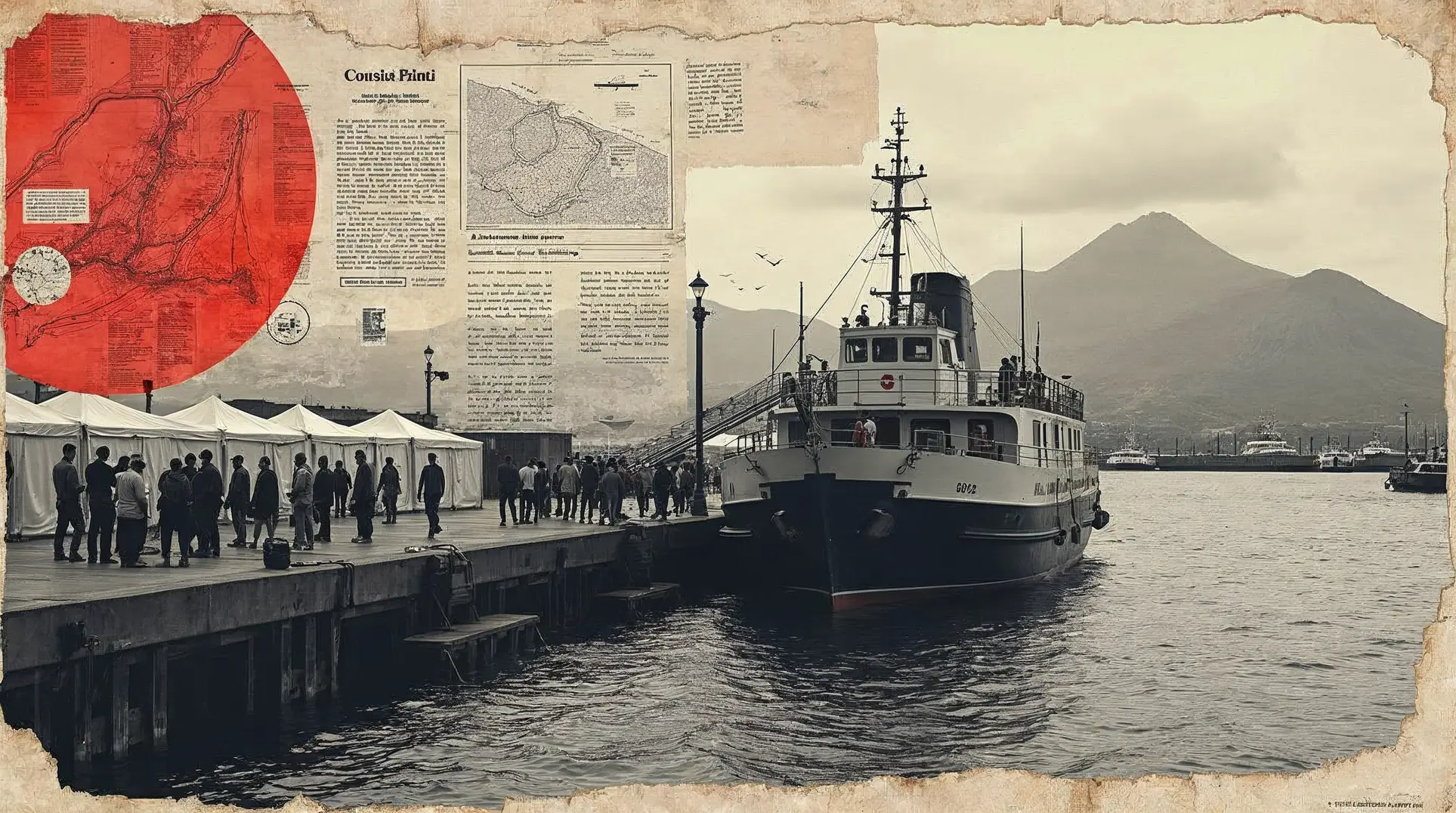
Rescuers brought 1,488 people ashore from 14 cayucos, wooden fishing boats, in the Canary Islands on Saturday, EFE reported. The Spanish news agency cited Salvamento Marítimo, Spain's maritime rescue service, and quayside assistance teams. The tally is provisional. EFE said the figures do not include two rescue operations that were still open in the early hours of Sunday. According to EFE's provisional tally, twelve of the boats, carrying 1,235 people, landed on El Hierro.
EFE and Cadena SER, a Spanish radio network, call it the highest daily total in the route's 32-year history. It passes the 1,461 people who arrived on 7 November 2020, when Arguineguín, on Gran Canaria, was the focal point. Reuters described it as the highest in a single day since 2020. An earlier AP count was lower, at 1,324 people on 14 boats. El Hierro has about 11,400 residents, according to Spain in English.
The day on the quay
The first boat reached La Restinga, the fishing port on El Hierro, at 04:01. It carried 148 people from Kayar, Senegal, and was brought in by the Navia, a Salvamento Marítimo vessel, according to EFE's timeline.
At 17:26 the largest single boat arrived with 240 people, including 12 women and 36 minors. The Salvamar Mízar assisted it after six days at sea from Gunjur, The Gambia. The last rescues included a boat with 171 people from M'Bour, Senegal, and another with 214 from Thiaroye sur Mer, Senegal. The Guardia Civil patrol boat Río Guadiato and the Navia split the 214 between two ports. They put 140 ashore at La Estaca and 74 at La Restinga.
Two other boats landed elsewhere. The Urania brought 203 people to Arguineguín around midnight. They had been rescued about 100 miles south of El Hierro, and the boat had left Gunjur. Seventeen were taken to hospital. At Los Cristianos, Tenerife, 50 people landed around midday, and one went to hospital.
EFE counted at least 108 women and 167 minors. Reuters and EFE reported that most people came from Senegal, Gambia and Guinea-Conakry. Crossings lasted four to seven days, assistance teams told EFE. Six Salvamento Marítimo vessels and two Guardia Civil patrol boats worked the arrivals. On Friday, eight cayucos with 843 people had landed. The two-day total was 2,331 people on 22 boats, EFE reported, including 1,488 people on fourteen boats on Saturday.
Observers are reading: how Tuesday's announced measures compare with the pressure on El Hierro, and which questions remain open.
Become an Observer, it's free. Get full access to all Crisis.Zone analysis, briefings and breaking coverage.
What is not yet known
Officials and media offer explanations for the autumn rebound. Reuters said sea conditions are generally calmer in autumn. Demócrata reported that Senegalese authorities acknowledged that security for the Youth Olympic Games in Dakar, which ended on Friday, temporarily reduced coastal surveillance at some points. Al Jazeera reported earlier that patrols off Senegal, Mauritania and Morocco have pushed departures further south, as Crisis.Zone reported. The route remains among the deadliest. In September, a cayuco from The Gambia was found adrift near Gran Canaria, with 44 survivors and five bodies on board. Helena Maleno of Caminando Fronteras said 83 people had died, which would make it one of the deadliest incidents on the route this year. Salvamento Marítimo could not confirm that toll.
Torres was due to visit La Restinga at 13:00 local time on Sunday. The outcome of that visit is not yet available. The sources do not say how many new reception places are operating, whether the compensation fund exists beyond a pledge, or whether further measures are authorised.
Become an Observer (it's free) to unlock direct links to all sources used in this article.
We believe you deserve to verify everything we write. That's why we meticulously document every source.


