


Key takeaways
- Reuters reported that dozens of Beni residents say they cannot find relatives' Ebola-victim bodies, while others say burials took place without notice.
- Officials told families they were searching. Reuters reported no explanation and no count of affected families.
- Beni has recorded more new Ebola cases than any other area since early November, per government data cited by Reuters.
- Without an approved vaccine for Bundibugyo, safe burial depends on families trusting the process, which failures of notification could weaken.
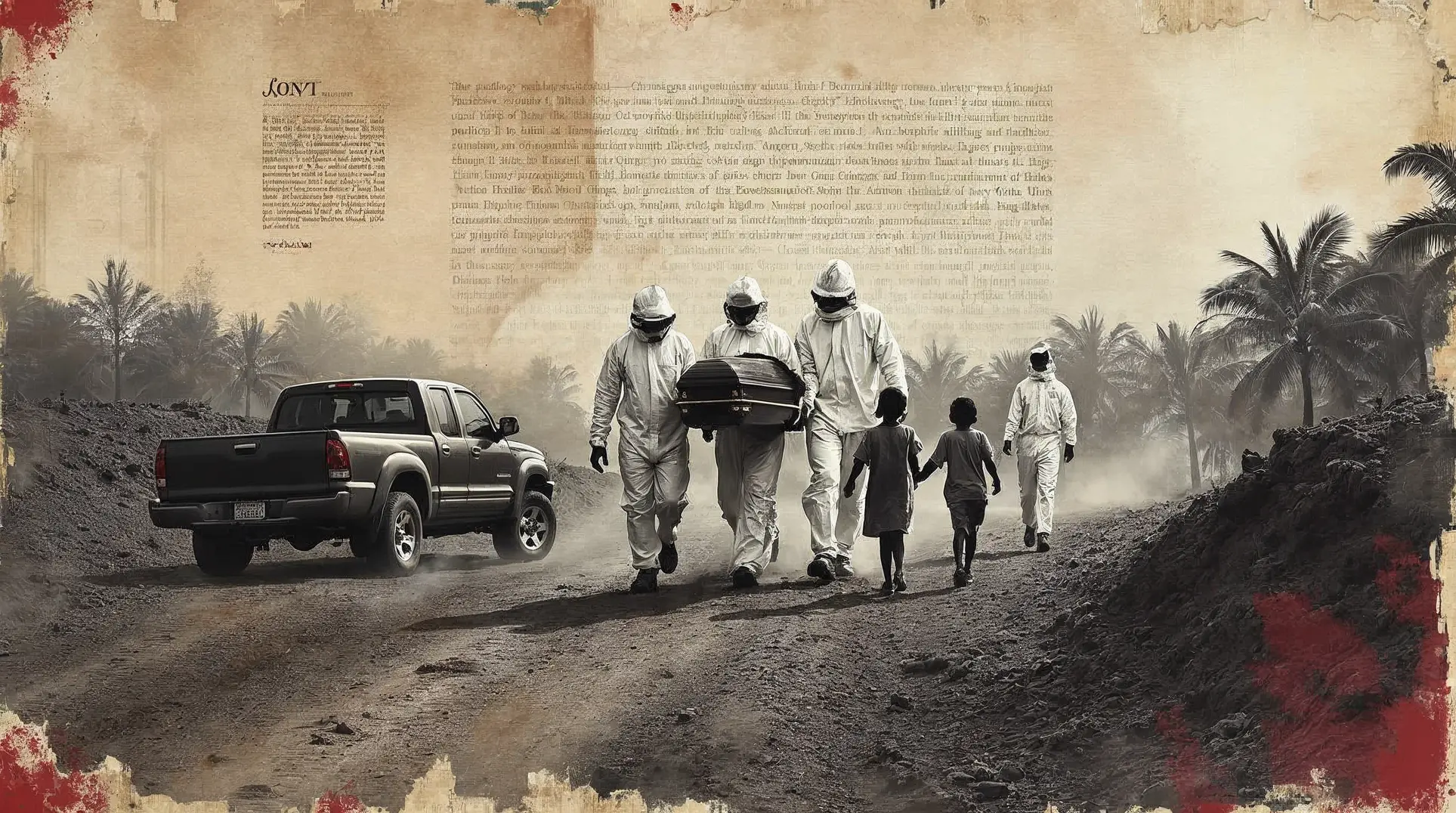
Reuters reported that dozens of residents in Beni, eastern Congo, say they cannot find the bodies of relatives who died in the Ebola outbreak. Others say loved ones were buried without their knowledge, Reuters reported. Crowds gathered outside the morgue of the main hospital in Beni, in North Kivu province. They demanded answers and denounced what they described as failures in the handling of the dead.
Mathe Kasereka said his family went to the morgue to collect his 19-year-old brother and bury him. "We were first asked to bring a coffin, so we bought one and brought it to the morgue," he said. Staff helped other families collect their relatives, he said, then searched for his brother and could not find him. The family was sent back to the Ebola treatment centre where the brother had died. Staff there told them records showed the body had already gone to the morgue. "We completed all the formalities that were required of us ... But up to now, we still have not found him," Kasereka said.
Burials the families say they were not told about
Rosette Satondwa, sitting on a stool near the crowd, told Reuters her brother-in-law died at the hospital two days earlier. The family planned to bury him on Tuesday. Instead, they were told he had been buried the previous day. "We were not informed about what was happening," she said. Relatives later asked to be shown his grave and brought his widow and children, who had missed the burial.
Richard Kasereka Mupanda, a relative of the missing teenager, said he went into the morgue on Monday with Red Cross workers and did not find the body. He said the bodies were beginning to decompose. "We don't know if some bodies have been taken away by other families or if they're still inside," he said.
Hospital officials, burial teams and local authorities told families they were working to locate the missing bodies, Reuters reported. They did not respond to requests for comment. The Reuters report gives no explanation for why the bodies cannot be found, and no figure for how many families are affected.
Beni has recorded more new Ebola cases than any other area since the start of November, according to government data cited by Reuters. It accounts for about a fifth of infections in that period. The same data show more than 1,000 people infected in the city and about 650 dead since May. Nationwide, AP reported, citing government data, more than 11,700 people have been infected and more than 5,700 killed, in the deadliest of Congo's 17 outbreaks.
Observers are reading: how failures of records and notification at burial would undercut the response's own aims, and what the Africa CDC and WHO plan commits to.
Become an Observer, it's free. Get full access to all Crisis.Zone analysis, briefings and breaking coverage.
What officials owe the families
Reuters warned that the incidents risk deepening mistrust of health facilities. It noted that responders in the region have struggled to win public confidence and have come under attack from communities suspicious of the country's response. A family that learns of a burial after the fact is unlikely to take that warning as abstract.
Three answers would test the officials' promise to search. How many families are affected? How is a body tracked from treatment centre to morgue to grave? How are relatives told before a burial takes place? The Reuters report contains no answer to any of them.
The families outside the Beni morgue are asking for something specific. They want to see their dead, bury them and know where they lie. For the Kasereka family, who bought a coffin and brought it to the morgue, staff could not find the brother's body, Reuters reported.
Become an Observer (it's free) to unlock direct links to all sources used in this article.
We believe you deserve to verify everything we write. That's why we meticulously document every source.


