


Key takeaways
- The New York Times reported at least 48 killed in the attack on Cantine-Aloya near Beni, North Kivu, in its 8 November update.
- Patients fled the Kelekele Hospital Centre area, including one confirmed Ebola case and five suspected cases, and none had been reported found.
- Local civil society leader Justin Paluku called the attack a major security failure, and Africa CDC called for a corridor of peace.
Armed men attacked Cantine-Aloya, about 50 km (28 miles, according to the New York Times) west of Beni in North Kivu province, eastern Democratic Republic of Congo, late on Thursday 5 November. The violence ran into Friday. Reuters reported that it began at about 11 pm local time. The attackers set fire to a health post and to homes. At least 48 people were killed, according to the New York Times, whose report was updated on 8 November and cites health and United Nations officials. Other outlets gave lower tolls, with Quartz reporting at least 44 dead and the Sowetan at least 33. Col. Charles Omeonga, the Beni territorial administrator, told Reuters that fighters of the Allied Democratic Forces (ADF) set fire to several houses and killed civilians.
Patients fled into the night. Christian Kakule, medical director of the Kelekele Hospital Centre in Cantine, told AP that gunfire and burning homes came as close as 50 metres from the hospital. AP reported that 180 patients left, including suspected Ebola cases and one confirmed case. Reuters, also citing Kakule, put the Ebola-linked group at one confirmed patient and five suspected cases, three of them high-risk contacts. These are different categories, not rival counts. Reports published by 8 November did not say whether any of these patients had been found.
Three health facilities burned, and a toll still rising
Reuters and Al Jazeera reported that the attackers burned a health post. The New York Times reported that two other health centres were also torched, making three in all. RFI reported that the attackers looted pharmacies and health centres before withdrawing into the forest.
Local civil society leader Tchetche Aliamini told Reuters that rescuers recovered 33 bodies. Most victims had gunshot wounds, while others were burned or hacked with machetes. Justin Paluku, a local civil society head, told AP: "So far, we have counted 33 bodies and more than 50 houses set on fire, along with various other forms of material destruction."
The count has risen since. An earlier New York Times version, dated 7 November, said at least 44. The Congolese army put the number at 37 civilians, according to RFI and TV5Monde. Omeonga told Reuters that a full toll could not yet be established because heavy rain hampered army operations and investigations. Fakti.bg noted that no final official toll and no information on detained attackers had been reported.
The ADF has roots in Uganda and pledged allegiance to the Islamic State in 2019. AP and Al Jazeera reported that it killed 66 people in eastern Congo in July 2025, in what the UN called a "bloodbath." No independent claim of responsibility for Cantine-Aloya had been reported.
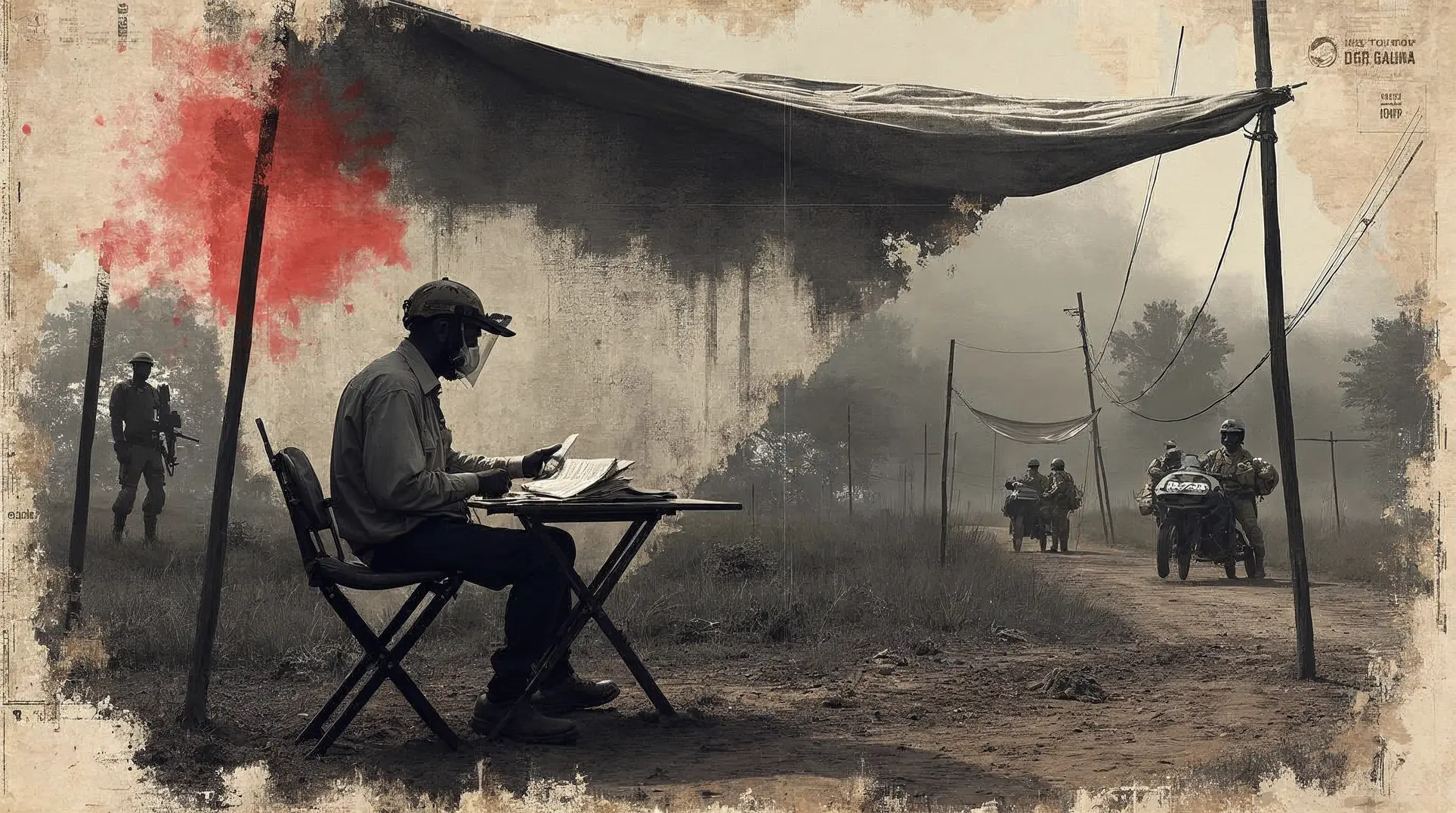
Observers are reading: how the burning of a health post undermines contact tracing, and why Africa CDC links health access to civilian protection.
Become an Observer, it's free. Get full access to all Crisis.Zone analysis, briefings and breaking coverage.
What remains unknown
Three questions were open on 8 November. The first is the final death toll. Rain slowed the army's work, and the figures run from 33 bodies recovered to at least 48 killed. The second is whether the patients who fled Cantine, including the confirmed Ebola case and the high-risk contacts, have been located and returned to monitoring. The third is whether health workers can reach affected communities safely and keep doing so.
Kakule, Paluku, Aliamini, Omeonga and Africa CDC are each describing a different part of the same problem. People are dying, and the system meant to stop a deadly outbreak has lost ground in a town west of Beni.
Become an Observer (it's free) to unlock direct links to all sources used in this article.
We believe you deserve to verify everything we write. That's why we meticulously document every source.


