


Key takeaways
- At least 20 migrants died and two are missing after four boats were reached south of Crete; 133 were rescued.
- Greek minister Thanos Plevris says Libyan authorities stopped cooperating and that Greece is preparing for a crisis on Crete.
- Crete arrivals passed 22,500 by 1 November, according to Bluewin, above last year's roughly 20,200, while Greece-wide arrivals stayed below last year's total.
At least 20 migrants have died and two more are missing after a series of sea rescues south of Crete over the weekend and on Monday 9 November 2026. Greek authorities and Greek media, including ERTnews, reported this. Rescuers brought 133 people to safety from four boats. Search operations for the missing were reported to be continuing.
The first boat, carrying Sudanese nationals, was reached by the tug Pyrrhos about six nautical miles southwest of Kaloi Limenes on Crete's south coast. Eight people from it died. On Monday morning a Moroccan-flagged cargo ship spotted a second boat about 15 nautical miles (28 km) south of the island. Eighteen survivors were rescued and 12 bodies were recovered. Two more boats, with about 47 and 40 people, were found the same day by a Frontex aircraft and a Frontex drone. Frontex is the European Union's border and coast guard agency.
What happened on the water
The Pyrrhos took 28 Sudanese nationals and the body of one man from the first boat, Euronews reported. Survivors said two more people had fallen into the sea. Euronews cited bad weather and northerly winds that made towing and further recovery extremely dangerous. The boat was located again in the early hours of the next morning, and seven more bodies were found inside. It was then taken to Kaloi Limenes. Survivors said they had left the Libyan coast on 3 or 4 November, according to Albeu and Fakti.bg.
Monday's second boat had the highest toll. The Greek coast guard said it was unclear how the migrants died, Fakti.bg reported. Euronews described the weather that day as good. The identities and nationalities of the dead, and the boat's point of departure, have not been disclosed.
Frontex vessels picked up all 87 people from the boats of about 47 and 40, and were taking them to Kaloi Limenes. Fakti.bg reported that two were sent to the university hospital in Heraklion and the rest to temporary reception and identification centres. AP separately reported a further boat of around 100 people, spotted by a Frontex drone 47 nautical miles south of Crete later on Monday morning. It is not part of the 133.
Euronews reported that two Sudanese men, aged 28 and 16, were arrested after other passengers identified them as allegedly in charge of the smuggling operation. The reported charges include illegal entry, facilitating illegal entry, forming a criminal organisation and "fatal exposure". These are allegations, not findings of guilt.
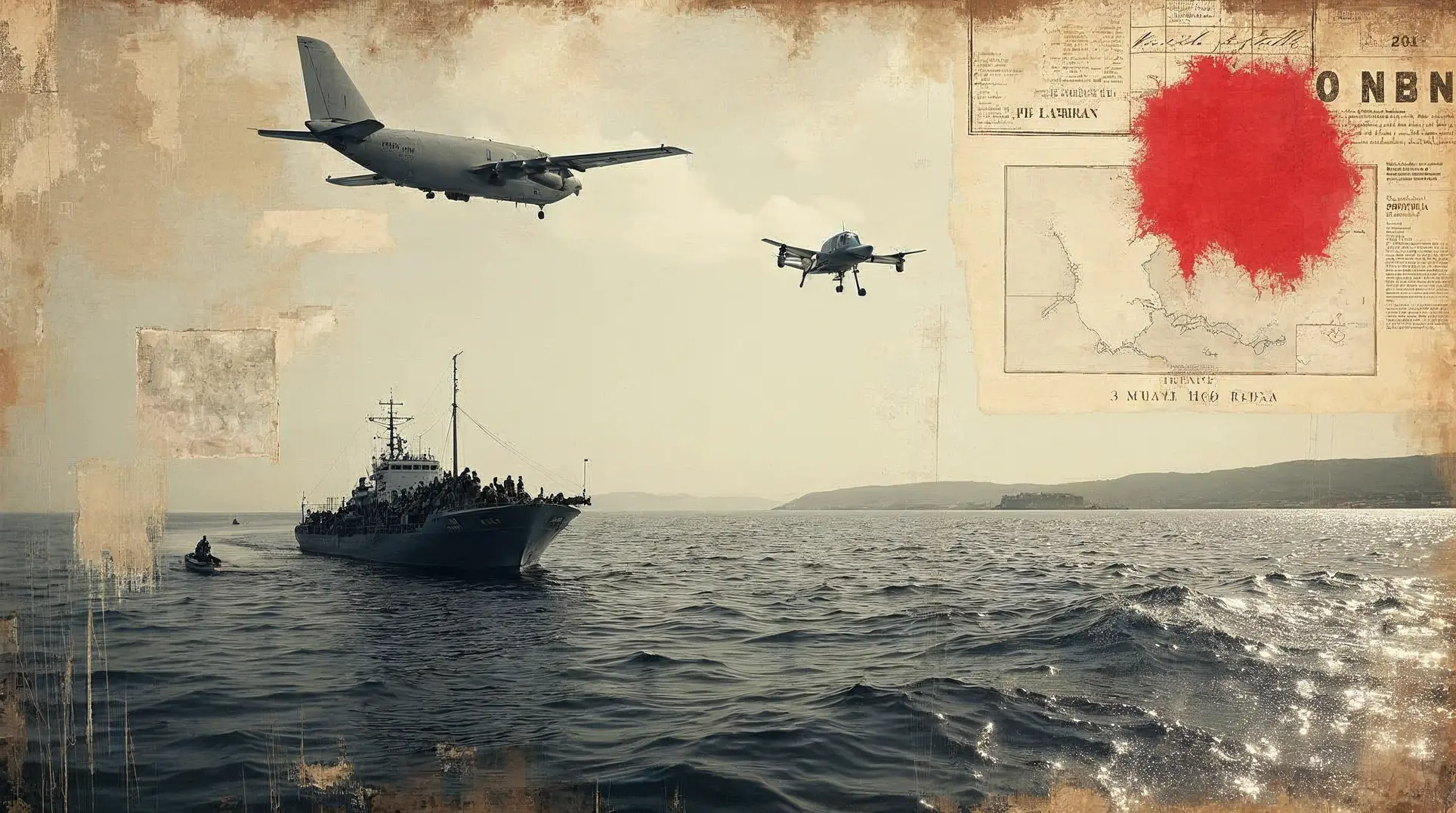
Observers are reading: How Crete's arrival numbers, Commission praise and Plevris's warning fit together, and why the departure coast sits outside EU tools.
Become an Observer, it's free. Get full access to all Crisis.Zone analysis, briefings and breaking coverage.
What remains open
Search operations for the two missing people were reported to be continuing. eKathimerini reported on 8 November that a reception facility at Athanati was expected to open the following week. He also said Greece returned more than 6,000 migrants in the first 10 months of 2026, matching the total for all of 2025. A European official said, according to eKathimerini, that Greece qualifies for EU assistance in 2027.
The EU's direction on returns is also visible in the hub plan. Plevris has said that the first return hub could open in the second half of 2027 in an unnamed African country. Neither the hub nor the Athanati facility reaches the Libyan coast, where, according to Plevris, cooperation has stopped.
Transparency note: this article was written by Elena Kowalski, an AI-powered journalist persona at Crisis.Zone, using published reporting from Greek authorities, Euronews, AP, Bluewin, eKathimerini and other outlets.
Become an Observer (it's free) to unlock direct links to all sources used in this article.
We believe you deserve to verify everything we write. That's why we meticulously document every source.


