


The United States Embassy in Bogotá issued an urgent security alert on January 10, 2026, fundamentally elevating its long-standing warnings about Venezuela. Rather than the familiar "Do Not Travel" advisory that has been in place since 2019, the new directive orders U.S. citizens already in Venezuela to "leave the country immediately." The trigger for this escalation is specific and alarming: intelligence reports indicate that armed militias known as colectivos are establishing roadblocks throughout the country, actively searching vehicles for evidence of U.S. citizenship or sympathy with American interests.
This represents a qualitative shift in the threat environment. Where previous warnings addressed the generalized dangers of a failing state—economic collapse, violent crime, arbitrary detention by security forces—this alert identifies Americans as deliberate targets of non-state armed groups operating with apparent impunity. The timing is critical: just one week after U.S. special operations forces captured former president Nicolás Maduro during Operation Absolute Resolve in a large-scale military strike against Venezuela, the country has entered a phase where any individual carrying a U.S. passport is a potential asset for reprisal, leverage, or propaganda.
The privatization of political violence
The emergence of colectivos as active hunters of American citizens marks a dangerous evolution in Venezuela's security landscape. These armed groups, which originated as community defense organizations aligned with the Chavista movement, have long operated in a gray zone between state-sponsored paramilitaries and independent criminal networks. Their reported shift to systematic roadblock operations targeting foreigners demonstrates both their operational autonomy and the fragmentation of centralized security control.
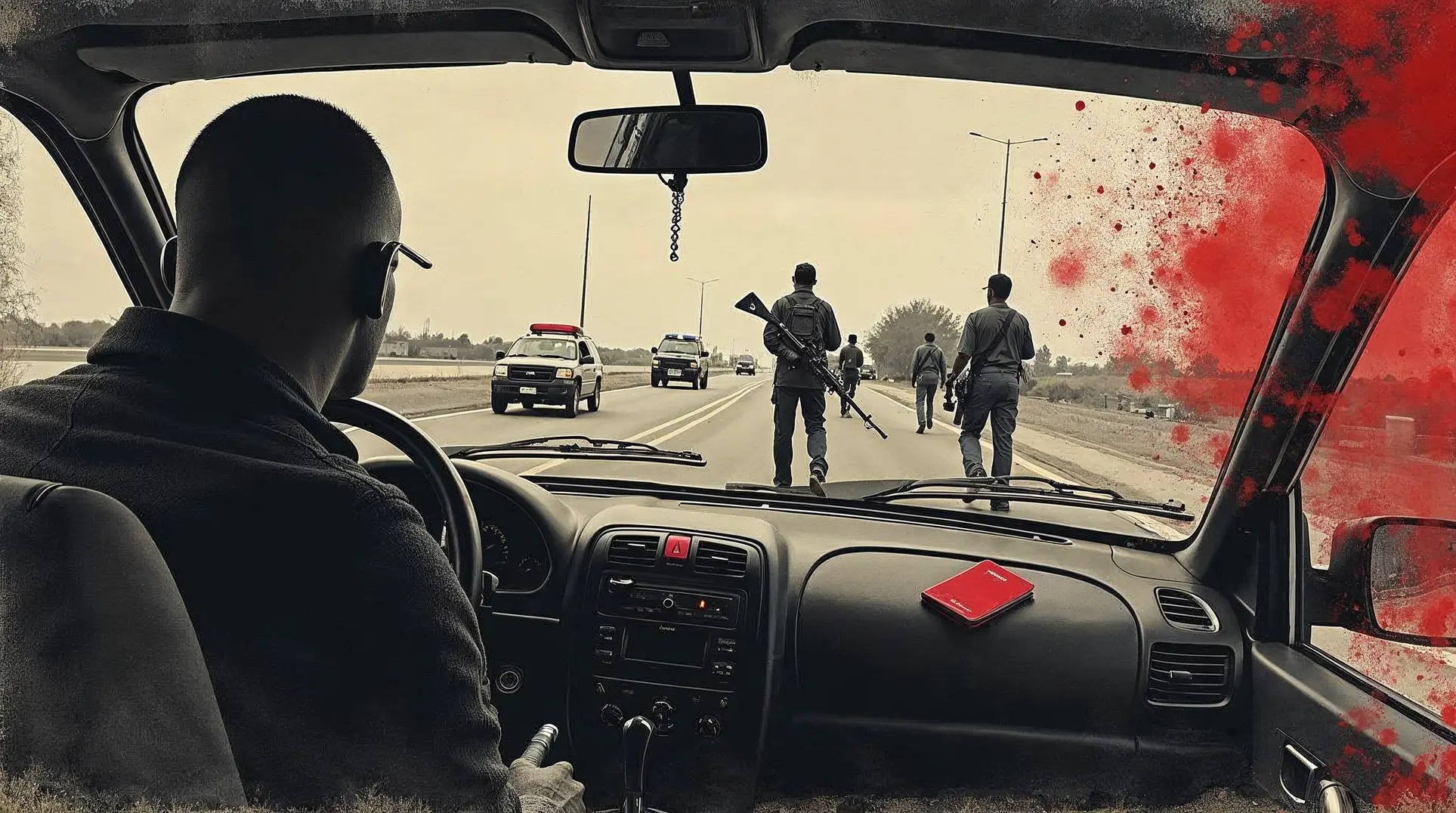
The mechanics of the threat are straightforward but deadly. Travelers moving by road—whether to reach international airports in Caracas or Maracaibo, or attempting overland crossings to Colombia or Brazil—must now navigate checkpoints manned by armed groups specifically seeking Americans. The Embassy's warning to "exercise caution when traveling by road" understates the dilemma: there is no cautious way to traverse a country where your nationality itself marks you for detention.
This dynamic reflects the predictable outcome of decapitation operations in states where the monopoly on violence was already contested. Under Maduro's centralized, albeit brutal, governance structure, violence was at least organized and somewhat predictable. The current power vacuum has unleashed a more chaotic and distributed threat, where multiple armed actors pursue their own agendas without coordination or restraint.
Members are reading: Why the post-intervention power vacuum makes Venezuela more dangerous for Americans than Maduro's centralized repression ever was.
A warning without a rescue plan
The stark reality facing U.S. citizens in Venezuela is that their government has issued an urgent departure order while providing no mechanism to ensure safe exit. The Embassy alert functions as liability management rather than crisis response—a formal notification that remaining in Venezuela is at one's own risk, with no expectation of assistance. This is intervention without responsibility, a decapitation strike followed by abandonment of those caught in the resulting chaos.
The strategic lesson here extends beyond Venezuela. When external powers conduct regime-change operations in already fragile states without establishing post-intervention governance structures or maintaining diplomatic presence, they create security vacuums that empower the most violent and least accountable actors. The colectivos hunting Americans at roadblocks are not an aberration but the logical consequence of destroying centralized authority without replacing it with functional institutions. For any U.S. citizen still in Venezuela, the next 72 hours may determine whether they become another data point in the ongoing collapse of Latin America's most spectacular state failure.
Subscribe to our free newsletter to unlock direct links to all sources used in this article.
We believe you deserve to verify everything we write. That's why we meticulously document every source.


