


President Yoweri Museveni is poised to secure his sixth elected term with approximately 72 percent of the vote in Uganda's Thursday election, according to near-complete results from the Electoral Commission. His principal challenger, opposition leader Bobi Wine, garnered roughly 24 percent. Yet the certainty of these numbers stands in sharp contrast to the volatile uncertainty surrounding Wine himself, who announced Friday that he had escaped a security raid on his home after days of what his party described as house arrest. Wine remains in hiding as authorities prepare to formalize a result few doubted would arrive.
This dissonance—between the manufactured inevitability of the electoral outcome and the chaotic manhunt for Uganda's most prominent opposition figure—reveals the sophisticated machinery of authoritarian persistence in 21st-century Africa. Museveni's regime does not simply crush dissent; it contains it within a performance of democratic process, deploying the entire state apparatus to ensure that elections function not as mechanisms of accountability but as instruments of control. The 80-year-old president, in power since 1986, has refined a model that allows space for opposition to exist, but never enough space to prevail.
The architecture of containment
The state's approach to managing Bobi Wine demonstrates a calculated strategy of physical and informational isolation. Wine, whose real name is Robert Kyagulanyi and who rose to prominence as a musician before entering politics, was placed under what his National Unity Platform party characterized as house arrest immediately following the vote. The situation escalated when the party claimed security forces had abducted him by helicopter—a claim authorities swiftly denied. Wine himself later confirmed that police and military units raided his residence, forcing him to flee. His current whereabouts remain unknown.
This pattern is not novel. During the 2021 election cycle, Wine experienced similar confinement, held at his home for days while the electoral process concluded around him. The repetition underscores a deliberate tactic: neutralize the opposition figurehead at the precise moment when his mobilization capacity matters most. By rendering Wine physically inaccessible to supporters and media during the critical post-election window, the state eliminates the possibility of coordinated challenge to the results.
Equally critical was the government's shutdown of internet services in the days surrounding the vote. This was not merely a security precaution but a strategic information weapon. Digital connectivity enables opposition movements to document irregularities, coordinate legal challenges, and maintain narrative momentum. By severing these channels, the regime creates an information vacuum it alone can fill through state media and official pronouncements. The blackout ensures that whatever happens in Uganda's streets, homes, and polling stations during the crucial counting period remains largely invisible to external observers and internal coordination networks alike.
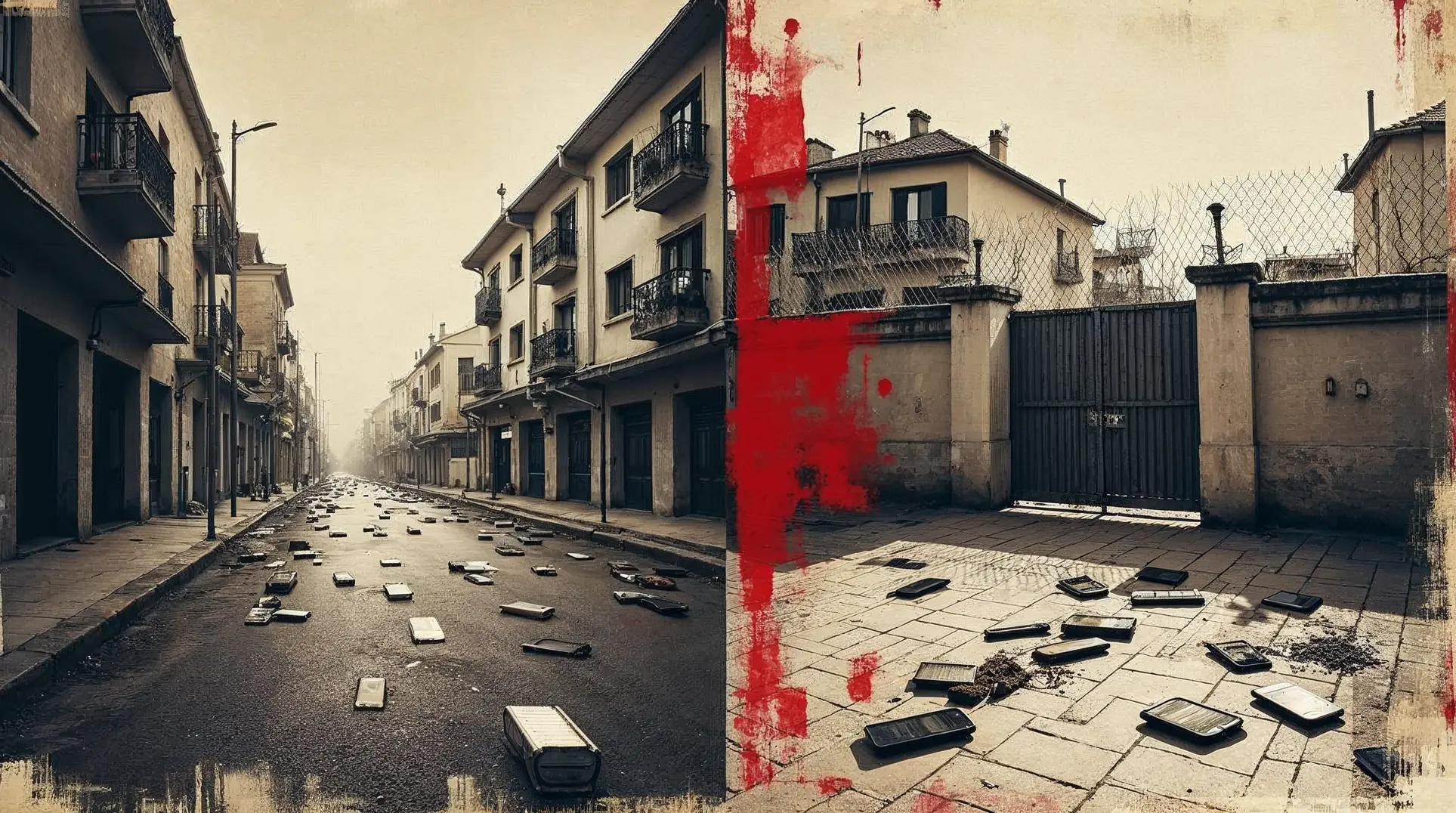
Members are reading: How Museveni's model allows opposition to exist but never to win, and what Wine's predicament reveals about the future of dissent in Uganda.
The exhausted space for dissent
As the Electoral Commission prepares its final announcement, the question confronting Uganda's opposition is less about this election's outcome than about what political space remains available for future challenge. Wine's situation encapsulates the dilemma: he has demonstrated capacity to mobilize significant popular support, yet the state possesses overwhelming means to contain that support within manageable parameters. His escape from house arrest is defiant symbolism, but it does not alter the fundamental power asymmetry.
For observers of African politics, Uganda under Museveni offers a instructive case in how post-liberation leaders who came to power through armed struggle maintain dominance decades later. The president's narrative of having brought stability after years of chaos under Idi Amin and Milton Obote retains some currency, particularly among older Ugandans and rural constituencies. Yet that stability increasingly appears synonymous with stagnation, maintained through systematic suppression of alternatives rather than genuine political competition. The broader regional context of prolonged conflicts and leadership tenure patterns reinforces this dynamic.
The immediate future likely holds continued attempts by Wine and his party to document irregularities and challenge results through available legal mechanisms, processes that have historically yielded little substantive change. Whether his current flight from authorities becomes a rallying symbol for sustained resistance or simply another episode in a cycle of containment will depend partly on factors beyond Uganda's borders—international pressure, regional diplomatic dynamics, and the attention span of global media. For now, Museveni's sixth term appears as certain as the methods by which it was secured.
Subscribe to our free newsletter to unlock direct links to all sources used in this article.
We believe you deserve to verify everything we write. That's why we meticulously document every source.


