


The Uganda Communications Commission ordered internet service providers to suspend public access across the country on Tuesday evening, January 13, two days before a presidential election in which 81-year-old Yoweri Museveni will seek a seventh consecutive term after four decades in power. The directive, issued at 6:00 PM local time, mandates the shutdown of social media platforms, web browsing, messaging applications, and new SIM card registrations, citing the need to prevent "misinformation, disinformation, electoral fraud and related risks." Critical services including banking and hospital systems remain exempt from the order.
The shutdown directly contradicts assurances issued just eight days earlier. On January 5, the Ministry of ICT and UCC Executive Director publicly dismissed internet shutdown rumors as "false and misleading," promising to maintain connectivity throughout the electoral period. This abrupt reversal, combined with the timing—strategically positioned to maximize disruption during the final campaign push and election-day monitoring—reveals the calculated nature of the decision. It creates precisely the conditions needed for a government facing a credible challenge from opposition candidate Robert Kyagulanyi, the 43-year-old musician known as Bobi Wine, whose "Protest Vote" slogan has mobilized Uganda's predominantly young electorate.
A calculated political strategy, not a security measure
The government's stated justification invokes security imperatives and electoral integrity, framing the internet as a vector for disorder that must be contained. Yet this narrative collapses under examination. The platforms being blocked—WhatsApp, Facebook, Twitter, and mobile data services—are the primary tools through which opposition movements organize, citizens document irregularities, and independent observers share real-time information. In a country where digital channels represent the core infrastructure of political participation for a generation that has known only Museveni's rule.
The shutdown functions as a force multiplier for other repressive measures already deployed. In the weeks preceding the election, security forces arrested dozens of opposition supporters, detained journalists covering campaign events, and deployed heavily in opposition strongholds. The digital blackout complements this physical crackdown by eliminating the ability to coordinate responses, share evidence of abuses, or maintain momentum for mobilization. It transforms scattered incidents of repression into an information vacuum where accountability becomes nearly impossible.
What distinguishes this action from routine censorship is its comprehensiveness and timing. By blocking not just specific platforms but all public internet access, the government has created conditions where election-day fraud becomes exponentially harder to detect and document. Domestic monitors cannot transmit results from polling stations in real time. International observers lose their ability to cross-reference reports. Citizens cannot share video evidence of ballot stuffing or intimidation. The shutdown does not prevent electoral fraud—it enables it.
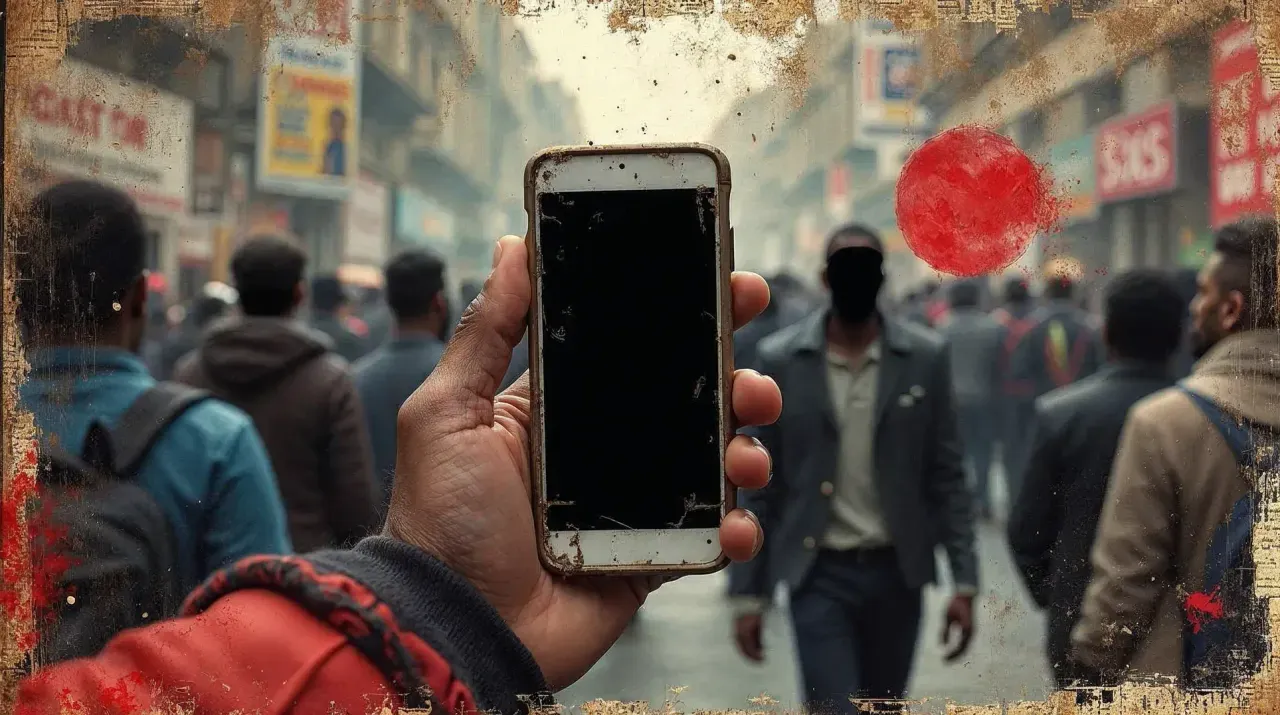
Members are reading: How Uganda's shutdown reveals a tested playbook of authoritarian tactics spreading across African democracies facing digital opposition movements.
An election managed as a security operation
The shutdown signals that Uganda's government views the January 15 vote not as a democratic contest requiring legitimacy through transparency, but as a security challenge requiring containment through information control. Opposition leader Bobi Wine's call for supporters to use offline communication tools—hand-delivered messages, physical rallies, and person-to-person networks—represents an attempt to resurrect pre-digital organizing methods, but these cannot replicate the scale and speed that made his movement potent among urban youth.
The trajectory points toward elections increasingly defined by what citizens cannot see rather than what they can verify. As regimes perfect the timing and scope of connectivity disruptions—long enough to obscure critical periods, short enough to limit sustained international pressure—the gap widens between the formal architecture of democracy and its substantive practice. Uganda's internet shutdown, like the mechanisms of impunity that have long operated in the region, demonstrates how institutional forms persist even as their democratic content is systematically hollowed out. The question for Uganda's overwhelmingly young population is whether offline resistance can counter a state that has mastered both physical and digital repression.
Subscribe to our free newsletter to unlock direct links to all sources used in this article.
We believe you deserve to verify everything we write. That's why we meticulously document every source.


