


The United States told the United Nations on Tuesday it will impose and enforce sanctions against Venezuela "to the maximum extent" to deprive President Nicolás Maduro of resources, a declaration that arrived as the U.S. Coast Guard actively pursues a third tanker near Venezuelan waters. Russia used the same Security Council session to warn that Washington's enforcement posture could establish a template for coercive action against other Latin American governments, framing the maritime campaign as a harbinger of broader regional intervention.
The statement and the warning together mark a pivot from financial pressure to physical interdiction. What had been a sanctions regime built on Treasury designations and license restrictions has now layered on-the-water seizures, blurring the line between compliance enforcement and the sort of naval blockade historically reserved for wartime. That shift carries legal, operational, and geopolitical risks that extend well beyond bilateral U.S.–Venezuela tensions.
From designation to interdiction
U.S. sanctions on Venezuela date to Executive Order 13692 in 2015, targeting officials over human-rights abuses and democratic backsliding. Successive administrations expanded the architecture to encompass state oil company PDVSA, the central bank, and associated entities. In late 2023, the Office of Foreign Assets Control (OFAC) offered conditional relief tied to the Barbados Agreement on electoral guarantees; by early 2024, alleged manipulation and repression prompted Washington to revoke key licenses, and broader relief expired in April. Late 2024 and early 2025 saw fresh designations of sixteen officials under the same executive order, citing electoral fraud and political repression.
Until this month, enforcement stayed largely on paper—asset freezes, correspondent-banking prohibitions, and secondary sanctions warnings. December changed the calculus. On December 10, U.S. authorities seized the tanker Skipper off Venezuela. Days later, a second vessel was interdicted, confirming the move was not a one-off. Now Reuters and other outlets report the Coast Guard is pursuing a fourth hull, identified by maritime-risk firms as Bella 1, previously designated by Treasury and linked to Iranian networks. Officials described the vessel as subject to a judicial seizure order and flying a false flag. President Donald Trump framed the effort as a "total and complete blockade" of sanctioned oil tankers and floated the possibility that seized oil and ships could be kept or sold. Oil markets ticked up modestly on the news.
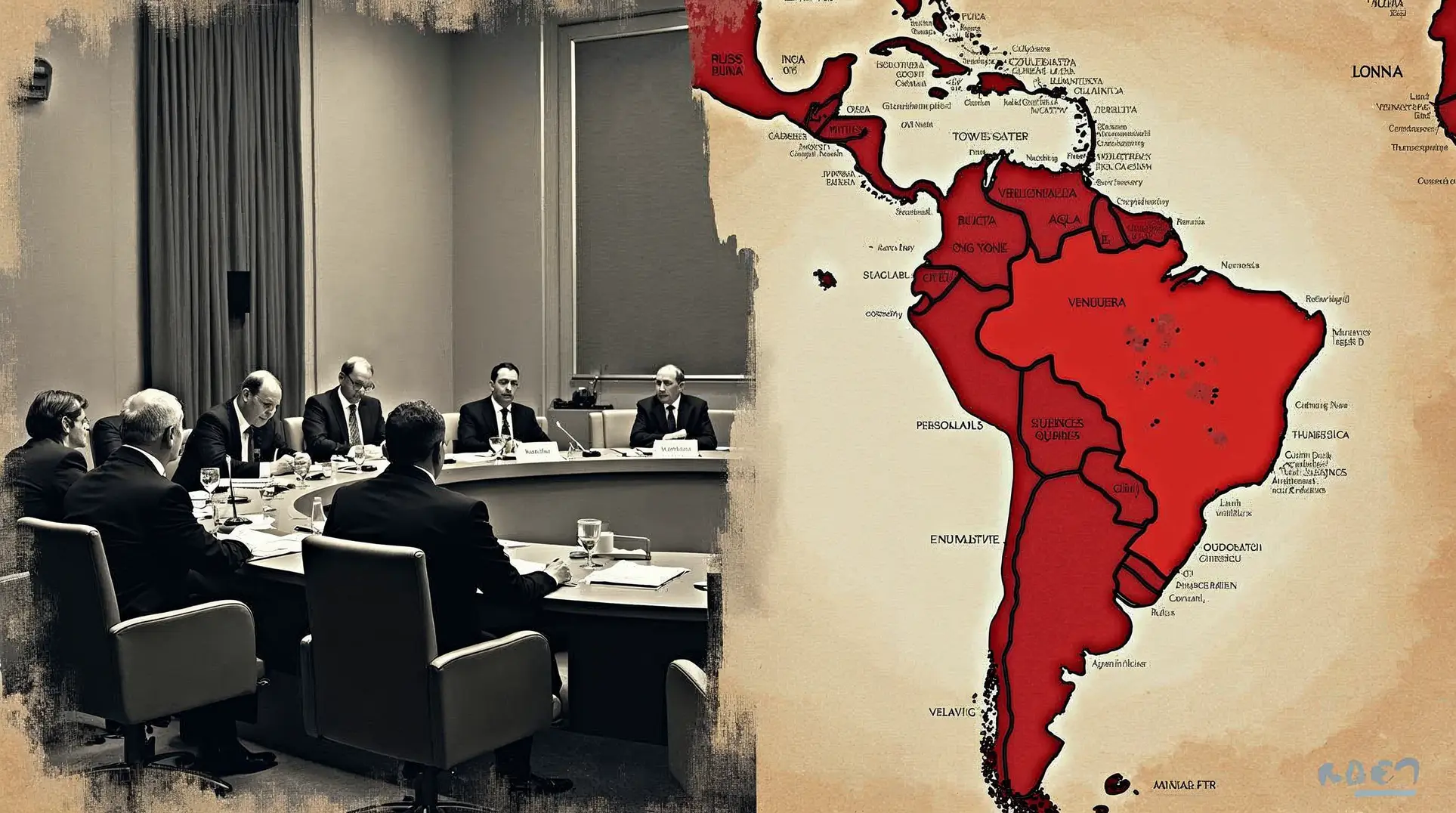
Members are reading: How the legal ambiguity of maritime interdiction creates a precedent Russia can weaponize across Latin America.
Caracas, Moscow, and Beijing push back
Venezuela's UN representative rejected the U.S. framing, arguing that "the threat to peace is not Venezuela, but the U.S. government." Caracas requested the Security Council session and has publicly labeled the seizures as piracy and aggression. Russia and China provided political cover: Beijing condemned the interdictions as violations of international law in press briefings and reiterated opposition to unilateral coercive measures. Moscow's warning to other Latin American states was both a diplomatic signal to the region and a bid to frame U.S. enforcement as lawless extraterritoriality, leveraging the same sovereignty rhetoric Washington has used against Chinese or Russian actions elsewhere.
The great-power dimension adds friction. Venezuela is not isolated; it has deepening ties to both Moscow and Beijing, which see U.S. enforcement as a test case for their broader challenge to Western-led sanctions regimes. That backing emboldens Caracas and internationalizes a dispute that might otherwise remain bilateral, complicating any future de-escalation.
Market signals and what comes next
Early market reaction was muted—oil prices rose modestly—but sustained interdiction could have material impact. If seizures chill third-party shipping or tie up loaded cargoes offshore, Venezuelan exports may fall and onshore storage fill, forcing production cuts. Much depends on scope and duration: whether the Coast Guard targets only clearly designated hulls or extends enforcement to vessels with weaker sanctions links, and whether Venezuela follows through on escort threats.
Near-term indicators to watch include the fate of Bella 1, any additional designations or seizures, export-volume data from Venezuelan ports, and whether the UN debate produces any diplomatic off-ramp. The shift from Treasury letters to Coast Guard cutters has moved enforcement from the administrative to the operational domain. In that space, precedent is set not by policy papers but by what happens when ships meet at sea—and who is watching from the sidelines.
Subscribe to our free newsletter to unlock direct links to all sources used in this article.
We believe you deserve to verify everything we write. That's why we meticulously document every source.


