


U.S. President Donald Trump is actively considering military options against Iran that include targeted strikes on security forces and leadership figures, according to multiple sources familiar with the deliberations. The discussions follow a violent crackdown that crushed nationwide protests earlier this month, with administration officials exploring how military pressure might create conditions favorable to internal political change. The USS Abraham Lincoln carrier strike group, F-15E strike fighters, and additional assets are now positioned in the region as the White House maintains a public posture of escalating threats.
This intensification occurs within a broader coercive framework. Trump has issued repeated ultimatums through social media—"Time is running out," he warned on January 28, adding "The next attack will be far worse!"—while simultaneously pointing to the recent U.S. operation that removed Venezuelan President Nicolás Maduro as evidence of American capability and resolve. Yet Israeli and Arab officials have privately cautioned that air power alone would not dislodge Iran's clerical leadership, underscoring a fundamental tension between the administration's public confidence and regional assessments of political reality.
The mechanics of maximum pressure
The current U.S. approach represents the most visible military buildup in the Persian Gulf since the 2020 Soleimani strike. The Abraham Lincoln deployment includes guided-missile cruisers and destroyers equipped with Tomahawk cruise missiles, while F-15E Strike Eagles—capable of precision strikes deep inside Iranian territory—have been positioned at forward bases. This is not merely defensive posturing. The configuration suggests both a deterrent capability and preparation for offensive action should Trump decide to authorize strikes.
Secretary of State Marco Rubio's recent Senate testimony attempted to frame this buildup as protective. "We're ensuring our troops in the region are defended," Rubio stated before the Foreign Relations Committee, while characterizing the Iranian regime as "weaker than it's ever been." This dual messaging—defensive intent paired with assertions of Iranian vulnerability—creates strategic ambiguity but also reveals an internal contradiction. If the goal is truly defensive, the public threats of escalation are unnecessary. If the objective is to compel capitulation or inspire regime change, then the defense framing is disingenuous.
The administration has leaned heavily on the Venezuela precedent. Trump's references to the Maduro ouster are explicit: targeted action can remove hostile governments efficiently. Yet this comparison falters under scrutiny. Venezuela's military command fractured after years of economic collapse and external pressure created conditions for a rapid political transition, as detailed in recent intelligence assessments. Iran's power structure is fundamentally different—built around the Islamic Revolutionary Guard Corps, a parallel military-economic apparatus, and a clerical establishment with deeper institutional roots and ideological cohesion.
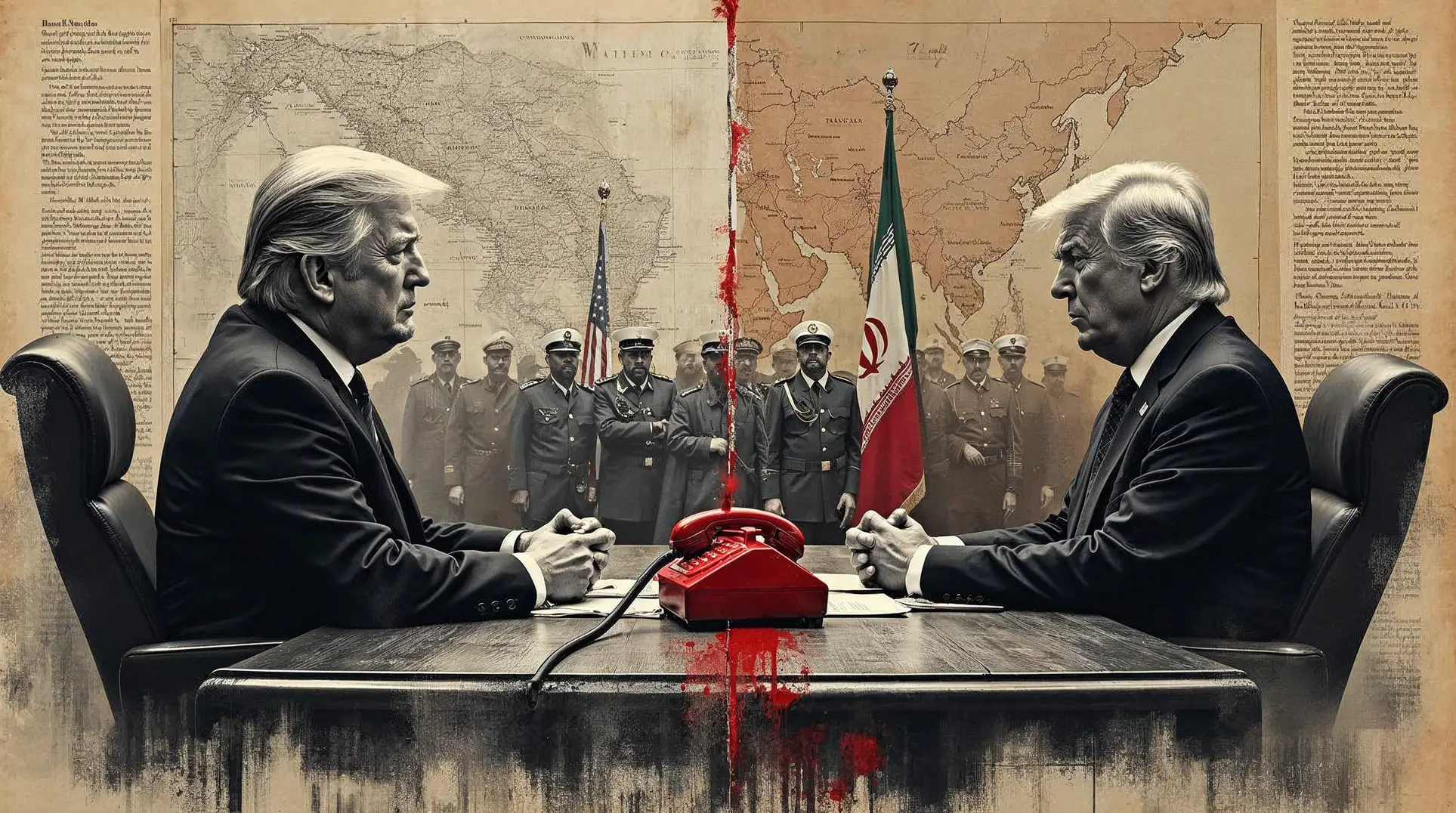
Members are reading: Why the current escalation creates a structural trap where both Washington and Tehran face incentives to demonstrate resolve through action rather than compromise.
The narrowing path forward
The immediate outlook suggests continued volatility. Neither side appears positioned to de-escalate without extracting concessions that the other is unwilling to provide. The U.S. military presence will likely remain at heightened readiness, sustaining the pressure campaign. Iranian forces will maintain their counter-posture, prepared to respond to any strike. Diplomatic channels, while not entirely closed, operate under constraints that make substantive progress difficult.
Regional powers have notably refrained from endorsing either maximalist approach. Arab officials who share American concerns about Iranian regional influence have privately cautioned against military action whose consequences remain unpredictable. Israel, despite its own tensions with Tehran, has signaled skepticism about the efficacy of limited strikes. This regional hesitation reflects a practical assessment: escalation carries risks that extend far beyond the immediate U.S.-Iran confrontation, potentially destabilizing energy markets, shipping routes, and fragile political arrangements across the Gulf.
The most dangerous element remains the potential for miscalculation. With naval forces operating in close proximity in the Persian Gulf, with air defenses on high alert, and with both sides primed to interpret ambiguous actions as hostile, a small incident—an accidental engagement, a misidentified target, an overzealous local commander—could trigger a broader conflict neither capital desires. The current trajectory has created conditions where the space for clarification and de-escalation shrinks with each public threat and military deployment. What began as a pressure campaign to compel negotiation now carries the momentum of its own logic, moving toward outcomes that transcend the original strategic calculations.
Subscribe to our free newsletter to unlock direct links to all sources used in this article.
We believe you deserve to verify everything we write. That's why we meticulously document every source.


