


Venezuelan opposition leader María Corina Machado presented her Nobel Peace Prize medal to U.S. President Donald Trump during a White House meeting Thursday, as the U.S. military simultaneously captured a sixth Venezuelan oil tanker in international waters. Trump announced the gesture on social media, writing that Machado had given him the prize "for the work I have done," calling it "a wonderful gesture of mutual respect." The Nobel Committee quickly clarified that its medals are non-transferable and remain the property of laureates.
The timing reveals a calculated divergence between public diplomacy and operational reality in American policy toward Venezuela. While the Machado meeting generated headlines and photographs, the substantive action occurred at sea, where U.S. forces continue a systematic campaign to interdict Venezuelan oil shipments. This pattern suggests the Trump administration is pursuing a dual-track approach: cultivating pro-democracy optics through association with opposition figures while executing hard-nosed resource denial operations that serve American energy security interests regardless of which faction ultimately governs in Caracas.
The theater of legitimacy
The White House meeting with Machado serves a specific function in American strategic communications. By positioning himself alongside a Nobel laureate identified with democratic resistance, Trump acquires a humanitarian veneer for policies driven by material interests. Machado, who has no governing authority and limited operational presence inside Venezuela, offers maximum symbolic value at minimal political cost. She cannot deliver territorial control, bureaucratic compliance, or resource access—the tangible requirements of statecraft—but she can provide photographs and statements that frame American intervention as principled rather than predatory.
The Nobel Committee's immediate clarification that the prize cannot be transferred underscores the purely performative nature of the gesture. Yet this does not diminish its utility. In the information environment surrounding intervention, legitimacy is a currency as valuable as crude oil. Machado's presence allows the administration to claim alignment with democratic values while pursuing policies that would otherwise appear as straightforward coercion. The gesture costs Trump nothing—he gains a trophy and a narrative—while Machado receives continued American recognition in her competition with other opposition factions.
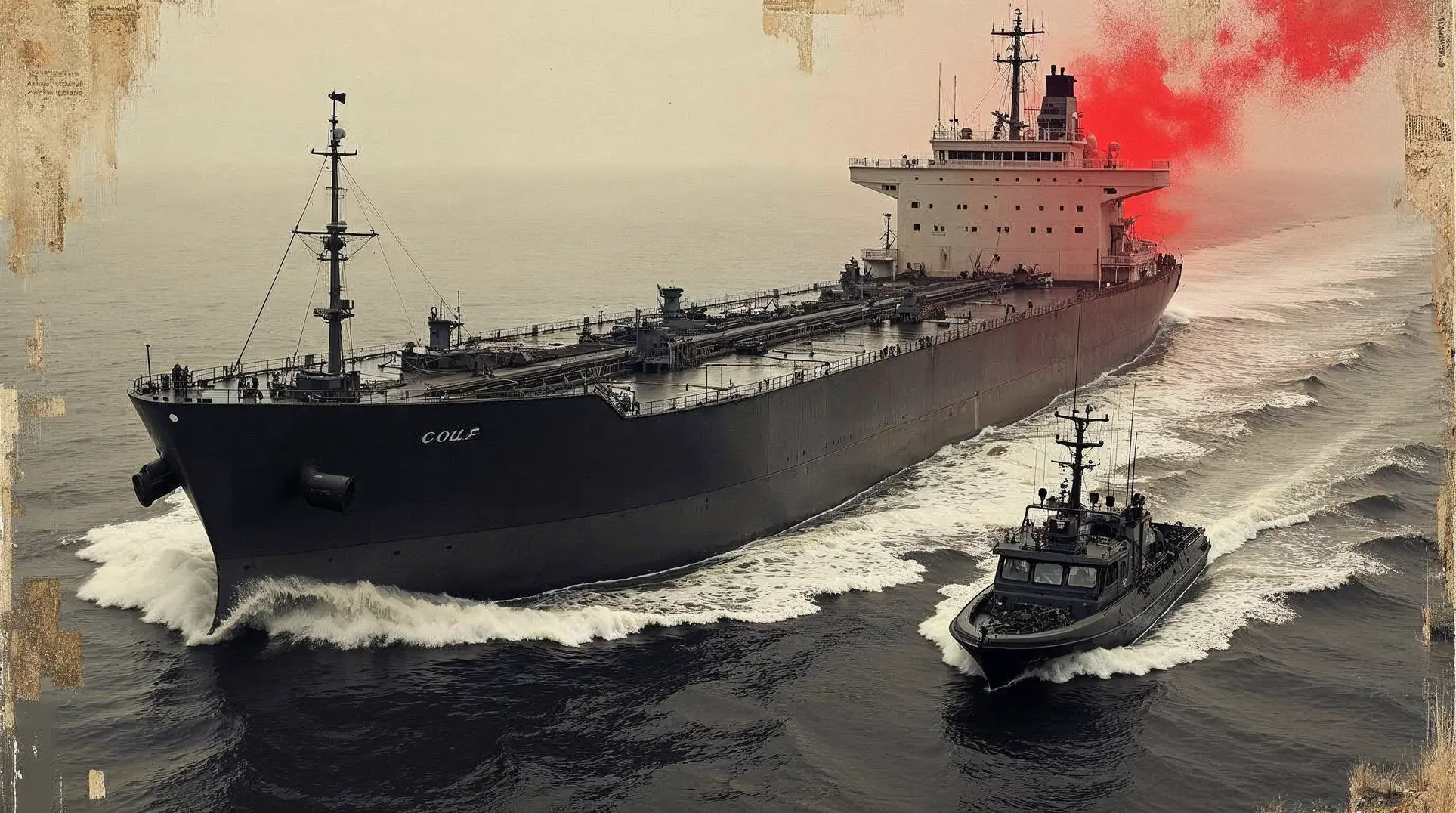
Members are reading: How tanker seizures reveal the Trump administration's true Venezuelan strategy—resource control, not regime preference.
The limits of symbolic politics
The Machado-Trump meeting illustrates the enduring gap between the performance of foreign policy and its substance. Opposition figures seeking external support must offer something of value to their patrons, and when they lack territorial control or governing capacity, symbolism becomes their primary currency. Machado's Nobel Prize, while personally earned through her advocacy, becomes a transferable asset in the political marketplace—not legally, as the Nobel Committee noted, but functionally, as a prop in American domestic and international messaging.
For Trump, the gesture reinforces his image as a disruptor challenging establishment norms, while simultaneously providing establishment cover for policies that employ military force to seize commercial vessels. The administration can point to Machado's presence as evidence of principled engagement, deflecting criticism that its Venezuela policy amounts to coercive regime change pursued through economic warfare. The Nobel Prize, however non-transferable in protocol, transfers legitimacy in perception—and in the contest for narrative control, perception often outweighs legal precision.
Yet the maritime interdiction campaign proceeds on its own timeline, driven by operational objectives rather than diplomatic symbolism. The U.S. formalization of control over Venezuelan oil revenue creates institutional structures designed to outlast individual administrations and political transitions. These mechanisms function regardless of whether Machado, Rodríguez, or another figure eventually consolidates power in Caracas, because they assert American authority over the resource itself rather than the government that nominally controls it.
Power projection through resource denial
The Venezuelan case demonstrates how contemporary great power competition employs economic statecraft as a primary instrument. The Trump administration's willingness to seize tankers in international waters signals that the United States considers Venezuelan oil a strategic asset subject to American influence, irrespective of international legal frameworks governing maritime commerce or sovereign resource rights. This approach transforms energy exports into a contested domain where military force, financial control, and diplomatic recognition serve as complementary tools.
The Machado meeting fits within this broader strategy as a relatively low-cost element that enhances the political sustainability of more aggressive measures. By maintaining ties to opposition figures, the administration preserves flexibility to shift recognition and support as circumstances evolve, while the underlying infrastructure of resource control remains constant. The military capture following oil deal patterns suggest that Washington's primary concern is establishing favorable terms for American access to Venezuelan energy, not the ideological character of the government providing that access.
In the realist calculus, the Nobel Prize exchange is a sideshow—newsworthy but ultimately inconsequential to the balance of power. The tanker seizures, by contrast, represent the assertion of American dominance through the denial of economic resources to adversaries. Machado's symbolic gesture enables this harder-edged policy to proceed with reduced political resistance, but the policy itself rests on military capability and financial leverage, not humanitarian rhetoric. The Trump administration appears to understand this distinction, even as it exploits the theater surrounding Machado's White House visit to obscure the material interests driving its Venezuela strategy.
Subscribe to our free newsletter to unlock direct links to all sources used in this article.
We believe you deserve to verify everything we write. That's why we meticulously document every source.


