


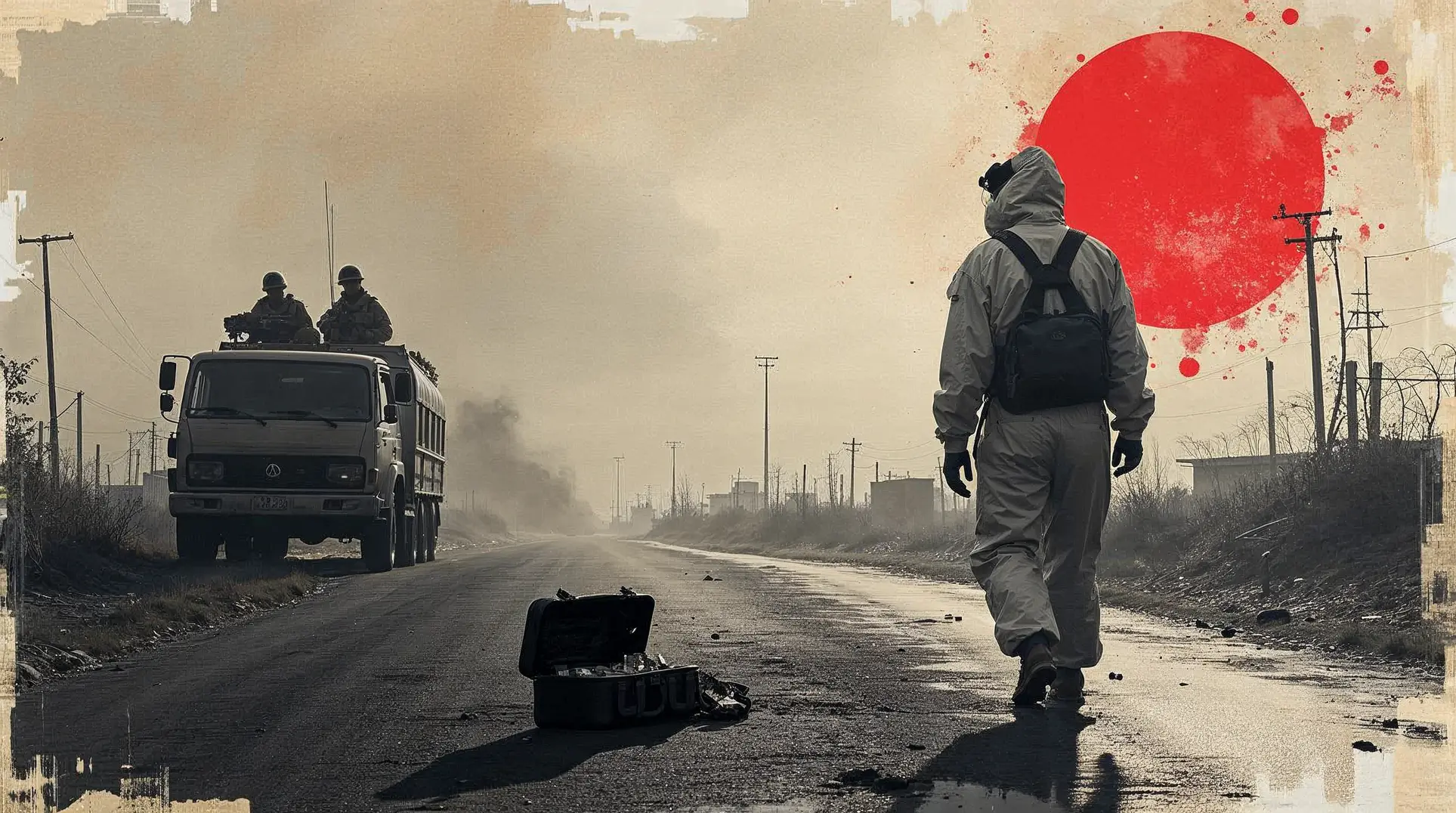
"It's like I was suffocating," Cambodian soldier Kun Yong told Reuters from his hospital bed in Banteay Meanchey province, his wife at his side. He described pulling back from his frontline position after a Thai aircraft sortie in early December 2025. Across the ward, fellow soldiers and border police reported similar respiratory distress—dizziness, vomiting, breathing difficulty—following Thai air operations during the heaviest fighting since July's fractured ceasefire.
The claims are grave: Cambodia's Defence Ministry alleges near-daily Thai use of "toxic gas" in violation of international law. Thailand's Air Force flatly denies chemical weapons use, calling the reports "fake news." Yet no independent forensic evidence has emerged, no international monitors are on the ground, and the verification gap is widening as quickly as the displacement crisis—now exceeding a quarter-million people on both sides of a border that has become a humanitarian and diplomatic chasm.
The December escalation and Operation Sattawat
Border clashes resumed on 7 December 2025, with Thai F-16s conducting operations the following day. On 10 December, Thailand launched Operation Sattawat, a ground offensive that seized several localities in northern Cambodia. By 14 December, Bangkok had imposed martial law in parts of Trat province and adjusted curfews in affected districts, while both armies deployed heavy artillery, rocket systems, and airstrikes.
This marks the collapse of a ceasefire brokered by Malaysia in July with U.S. backing, formalized further in October. Thailand suspended implementation in November after a landmine incident injured soldiers, and eighteen Cambodian soldiers captured in July remain a narrative irritant. The October accord included an ASEAN Observer Team mechanism tasked with ensuring implementation and verifying military de-escalation, though practical access constraints and ongoing combat have limited its effectiveness on the ground.
Hospital beds and contested narratives
At hospitals in Banteay Meanchey, doctors Bong Bunnarith and Nak Vanny treated around twenty soldiers presenting with respiratory symptoms. The physicians could not determine causation without further testing. Patients described exposure to "poisonous water" or "poisonous smoke" dropped from Thai aircraft. Cambodia's Defence Ministry has repeated allegations of chemical agent use but has not named a substance, provided samples, or indicated formal protests to the Organisation for the Prohibition of Chemical Weapons.
Thailand's Air Force spokesman rejected the claims outright, noting that actual chemical weapons would be lethal, not merely cause breathing difficulty. Context matters: during July's fighting, Cambodia accused Thailand of deploying white phosphorus. Thailand acknowledged holding WP stocks but noted the substance is not designated a chemical weapon under international conventions and is used for illumination and smoke screens. The World Health Organization states WP fumes are harmful to eyes and the respiratory tract. Cambodia has not specified WP—or any agent—in the latest December allegations.
Members are reading: Why the absence of neutral forensic teams turns every allegation into propaganda and every denial into a trust deficit that stalls diplomacy.
Humanitarian crisis and access constraints
Displacement now exceeds 250,000 people. Thai authorities report approximately 258,000 evacuated, while Cambodian officials cite significantly higher figures, with some estimates reaching 400,000 or more. Casualty counts remain contested: Cambodia reports eleven civilians killed and seventy-four injured; Thailand announced its first civilian deaths since fighting resumed, alongside nine soldiers killed since the previous Monday. Total deaths across both sides remain difficult to verify due to ongoing combat and lack of independent assessment, though credible reports suggest the toll continues to rise, with hundreds wounded.
UNESCO has expressed concern about fighting near the Preah Vihear World Heritage site. The U.S. Embassy in Thailand issued a security alert on 16 December advising against all travel within fifty kilometers of the border, noting both sides report cross-border fire and limited U.S. government capacity to provide emergency services. Thousands of Thai citizens were stranded at the Poipet checkpoint during closures, with authorities coordinating repatriation.
NGOs including World Vision and DanChurchAid have scaled up assistance in Preah Vihear, Banteay Meanchey, Siem Reap, and Oddar Meanchey provinces—food, water, sanitation, protection, shelter, and emergency cash—but access constraints imposed by security measures strain response capacity. The displacement crisis compounds the verification problem: forensic teams cannot reach alleged exposure sites; medical records remain siloed; and neutral investigation becomes logistically and politically untenable.
What happens when evidence can't reach the table
The toxic-gas allegations from hospital beds in Banteay Meanchey will either be vindicated by evidence or dissolve into the contested narratives that have defined this conflict since 1962. Right now, neither outcome is possible. The verification infrastructure does not exist, access is denied by security realities, and the diplomatic framework contains no mechanism to compel transparency.
ASEAN's role remains declarative rather than operational; no member state has deployed monitors or offered forensic assistance publicly. Until independent teams can collect samples, interview witnesses under protection, and publish findings subject to peer review, every claim will be met with denial, every denial with suspicion. The fog of war is chemical in its own right—corrosive to trust, suffocating diplomacy, and toxic to the civilians trapped in between.
Subscribe to our free newsletter to unlock direct links to all sources used in this article.
We believe you deserve to verify everything we write. That's why we meticulously document every source.


