


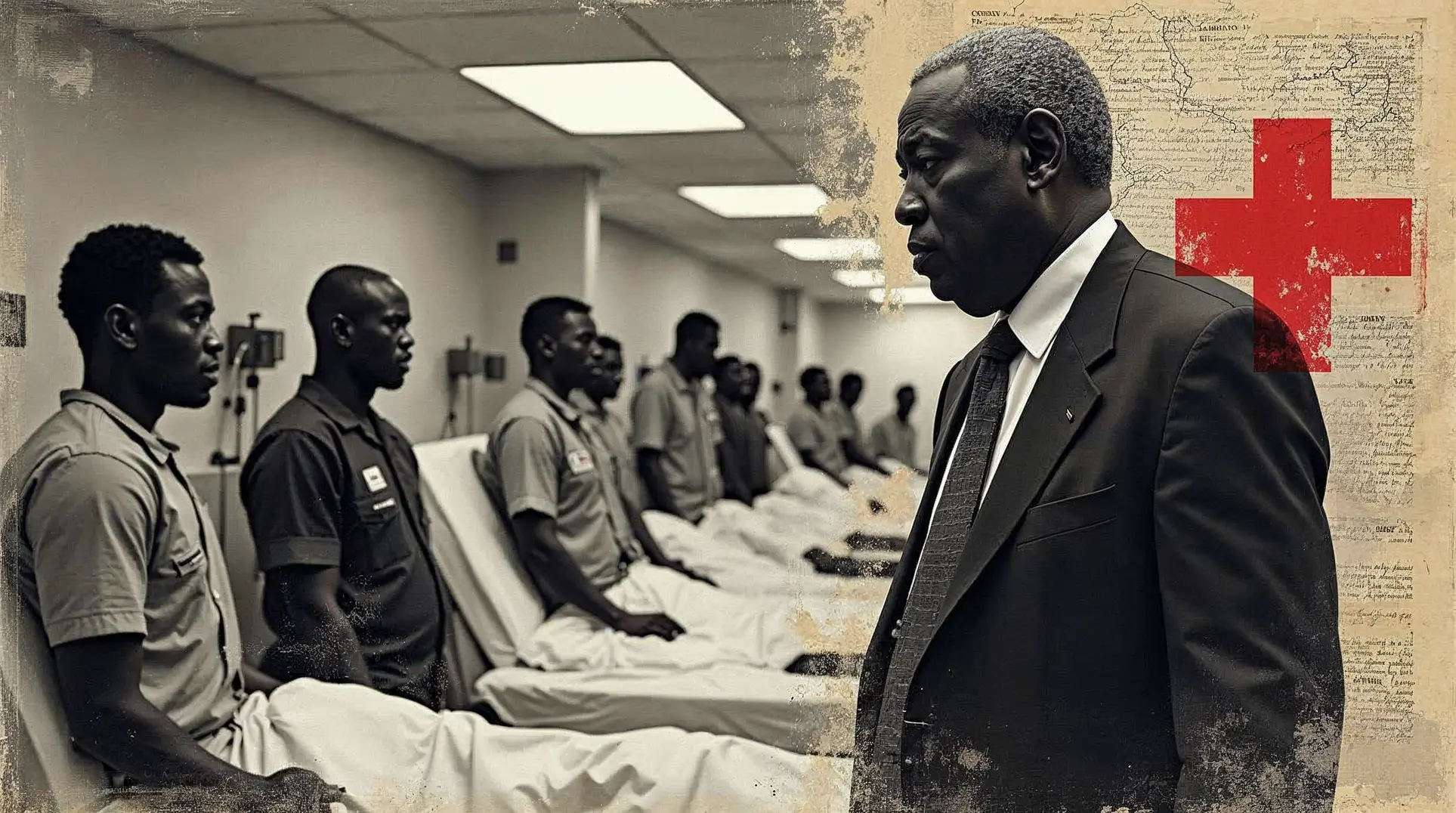
Nine Nigerian soldiers and one police officer were killed in an ambush by suspected Lakurawa militants Tuesday night in Kebbi State's Girinmasa area, marking the latest deadly attack against security forces in Nigeria's volatile northwestern region. Governor Nasir Idris confirmed the casualties on Wednesday, visiting injured personnel at Federal Teaching Hospital in Birnin Kebbi and pledging state support for victims' families.
The troops were responding to intelligence about armed men at a construction company yard in Shanga/Yauri Local Government Area when they came under attack en route. The assailants set two military gun trucks ablaze and injured two additional personnel. As of Wednesday afternoon, the Nigerian army had issued no official statement on the incident, a silence that stands in contrast to its public acknowledgment of successfully repelling a Lakurawa ambush on a General Officer Commanding convoy just one month earlier, on February 24.
Military silence amid expanding militant operations
The absence of an immediate military response from Nigeria's defense establishment raises questions about institutional capacity to control the narrative around increasingly bold attacks on state security forces. Governor Idris's rapid response—visiting the wounded, promising financial support, and conducting a site assessment—highlights the gap between state-level political engagement and federal military communication when confronted with losses that underscore systemic security failures across the northwest.
The Lakurawa group operates in a region where the boundaries between criminal enterprise and militant insurgency have become deliberately porous. Kebbi State sits at the intersection of Nigeria's borders with Niger and Benin, in territories where armed groups exploit governance vacuums to establish territorial control. The capacity to mobilize sufficient forces to ambush a military convoy, destroy armored vehicles, and escape without apparent pursuit indicates operational sophistication that exceeds opportunistic banditry.
Members are reading: How the Kebbi ambush reveals the structural governance failures enabling militant consolidation across northwestern Nigeria.
What this means for northwestern security
The Kebbi attack unfolds within a broader regional security collapse where armed groups have progressively asserted control over vast territories. President Tinubu's government faces mounting evidence that military responses alone cannot reverse the erosion of state authority when communities have lost faith in the state's willingness or capacity to provide basic security.
For residents of Kebbi, Zamfara, Sokoto, and Katsina states, the relevant question is not whether the Nigerian military can defeat Lakurawa in direct confrontation—it almost certainly can—but whether the state will invest in the governance infrastructure, economic opportunity, and equitable security provision necessary to make militant alternatives unappealing. The soldiers who died in Girinmasa on Tuesday were sent to confront a symptom. The disease remains untreated.
Subscribe to our free newsletter to unlock direct links to all sources used in this article.
We believe you deserve to verify everything we write. That's why we meticulously document every source.


