


Sudan's military chief General Abdel Fattah al-Burhan has publicly rejected the latest ceasefire proposal from US envoy Massad Boulos, calling it the "worst yet" and accusing the Quad mediators—the United States, Saudi Arabia, Egypt, and the United Arab Emirates—of structural bias. Burhan alleges Boulos echoed Abu Dhabi's positions, a charge the UAE denies amid long-standing claims it supplies weapons to the Rapid Support Forces. The rejection came as UN officials briefed the Security Council that El Fasher, the SAF's last major Darfur stronghold which fell to the RSF in late October after a 500-day siege, has "descended into an even darker hell."
This diplomatic rupture arrives at a moment of acute humanitarian crisis. The UN aid chief Tom Fletcher has effectively characterized El Fasher as a "crime scene," with credible reports of widespread executions, systematic sexual violence, deliberate starvation, and targeted attacks on hospitals. The collision between worsening atrocities and collapsing mediation credibility leaves millions of Sudanese civilians caught in a catastrophic policy void—where urgent protection needs meet a peace process that one belligerent now dismisses as compromised at its foundation.
A crime scene, not a battlefield
The fall of El Fasher was not a swift military conquest but the culmination of a 500-day siege that starved, isolated, and terrorized a civilian population. UN officials briefing the Security Council documented credible reports of house-to-house killings, mass executions, and ethnically motivated reprisals following the RSF takeover. Nearly 500 patients and companions were reportedly killed at the Saudi Maternity Hospital, part of a pattern of deliberate attacks on health facilities documented by the Office of the High Commissioner for Human Rights.
UNHCR reports nearly 100,000 people fled El Fasher and nearby villages in the past two weeks, though many elderly, wounded, and vulnerable remain trapped. Those who attempted escape faced widespread rape, forced recruitment of boys and men, and systematic extortion along flight routes controlled by armed groups. The Human Rights Council has convened a special session and adopted a resolution requesting independent investigators urgently probe these atrocities. Yet investigations after the fact offer little protection to those still inside Darfur's killing fields. The RSF has expanded operations, capturing the strategic town of Bara and broadening drone strikes across multiple regions, while more than 24 million people inside Sudan face acute food insecurity in what is now the world's largest displacement crisis.
The proposal Burhan refused
The truce package delivered by Boulos envisioned a humanitarian pause as the entry point to a broader political process, modeled on previous Quad-brokered frameworks. The RSF, holding battlefield momentum, has indicated conditional willingness to discuss cessation and political talks subject to prior agreements. But Burhan's government insists any ceasefire must require RSF withdrawal from civilian areas and weapons surrender—conditions tantamount to capitulation for an armed group that now controls much of Darfur and Khartoum's outskirts. Burhan has vowed to mobilize forces to "eliminate" the RSF, language that signals total war rather than negotiated settlement.
Yet Burhan's core objection is not the truce terms alone but the credibility of the mediators themselves. By publicly naming the UAE as a source of bias and alleging Boulos channels Abu Dhabi's positions, the army chief has reframed rejection not as intransigence but as principled refusal of a structurally compromised process. The UAE denies arming the RSF, but the perception of partiality—whether grounded in verifiable arms flows or tactical narrative—has become a material obstacle to any diplomatic off-ramp.
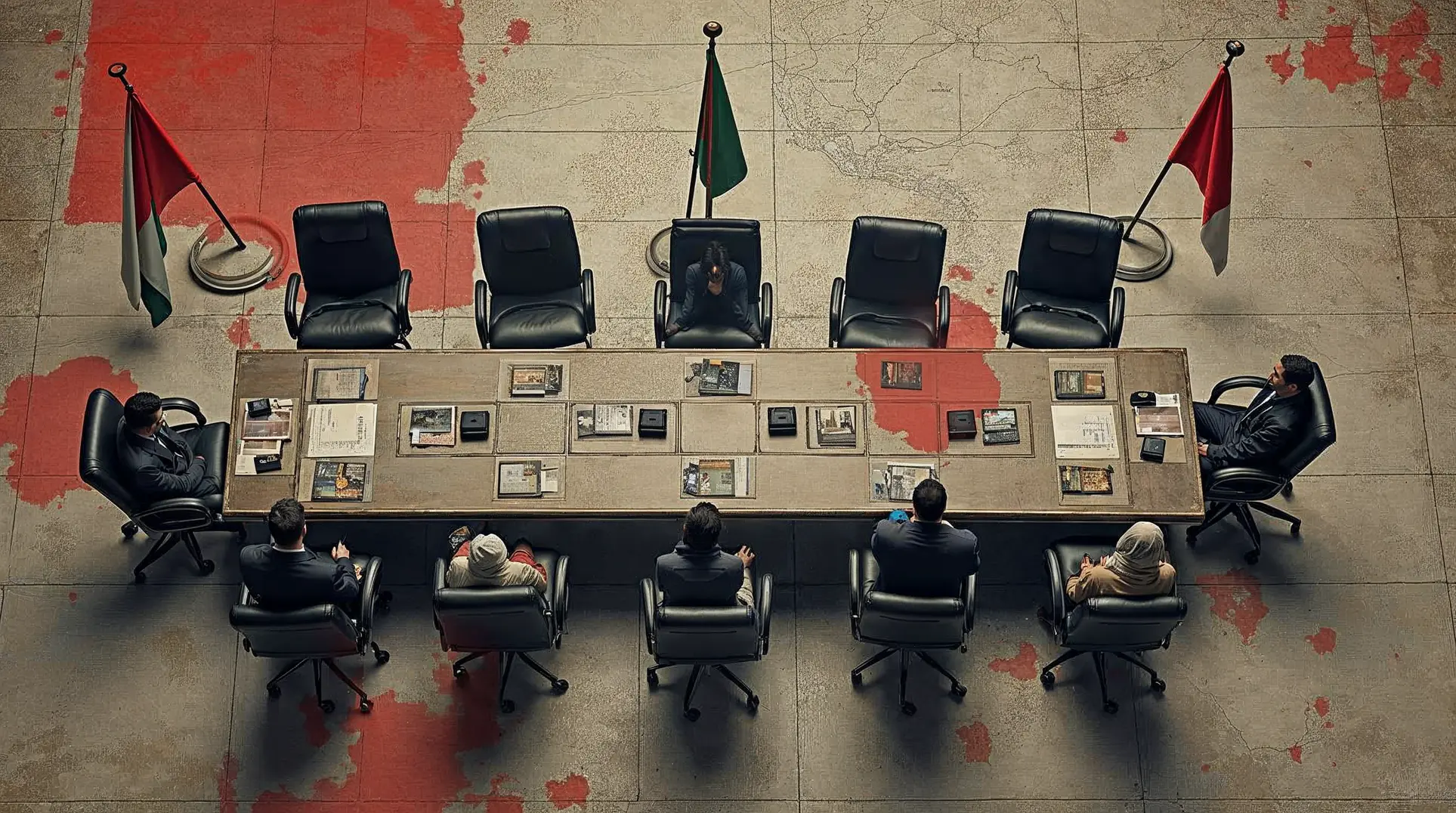
Members are reading: How mediator arms flows poison ceasefire credibility and what neutral oversight would actually require.
What credible mediation would require now
The UN's decision to launch an independent investigation into El Fasher atrocities is necessary but insufficient. Investigations document crimes after they occur; they do not stop house-to-house killings or open humanitarian corridors while people are still fleeing. Sudan's civilians need relief access, medical facility protection, and safe passage—none of which will materialize from a mediation process one party has rejected as biased and the other views as a tactical pause.
A credible humanitarian truce at this stage would require independent international monitors with freedom of movement, deconfliction protocols enforced by neutral third parties, and verifiable commitments from external actors—including both UAE and Egypt—to halt arms flows and financial support during any pause. It would need African Union leadership with teeth, backed by the kind of resources typically reserved for Gulf or Western diplomatic initiatives. And it would require accountability pathways built into ceasefire architecture, not promised vaguely for a post-conflict future that never arrives. Burhan's rejection, however politically motivated, exposes a hard truth: mediation without neutrality is theatre. And in Darfur, that theatre plays to an audience of the dead.
Subscribe to our free newsletter to unlock direct links to all sources used in this article.
We believe you deserve to verify everything we write. That's why we meticulously document every source.


