


The United States has positioned destroyers, surveillance aircraft, and Marines across the Caribbean while designating Venezuela's ruling apparatus a foreign terrorist organization. Though a full-scale invasion remains improbable—analysts cite insufficient lift capacity and boots—the coercive architecture is unmistakable. For Beijing and Moscow, the scenario of a Washington-aligned successor government in Caracas is no longer academic. It demands hard calculation of what they stand to lose and how they would adapt.
Venezuela has served both powers as a low-cost wedge in the U.S. near abroad: China secured its largest Latin American debtor and a BRI showcase; Russia deployed advanced air defenses and hosted the first International Army Games in the Western Hemisphere. A regime change would not erase Chinese commercial gravity or Russian grievance politics, but it would force both to recalibrate their regional playbooks under tighter constraints and diminished returns.
China's economic exposure and pragmatic hedging
China holds approximately $60 billion in Venezuelan state debt—dwarfing exposure to any other Latin American borrower—backed largely by oil and structured through policy banks. Tens of joint ventures span energy, infrastructure, and telecoms; Huawei has established networks that operate near sensitive military and intelligence sites, and Chinese ground stations support space operations. A pro-U.S. government would scrutinize every node, especially dual-use platforms, and demand debt renegotiation from a position of political leverage.
Beijing's response will follow its established template: pragmatic restructuring to preserve long-term market access over confrontation. Chinese policy banks provided over $120 billion in loan commitments across Latin America since 2005, and while they have reduced financing activity in recent years, they remain willing to restructure arrangements and accept commodity-backed guarantees to maintain embedded commercial presence. A cash-strapped post-Maduro administration will still need capital, and Western institutions move slowly. China can offer early debt relief, rebrand projects around renewable energy and logistics, and secure contract continuity by appearing more flexible than any alternative creditor.
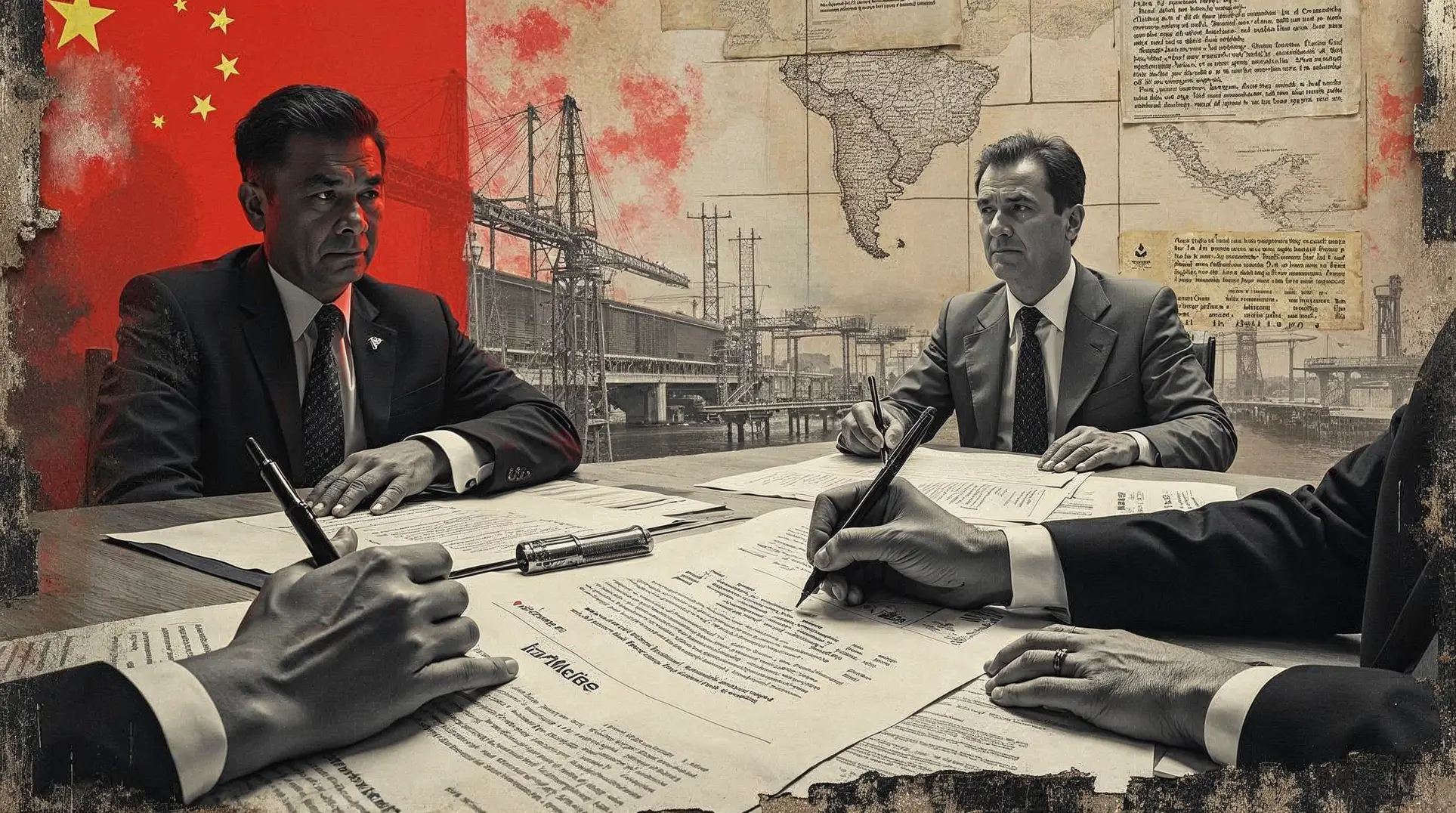
Members are reading: How China and Russia redeploy economic, diplomatic, and military assets after losing their primary Latin American wedge against Washington.
Regional dynamics and second-order effects
The loss of a friendly Caracas reduces one pillar of the informal China-Russia bloc but does not unwind China's economic magnetism. Beijing's leverage shifts from ideological affinity to transactional indispensability—a stronger foundation in a region where governments prioritize growth over alignment. Regional actors will welcome Venezuelan stabilization and renewed U.S. engagement while maintaining Chinese credit lines and access to markets that absorb commodities Washington cannot match in volume.
Brazil and Mexico will continue pressing against U.S. militarization; Colombia recalibrates border security amid potential spillover; Caribbean states weigh U.S. security guarantees against Chinese infrastructure financing they cannot source elsewhere. Argentina's rightward shift under current leadership aligns more closely with Washington, but economic necessity keeps Buenos Aires open to Beijing. The result is a hedged equilibrium where no single patron commands exclusive loyalty—precisely the environment China has cultivated through patient, non-coercive engagement.
For Washington, the policy implication is clear: regime change in Caracas degrades Russian and Chinese military projection but does not expel either power from the region. China adapts through economic resilience; Russia through asymmetric signaling. Consolidating gains requires sustained U.S. investment, institutional capacity-building, and recognition that Latin American governments will remain transactional. Moscow and Beijing lose a symbolic asset, but the structural drivers of their regional presence—capital scarcity, commodity demand, and hedging incentives—endure.
Subscribe to our free newsletter to unlock direct links to all sources used in this article.
We believe you deserve to verify everything we write. That's why we meticulously document every source.


