


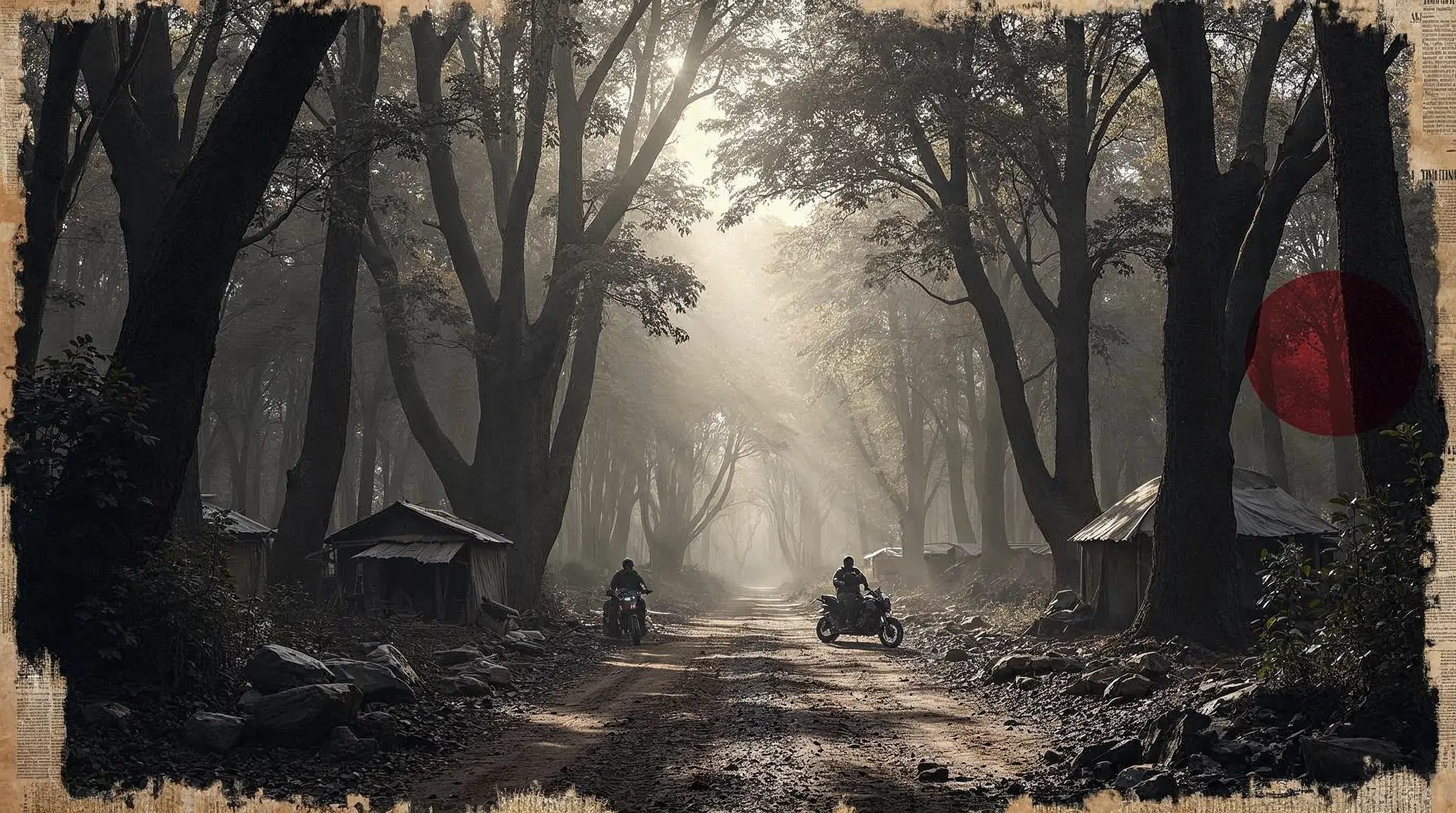
On Saturday afternoon, January 4th, motorcycle-borne gunmen attacked the Kasuwan Daji market in Demo village, Niger State, killing at least 30 people and abducting several others. The attackers, locally known as "bandits," spent hours looting food supplies and burning market stalls while witnesses reported no security presence. Police confirmed the death toll exceeds 30, though local media and witness accounts suggest over 40 people died, including women and children.
The massacre occurred one day after state officials announced the reopening of schools in what they designated "safe areas" of Niger State, following the November abduction of over 300 students in nearby Papiri. The proximity—both temporal and geographical—between official reassurances and this brutality exposes the dangerous gap between Nigerian government rhetoric and the security reality facing communities in the country's Northwest. President Bola Tinubu ordered security forces to hunt down the perpetrators, repeating a directive that has followed dozens of similar attacks with limited visible results.
The anatomy of a security vacuum
The Kasuwan Daji attack followed a pattern that has become grimly familiar across Nigeria's Northwest. Gunmen emerged from the National Park Forest, a known bandit sanctuary that state forces have failed to secure, and descended on the market around 4:30 p.m. Witness Dauda Shakulle told media outlets that the attackers operated without interference, conducting their raid methodically before withdrawing.
What makes this incident particularly revealing is not the attack itself, but what happened afterward. Local residents, not security personnel, recovered the bodies scattered across the market. When contacted by Reuters, military officials declined to comment. Police statements claimed forces had been deployed, yet witness testimony uniformly describes an absence of state security during and immediately following the hours-long assault. This contradiction between official narrative and ground truth points to a deeper structural issue than operational failure—it suggests a security apparatus either unable or unwilling to acknowledge the extent of territory beyond its effective control.
The attack's location compounds the significance. Demo village sits near Papiri, where 300 students were abducted from their school just two months earlier. That mass kidnapping prompted the school closure that officials had just declared resolved, creating the bitter irony of Saturday's violence. The ungoverned forest spaces serving as bandit staging grounds remain intact, enabling armed groups to strike civilian targets and retreat without encountering state resistance.
Members are reading: Why the Nigerian state's confidence in designating "safe areas" represents a dangerous misreading of security dynamics.
The credibility deficit
The Kasuwan Daji massacre leaves Niger State communities facing a compound crisis: the immediate violence itself, and the recognition that official security assessments cannot be trusted. When authorities declare areas safe while armed groups operate with the freedom to conduct hours-long market raids, civilians lose the ability to make informed decisions about fundamental activities like sending children to school or engaging in commerce.
The pattern established across Nigeria's Northwest suggests this attack will follow the familiar trajectory—official outrage, security deployments announced, and eventual return to the status quo that enabled the violence. Until the Nigerian state develops the capacity to secure the ungoverned spaces serving as bandit sanctuaries, or the honesty to acknowledge the limits of its territorial control, communities will continue paying the price for the gap between rhetoric and reality. Saturday's victims, gathered for ordinary market activity in an area officials had implicitly validated through school reopening announcements, died in that gap.
Subscribe to our free newsletter to unlock direct links to all sources used in this article.
We believe you deserve to verify everything we write. That's why we meticulously document every source.


