


Myanmar's military-controlled parliament elected Senior General Min Aung Hlaing as president on April 3, 2026, with 429 out of 584 votes, formalizing his transition from Commander-in-Chief to civilian leader. The move follows his resignation from military command on March 30 and caps a process that began with controversial elections in December 2025 that Western governments and opposition groups condemned as illegitimate.
The election positions Min Aung Hlaing to claim a civilian title while his loyalist successor, Ye Win Oo, takes command of the armed forces—an arrangement that preserves the junta chief's control over both state and military institutions. The parliament that elected him is dominated by the Union Solidarity and Development Party (USDP), which won over 80% of contested seats in an election where opposition parties were banned, criticism criminalized, and voting blocked in rebel-controlled territories.
Latest situation update
The presidential election represents the culmination of institutional engineering that began with the February 2021 coup, which overthrew Aung San Suu Kyi's elected government. Min Aung Hlaing has long sought to consolidate formal authority over Myanmar's political institutions, constructing elaborate constitutional frameworks even as the military's territorial control has contracted sharply.
According to independent assessments, the Tatmadaw controls less than 15% of Myanmar's territory as of January 2026, with opposition forces controlling approximately double that amount. The military's active-duty strength has declined significantly over three years of sustained conflict with Ethnic Armed Organizations and the People's Defense Force coalition. The economic situation has deteriorated catastrophically, with millions requiring humanitarian aid and widespread displacement across rebel-held areas.
The December 2025 elections that preceded Min Aung Hlaing's presidential bid drew immediate condemnation from Western capitals. The electoral framework excluded legitimate opposition, maintained 25% of parliamentary seats for unelected military appointees, and prevented voting in significant portions of the country. Human rights organizations documented systematic restrictions on media coverage and political organizing in the lead-up to the vote, creating conditions that made genuine democratic competition impossible.
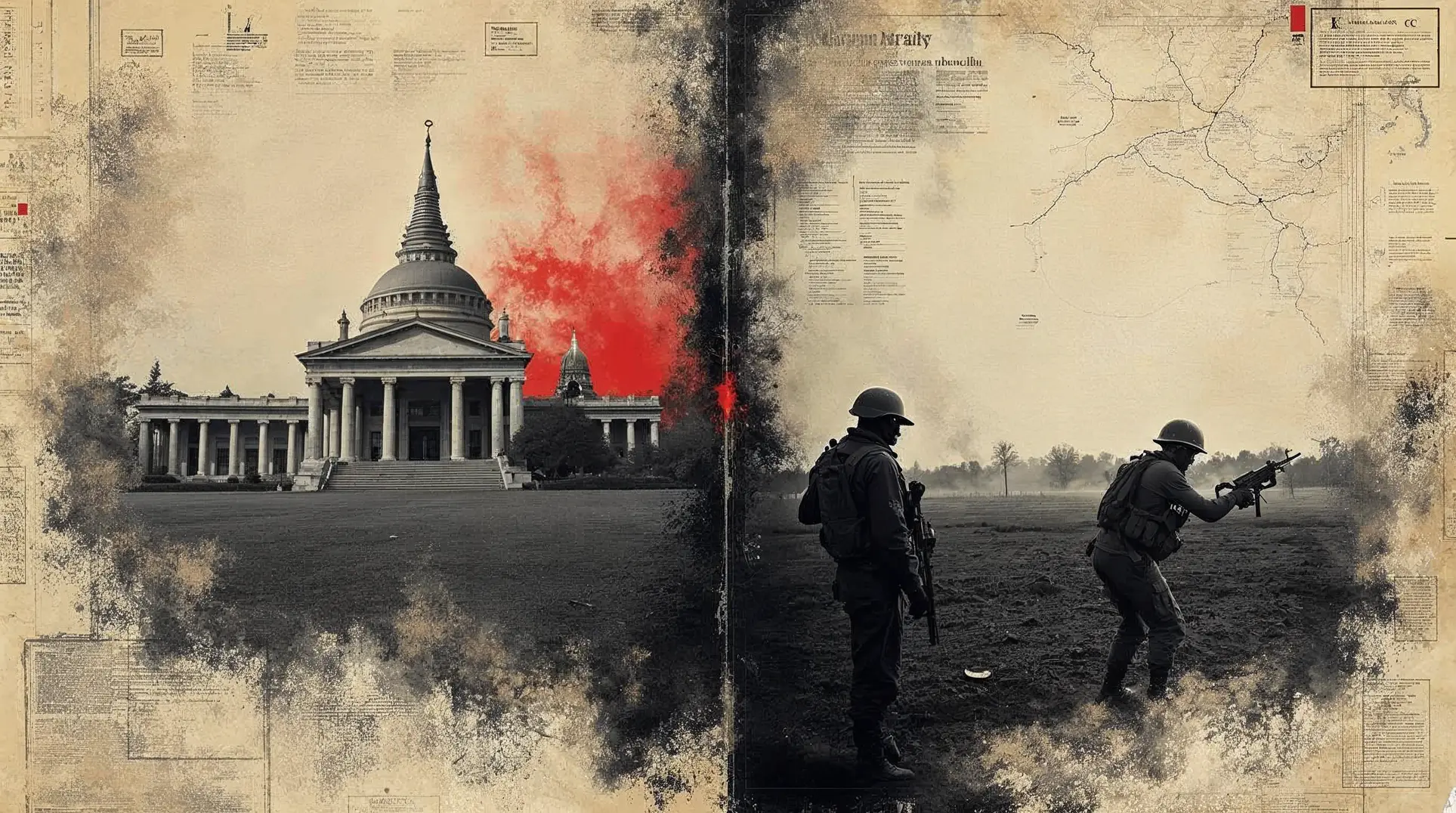
Members are reading: How China's economic interests and ASEAN engagement pressures shaped the junta's civilian transition strategy despite territorial collapse.
Outlook for Myanmar's conflict trajectory
Min Aung Hlaing's presidential inauguration is unlikely to alter the trajectory of Myanmar's civil war or improve conditions for the millions affected by the conflict. The junta's focus on institutional legitimacy through electoral processes consumes political capital that could address the underlying drivers of resistance—grievances over the coup, human rights abuses, and the military's historical dominance of civilian governance.
The presidential transition may facilitate some international engagement, particularly with countries prioritizing economic interests over democratic principles. But for Myanmar's population, the change represents continuity rather than transformation: the same leader who orchestrated the 2021 coup now claims a civilian title, while the military he commands continues losing ground to armed opposition. The gap between the junta's institutional performance and its operational reality suggests Myanmar's polycrisis will deepen, regardless of how Burkina Faso and other authoritarian governments structure their political facades. The question is not whether Min Aung Hlaing can claim presidential legitimacy, but whether Myanmar's state institutions can survive the erosion of their territorial foundation.
Subscribe to our free newsletter to unlock direct links to all sources used in this article.
We believe you deserve to verify everything we write. That's why we meticulously document every source.


