


Burkina Faso's military government and allied forces killed at least 1,255 civilians between January 2023 and August 2025, compared to 582 civilians killed by Islamist armed groups during the same period, according to a Human Rights Watch report released April 2, 2026. The findings document how state forces are responsible for more than double the civilian casualties inflicted by the jihadist insurgency they claim to be combating, raising fundamental questions about the counterinsurgency strategy's legality and effectiveness.
The report, titled "None Can Run Away: War Crimes and Crimes Against Humanity in Burkina Faso by All Sides," identifies President Ibrahim Traoré and six senior military commanders as potentially liable for the abuses, along with five leaders of the al-Qaeda-affiliated Jama'at Nusrat al-Islam wal-Muslimin (JNIM). The documentation reveals a pattern of systematic violence against civilians, particularly targeting the Fulani community in what HRW characterizes as ethnic cleansing operations carried out under the guise of counterterrorism.
Latest situation update
The most severe documented incident occurred on February 25, 2024, when Burkinabè military forces summarily executed at least 223 civilians, including 56 children, in the villages of Nondin and Soro. Soldiers accused the victims of collaborating with JNIM before killing them. The massacre represents the single deadliest episode in a broader campaign that has seen government forces and the Volunteers for the Defense of the Homeland (VDP) militia conduct mass killings across multiple regions. In April and May 2024 alone, military operations killed up to 400 civilians during counterinsurgency sweeps, while another 400 died in operations near Djibo in December 2023.
The Burkinabè military junta, which seized power in September 2022 with the stated aim of tackling jihadist violence, has systematically consolidated authoritarian control while conducting these operations. President Traoré's government has dissolved political parties, extended its transition timeline to 2029, and suppressed independent media coverage of the conflict. This information vacuum has allowed the scale of state-sponsored violence to persist largely without international scrutiny, despite the conflict displacing over 2 million people since the insurgency began in 2016.
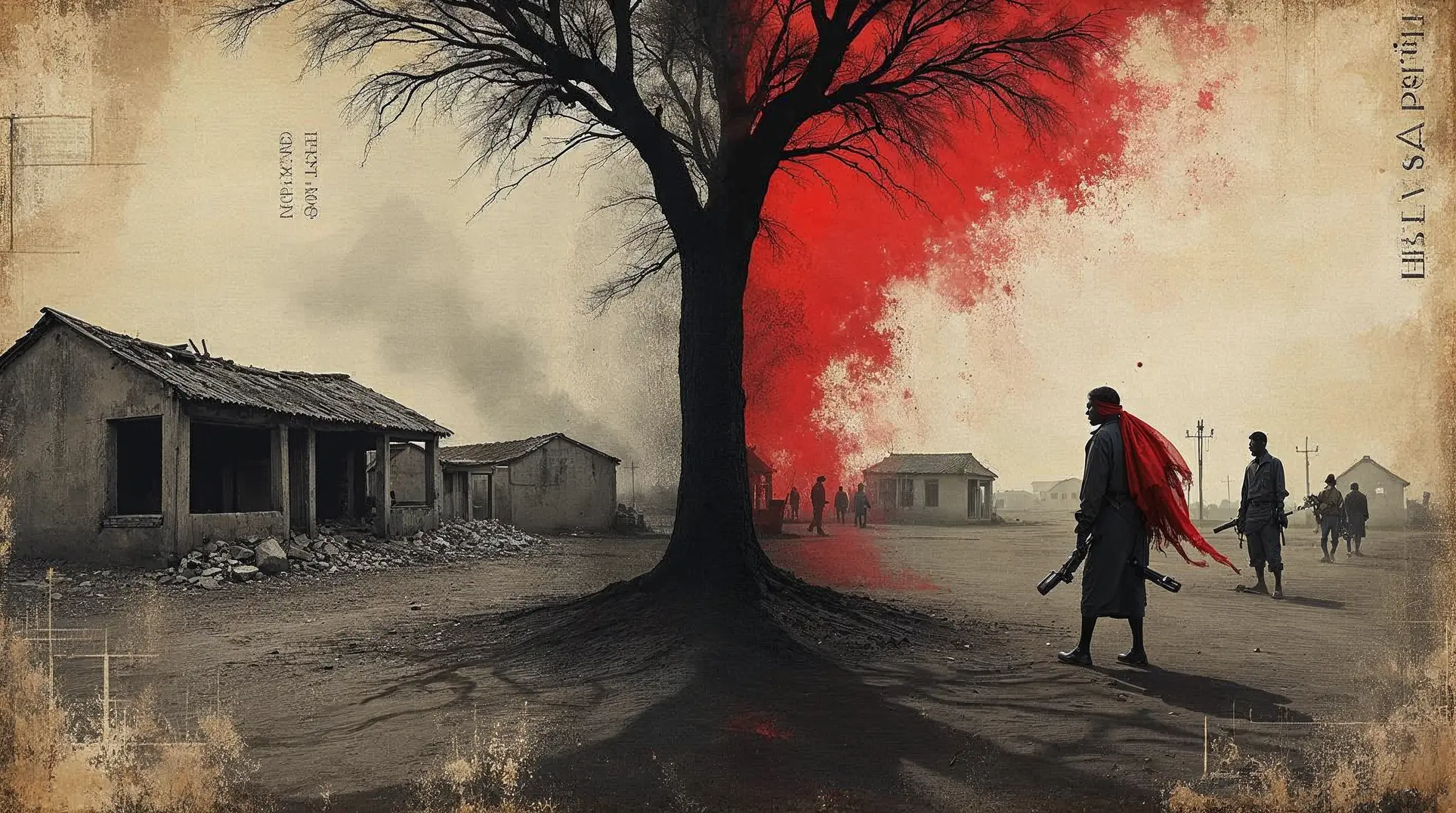
Members are reading: How the structural logic of collective punishment transforms counterinsurgency into ethnic cleansing when states lose capacity for targeted operations.
Accountability vacuum and international response
Human Rights Watch has called on the International Criminal Court to open a preliminary examination into the situation in Burkina Faso and urged international partners to impose targeted sanctions on military commanders credibly implicated in atrocities. The report emphasizes that national justice institutions remain either inaccessible or distrusted by victims, creating near-total impunity for all warring parties. No investigations have been announced into the documented massacres, and no compensation has been offered to families of those killed.
The UN Security Council and regional bodies like the Economic Community of West African States have issued statements of concern but implemented no binding mechanisms to compel accountability or protect civilians. The comparison to similar drone warfare patterns in Sudan underscores how conflicts across the Sahel region are increasingly characterized by state forces inflicting mass civilian casualties while claiming counterterrorism justifications. Without external pressure that imposes costs for these violations, the pattern documented by Human Rights Watch will continue, further eroding the Burkinabè government's already fragile legitimacy and driving more civilians into the arms of the very insurgent groups the military claims to fight.
Subscribe to our free newsletter to unlock direct links to all sources used in this article.
We believe you deserve to verify everything we write. That's why we meticulously document every source.


