


Iran's Assembly of Experts formally elected Mojtaba Khamenei as the Islamic Republic's third Supreme Leader on March 8, 2026, just over a week after his father Ayatollah Ali Khamenei was killed in a joint US-Israeli airstrike. The 56-year-old cleric becomes the first leader in the post-1979 era to inherit Iran's highest office through direct succession, a dynastic transition that challenges the Islamic Revolution's foundational principles while consolidating the Islamic Revolutionary Guard Corps' grip on state power.
The succession unfolds on the ninth day of sustained US-Israeli military operations targeting Iranian infrastructure, leadership compounds, and nuclear facilities. Oil prices surged past $100 per barrel as markets absorbed the implications of leadership change during active combat. Donald Trump immediately rejected Mojtaba's selection, calling him an "unacceptable choice" and declaring that any unapproved leader "would not last long," while demanding Iran's "unconditional surrender." Israel vowed to target the new Supreme Leader, continuing a pattern of explicit threats against Iran's constitutional succession process.
The shadow operator emerges
Mojtaba Khamenei spent decades cultivating influence from behind the scenes, operating as what analysts described as a "mini-supreme leader" within his father's inner circle. He served as gatekeeper to the elder Khamenei, controlling access and information flows that gave him unusual leverage over regime decision-making. His public profile remained deliberately limited—few photographs exist, and he rarely appeared at official events—yet his authority within security and clerical networks grew steadily.
His formation occurred in the crucible of the Iran-Iraq War, where he served in the IRGC's Habib Battalion. Those wartime experiences forged enduring relationships with commanders who now occupy senior positions throughout Iran's security apparatus. After the war, he pursued advanced religious education in Qom under conservative scholars, establishing credentials among traditionalist clerics while maintaining his military-security ties. This dual foundation in religious authority and coercive power became the bedrock of his influence.
Western intelligence assessments and Iranian opposition sources place Mojtaba at the center of the 2009 Green Movement crackdown. Reformist figures publicly accused him of coordinating the suppression of protests challenging Mahmoud Ahmadinejad's disputed election victory. While the regime never confirmed his operational role, the episode demonstrated his willingness to deploy force against internal dissent and established his reputation among hardliners as someone who would defend the system without hesitation.
IRGC ascendancy formalized
The new Supreme Leader's elevation represents more than individual succession—it formalizes the IRGC's transformation from revolutionary militia to Iran's dominant governing institution. Mojtaba's power base rests overwhelmingly within the Guards' command structure and its vast economic empire spanning construction, telecommunications, energy, and black-market networks. His selection ensures that IRGC interests will drive policy across security, economics, and foreign affairs with less institutional friction than existed under his father.
This alignment carries immediate operational consequences. The IRGC has already demonstrated its willingness to contradict civilian government messaging, as evidenced by the contradiction between President Pezeshkian's diplomatic outreach to Gulf states and IRGC statements preserving Iran's right to strike US and Israeli assets regardless of host country concerns. Under Mojtaba, such contradictions may diminish not through reconciliation but through the marginalization of civilian voices that diverge from IRGC priorities.
The Guards' economic interests also benefit from leadership continuity at a moment of extreme external pressure. International sanctions have paradoxically strengthened IRGC-controlled enterprises by eliminating legal competition and creating lucrative smuggling opportunities. Mojtaba's ascension removes any prospect of reformist challenges to this arrangement, cementing a war economy structure that enriches security elites while ordinary Iranians face hyperinflation and scarcity.
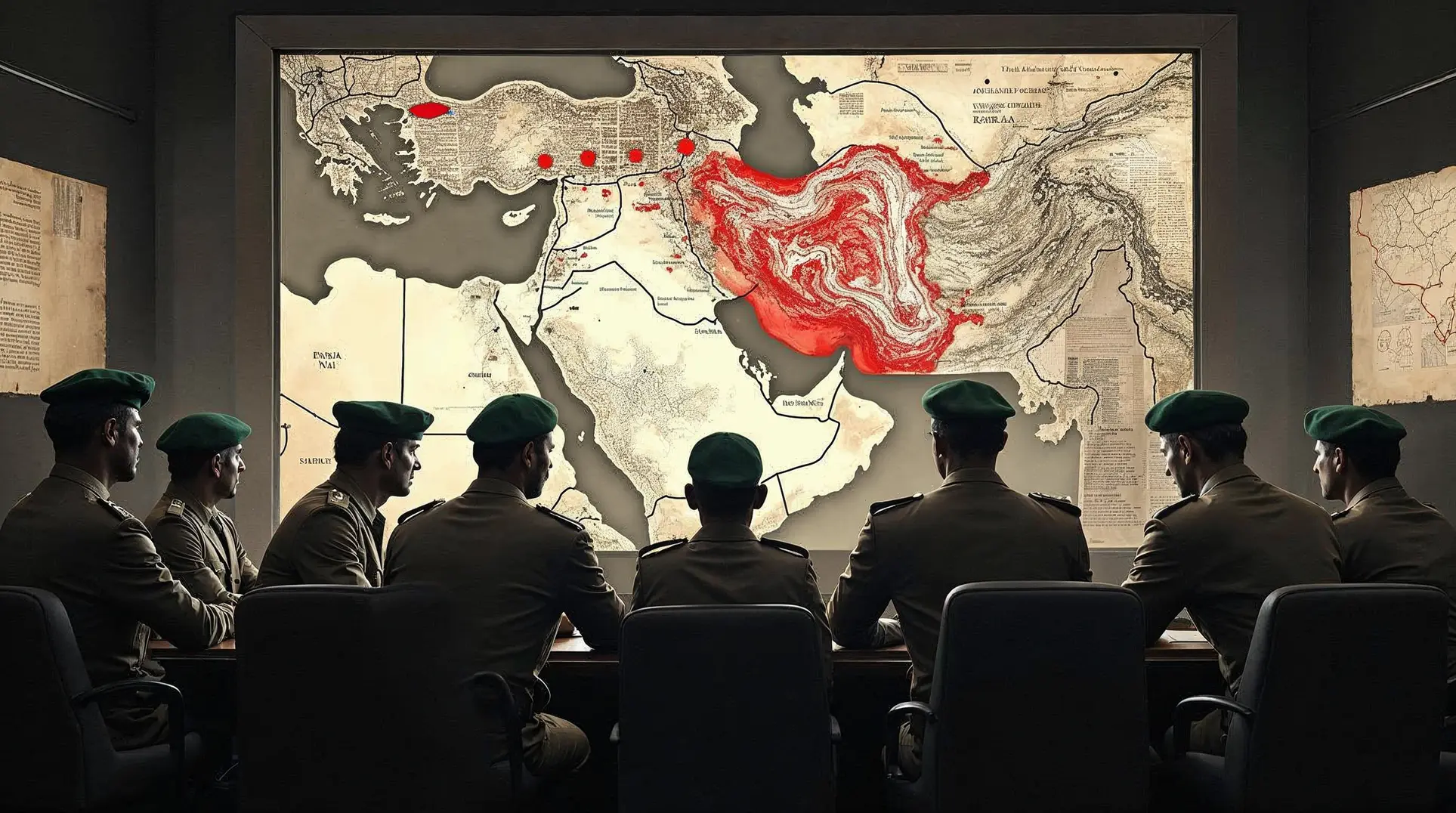
Members are reading: How Mojtaba's legitimacy crisis could fragment Iran's command structure precisely when unified authority matters most for regime survival.
Ideological hardening and nuclear trajectory
Mojtaba Khamenei's documented positions suggest a more uncompromising approach to both domestic governance and foreign policy than his father maintained. Sources within Iranian conservative circles describe him as among the most hardline of principlist factions, skeptical of engagement with Western powers and hostile to internal reform movements. His role in suppressing the 2009 protests established a pattern of prioritizing regime security over political accommodation.
On nuclear policy, intelligence assessments indicate Mojtaba favors pursuing weapons capability more aggressively than his father, who maintained strategic ambiguity about ultimate intentions. The current conflict has degraded but not eliminated Iran's nuclear infrastructure. The International Atomic Energy Agency confirmed damage to the Natanz facility, yet production capabilities remain partially intact. A Supreme Leader committed to weaponization could accelerate clandestine programs, particularly if he concludes that conventional deterrence has failed to protect Iran's leadership from decapitation strikes.
The traumatic circumstances of his father's assassination create personal motivations that align with institutional pressures toward escalation. Mojtaba witnessed his family compound destroyed in a deliberate strike designed to kill Iran's highest leadership. This is not abstract geopolitical competition but direct, violent targeting of his immediate family. The psychological impact of such trauma, combined with regime survival imperatives, points toward vengeful responses aimed at restoring deterrence through dramatic action.
Members are reading: Analysis of Iran's three most likely escalation pathways under new leadership, and why each carries catastrophic risks without clear strategic payoffs.
Regional power dynamics shift
The succession reverberates beyond Iran's borders, affecting regional alignments and proxy relationships cultivated over decades. Hezbollah, Iran's most capable deterrent asset, explicitly framed its entry into the conflict as retaliation for the elder Khamenei's assassination. The personal dimension of that justification provided political cover for a decision that carried enormous risks for Lebanon. Mojtaba's assumption of power removes that specific rationale while raising questions about whether proxy groups view him with the same authority his father commanded.
Iraq's Shi'a militias, Syrian regime elements, and Yemeni Houthi forces all operated within networks that the previous Supreme Leader personally cultivated through years of relationship-building and resource allocation. These are not purely ideological movements but pragmatic actors whose cooperation depended on Iranian financial support, weapons supplies, and strategic coordination. Mojtaba inherits the institutional mechanisms but lacks the personal relationships and proven judgment that sustained these arrangements through previous crises.
Gulf states now confront a more unpredictable Iranian leadership at a moment when they have absorbed strikes due to hosting US military infrastructure. The UAE, Bahrain, Qatar, and Kuwait face difficult choices between maintaining security relationships with Washington and avoiding further entanglement in a conflict where Iran has demonstrated both capability and willingness to strike their territory. President Pezeshkian's apology for collateral damage offered diplomatic space, but whether Mojtaba will honor such restraints remains uncertain given his IRGC backing and hardline orientation.
Members are reading: Mapping Iran's internal power centers and how Mojtaba's narrow support base could fracture command authority during extended conflict.
Forward trajectory and strategic uncertainties
The immediate path forward hinges on whether Mojtaba can establish authority quickly enough to impose unified strategic direction on Iran's fragmented power structure. The IRGC's backing provides a foundation, but the Guards themselves encompass competing factions with divergent threat assessments and preferred responses. Quds Force elements focused on external operations may prioritize proxy escalation, while domestic security units emphasize regime protection, and economic interests within the Guards' business empire seek stability that preserves revenue streams.
External actors have signaled continued military pressure regardless of leadership transition. Trump's explicit rejection of Mojtaba as "unacceptable" and Israel's vow to target him directly create an environment where the new Supreme Leader operates under standing threat of assassination identical to that which killed his father. This reality eliminates any expectation of breathing space to consolidate power, instead forcing immediate decisions about how to respond to ongoing attacks while establishing internal authority.
The nuclear dimension remains the critical variable with greatest potential for transforming the conflict. Iran's previous refusal to negotiate on missile programs established red lines that the elder Khamenei maintained. Whether Mojtaba views those constraints as binding or as artifacts of a strategic environment that has fundamentally changed will determine whether the region faces the prospect of a nuclear-armed Iran emerging from this crisis. Intelligence on this question remains limited, but his documented positions suggest greater willingness to cross thresholds his father approached but never definitively breached.
Conclusion
Mojtaba Khamenei's ascension represents continuity in ideology and institutional alignment but introduces profound uncertainties about Iran's strategic trajectory. His deep IRGC ties ensure that security considerations will dominate policy formation, while his lack of independent religious authority and the dynastic nature of his succession create legitimacy vulnerabilities that could fracture command structures when unified direction is most critical. The traumatic circumstances of his father's assassination, combined with ongoing military pressure and explicit external threats against his own life, create conditions that favor escalatory responses over diplomatic accommodation.
The region now confronts an Iranian leadership that is simultaneously more hardline in orientation yet potentially weaker in actual authority—a combination that historically generates unpredictable and often dangerous strategic behavior. Whether Mojtaba can consolidate power quickly enough to impose coherent strategy, or whether internal fragmentation paralyzes Iranian decision-making while external pressure intensifies, will shape regional dynamics for years beyond the current conflict.
Subscribe to our free newsletter to unlock direct links to all sources used in this article.
We believe you deserve to verify everything we write. That's why we meticulously document every source.


