


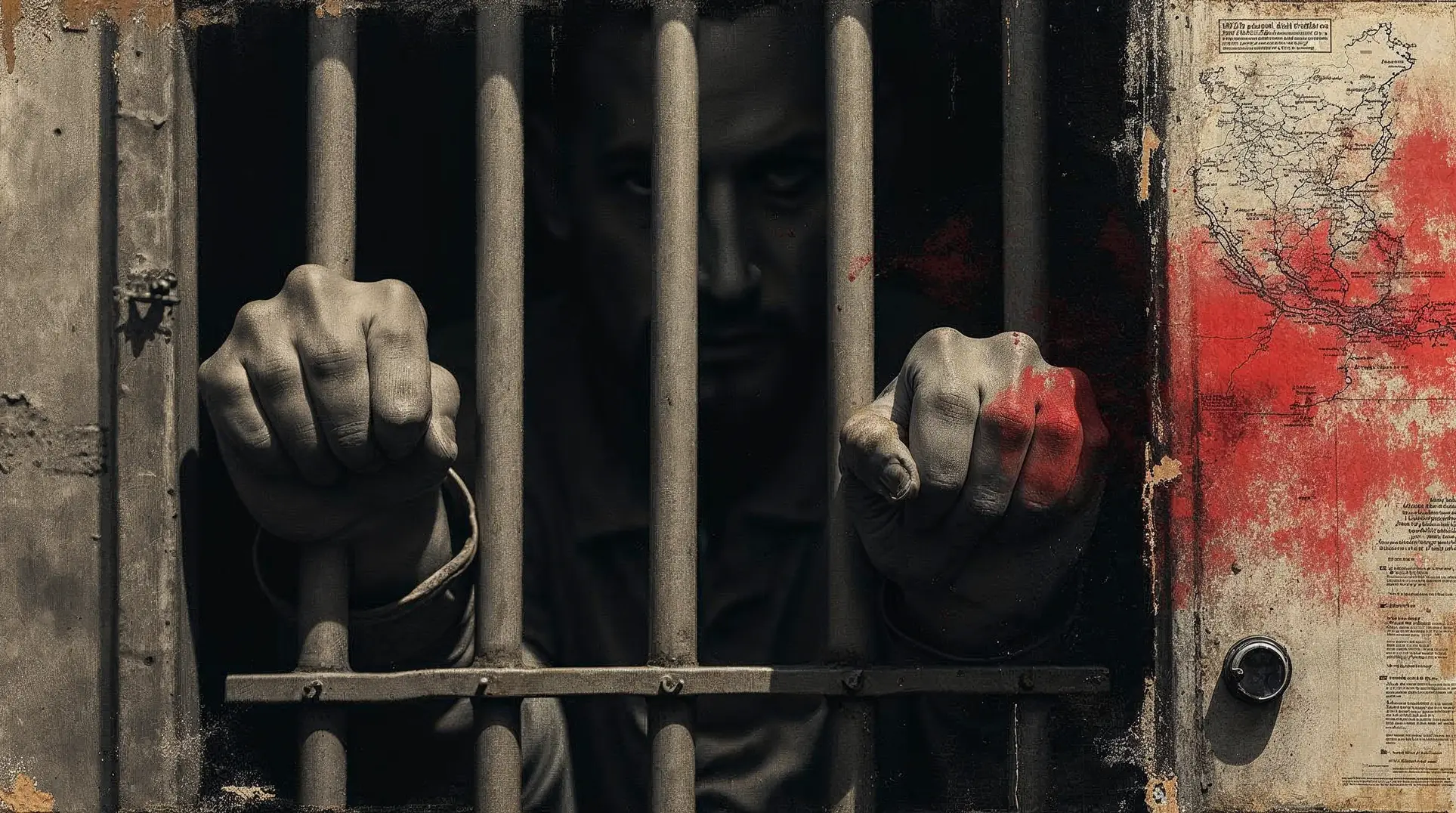
Reporters Without Borders revealed on March 24 that the M23 rebel group has detained numerous individuals, including civilians and at least two journalists, in shipping containers lacking light and ventilation at a compound in Goma, eastern Democratic Republic of Congo. The organization condemned the practice as "inhumane and degrading" based on first-hand accounts, satellite imagery, and social media evidence from 2025.
The detentions occurred at the provincial legislative assembly compound in Goma, a strategic city that M23 has controlled since its expanded offensive began in 2021. Witnesses described up to 80 people held per container, subjected to minimal food, routine beatings, and extreme temperatures. Survivors reported deaths inside the containers, with some detainees held for weeks before transfer to other locations. The revelations add a grim dimension to the humanitarian crisis in a region where over 7 million people have been displaced by conflict.
Control through terror
The use of shipping containers as detention facilities is not improvisation—it reflects a calculated strategy of control through terror in territories where M23 has displaced state authority. The compound's location at Goma's provincial assembly building is particularly significant: the rebel group has appropriated symbols of government infrastructure to house its mechanisms of repression, physically manifesting the governance vacuum in North Kivu.
The documented abuses extend beyond detention conditions. Amnesty International has previously recorded M23's systematic use of torture, arbitrary detention, enforced disappearances, and ransom demands targeting civilians in areas under its control. The shipping container detentions fit this pattern of violence designed to suppress dissent and control populations in mineral-rich territories. The targeting of journalists reveals an explicit effort to eliminate independent documentation of M23's operations in regions where the group profits from coltan extraction and other resource revenues.
Members are reading: How resource revenues enable systematic abuses and why international actors fail to enforce accountability
Complicity through inaction
The broader international failure is not simply passive neglect but active complicity through economic relationships that perpetuate the conflict. Private security arrangements and resource deals in other parts of eastern DRC demonstrate how external actors prioritize access to minerals over protection of civilian populations. Rwanda's widely documented support for M23 continues despite international condemnation, in part because the economic benefits of instability in North Kivu serve Kigali's strategic interests.
For the journalists detained in shipping containers, and the civilians held alongside them, the question of responsibility extends far beyond M23 commanders. It includes the states that back the group, the corporations that source minerals from territories under its control, and the international bodies that deploy monitors without the mandate or capacity to protect populations at risk. The shipping containers in Goma are not an anomaly—they are a logical outcome of a system where those who document abuses face elimination, and those who profit from extraction face no consequences.
Subscribe to our free newsletter to unlock direct links to all sources used in this article.
We believe you deserve to verify everything we write. That's why we meticulously document every source.


