


The fatal shooting of 26-year-old Khattab Mohammad Ismail Al-Sarhan Daraghmeh in the occupied West Bank village of Al-Lubban ash-Sharqiya on January 1, 2026, occurred amid a broader Israeli operation that saw 50 Palestinians detained across the territory in a single day. Israeli Defense Forces stated troops responded with live fire after being attacked by individuals throwing stones, whom the IDF described as "militants." Palestinian health authorities confirmed one fatality and one injury. The incident represents the latest data point in a sharply escalating pattern of lethal force across the West Bank since October 2023.
What distinguishes this event, however, is its temporal and strategic alignment with a separate but related development in Gaza: the same day, Israeli authorities announced a ban on 37 international aid organizations operating in the besieged territory, a move condemned by the United Nations and European Union as deepening an already catastrophic humanitarian crisis. These concurrent actions—kinetic violence in the West Bank and bureaucratic strangulation in Gaza—reflect a dual-front strategy of territorial control that warrants structural analysis beyond the individual incident.
Systematic escalation and the erosion of restraint
The January 1 killing in Al-Lubban ash-Sharqiya is embedded within a documented pattern of intensified Israeli military operations across the West Bank. Since October 2023, Palestinian Authority figures indicate over 1,000 Palestinians have been killed by Israeli forces or settlers in the territory. While the IDF maintains that the majority were combatants engaged in armed resistance, analysis from the United Nations Office for the Coordination of Humanitarian Affairs and Human Rights Watch highlights patterns of excessive lethal force and near-total impunity for security personnel.
The International Court of Justice's July 2024 advisory opinion provides legal framing for this escalation, finding Israel's occupation unlawful and in breach of the prohibition on racial discrimination and apartheid. The opinion specifically cited the systematic nature of restrictions on Palestinian movement, settlement expansion, and differential application of law. What has emerged since October 2023 is an operational environment where the threshold for lethal force has demonstrably lowered, particularly in confrontations involving stone-throwing or unarmed protest.
Concurrent with increased lethal violence is a surge in administrative detentions and raids across major West Bank cities, particularly Hebron and Jerusalem. The 50 detentions recorded on January 1 alone reflect a pattern documented by Palestinian prisoner rights organizations: thousands of Palestinians have been arrested without charge or trial since late 2023, held under administrative orders that bypass judicial process. This creates a coercive environment extending beyond immediate zones of armed confrontation.
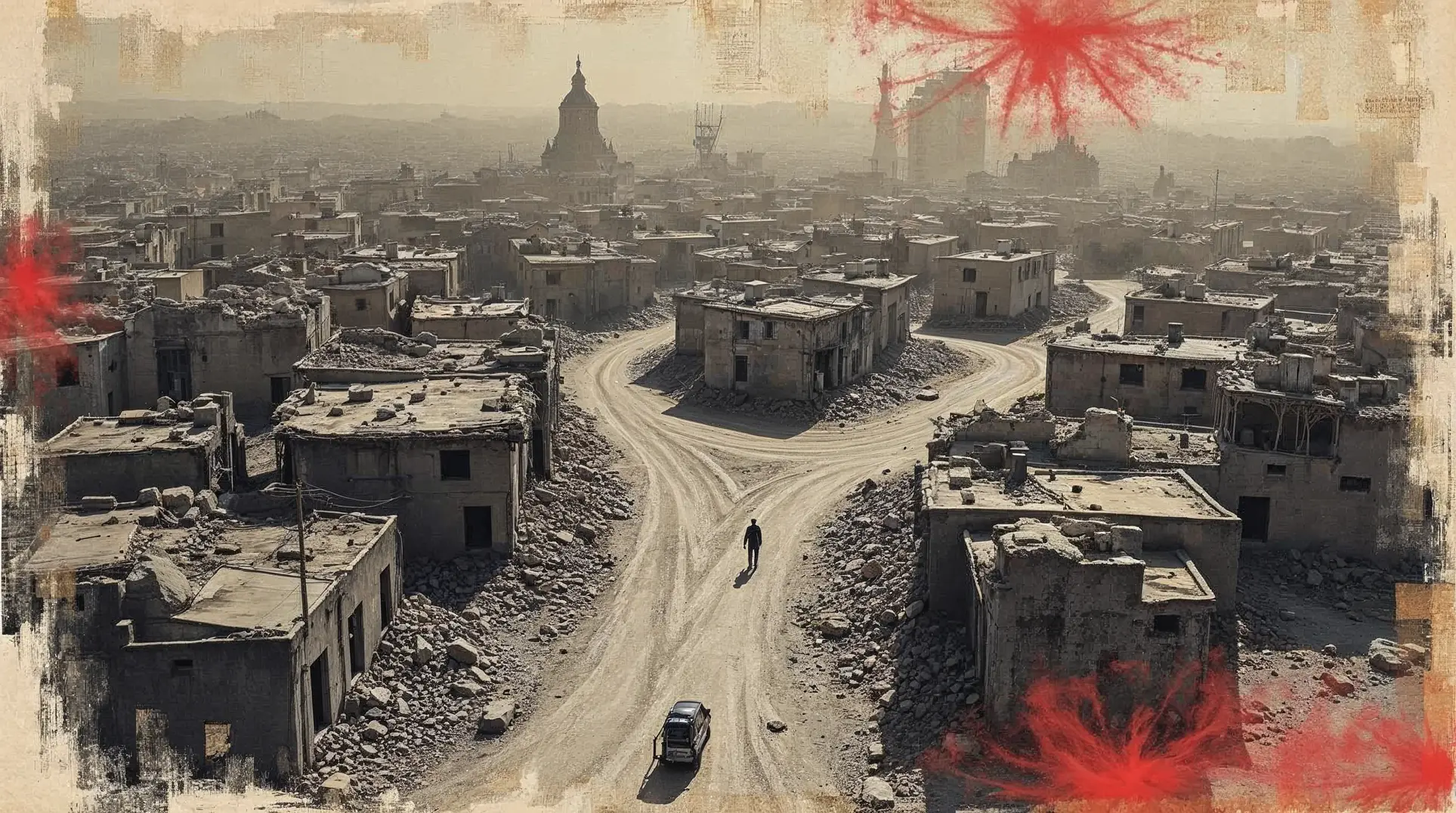
Members are reading: Detailed analysis of how mass demolitions and settler violence function as tools of demographic engineering and territorial control.
The Gaza dimension and bureaucratic asphyxiation
The ban on 37 aid organizations in Gaza, announced the same day as the Al-Lubban ash-Sharqiya killing, represents the administrative counterpart to the West Bank's kinetic pressure. While Israeli authorities cite security concerns and alleged organizational links to Hamas, humanitarian agencies and international bodies view this as a deliberate tightening of the siege that has already produced famine conditions in northern Gaza and catastrophic destruction of health and water infrastructure. The synchronicity is notable: as military force intensifies in the West Bank, bureaucratic mechanisms deepen Gaza's isolation.
This dual approach reveals a coherent strategy across both territories. In the West Bank, the mechanism is physical: demolitions, detentions, and lethal force create a coercive environment that makes daily Palestinian life increasingly untenable. In Gaza, the mechanism is administrative: restricting humanitarian access, controlling supply flows, and maintaining siege conditions that, according to Human Rights Watch and other organizations, may constitute crimes against humanity through the deliberate infliction of suffering on a civilian population.
Diagnosing a multi-front strategy of control
The events of January 1, 2026—a young Palestinian killed in a stone-throwing confrontation, 50 detained in overnight raids, and 37 aid groups barred from operating in Gaza—are not discrete incidents but symptoms of a coordinated escalation. The structural evidence points to a deliberate strategy of applying maximum pressure across the occupied territories through varied but complementary means. In the West Bank, it manifests as demolitions, displacement, and a lowered threshold for lethal force. In Gaza, it operates through humanitarian asphyxiation and siege maintenance.
This is not a flare-up but a calculated intensification, reshaping the demographic, spatial, and political reality of the occupied territories through sustained coercive pressure. The individual death in Al-Lubban ash-Sharqiya and the bureaucratic decree against aid organizations are two instruments of the same policy architecture, revealing the depth and breadth of Israel's current approach to managing Palestinian populations under its control.
Subscribe to our free newsletter to unlock direct links to all sources used in this article.
We believe you deserve to verify everything we write. That's why we meticulously document every source.


