


The Rafah border crossing between Gaza and Egypt reopened for limited traffic on Monday, February 2, 2026, after remaining almost entirely closed for nearly two years. Israeli and Egyptian authorities are permitting 50 medical patients—each accompanied by up to two relatives—to exit Gaza daily, while allowing 50 Gazans stranded abroad during the conflict to return, according to Israeli officials. The European Union border mission is supervising the crossing operations on the ground.
The reopening follows Israel's recovery of the remains of the last Israeli hostage from Gaza, fulfilling a key condition set by Israel under the U.S.-brokered ceasefire agreement. This development represents a critical but highly constrained implementation of the second phase of the ceasefire that began on October 10, 2025, though recent exchanges between Washington and Tehran highlight broader regional tensions that could affect the truce's sustainability.
Current crossing parameters
Israel and Egypt are jointly vetting all individuals before passage, with both governments maintaining approval authority over who crosses. The EU monitoring presence marks a return to the pre-2007 arrangement when European observers supervised border operations before Hamas assumed control of Gaza.
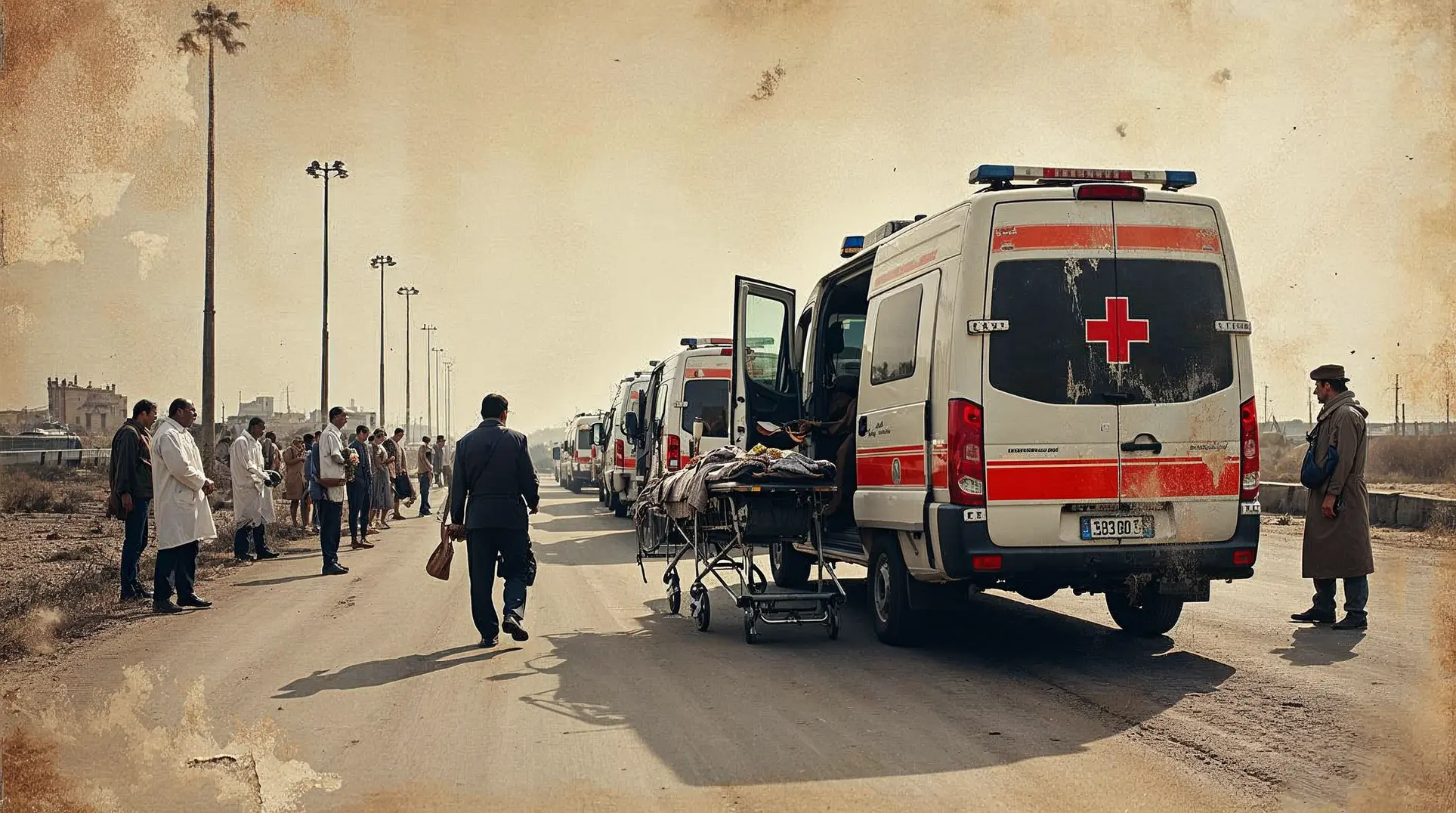
Gaza's Health Ministry reports that approximately 20,000 Palestinians require medical evacuation for treatment unavailable in the Strip's devastated healthcare system. Ambulances have been staged on the Egyptian side of the crossing in anticipation of the flow. The 50-patient daily quota represents 0.25 percent of the estimated medical evacuation need, underscoring the scale disparity between humanitarian requirements and the current opening's scope.
Israel seized military control of the Rafah crossing in May 2024 during ground operations in southern Gaza. The crossing was opened only once since then—briefly in early 2025 for limited medical evacuations—before closing again. Rafah represents Gaza's only potential gateway to the outside world not directly controlled by Israel, making its status central to any discussion of the enclave's humanitarian situation and longer-term governance.
Members are reading: How the 50-patient quota functions as a political pressure valve—and why the crossing's design embeds fragility.
The Rafah crossing's reopening marks measurable progress in ceasefire implementation, but its severely restricted scope illustrates the distance between symbolic steps and sustained humanitarian relief. With demand outstripping capacity by two orders of magnitude and enforcement mechanisms relying on contested interpretations of compliance, the crossing's operations will serve as a continuous test of the broader truce framework. The EU's supervisory role and joint Israeli-Egyptian vetting process temporarily defer governance questions that will ultimately determine whether this limited opening can evolve into durable border arrangements for Gaza's 2.3 million residents.
Subscribe to our free newsletter to unlock direct links to all sources used in this article.
We believe you deserve to verify everything we write. That's why we meticulously document every source.


