


Iran's Parliament Speaker Mohammad Baqer Qalibaf told lawmakers on Sunday that any U.S. military action would trigger Iranian strikes against Israel and American bases across the region, declaring them "legitimate targets." The warning, delivered as security forces continue a lethal crackdown that has killed over 116 protesters in recent weeks, marks a formal shift in Tehran's stated military doctrine toward what officials now call "anticipatory defense."
The threat is not occurring in a vacuum. The Islamic Republic faces its most severe internal legitimacy crisis in years, with widespread protests met by mass arrests, internet blackouts, and state rhetoric branding demonstrators as "enemies of God" and "terrorists." The regime's aggressive regional posture is deeply intertwined with this domestic fragility, transforming foreign policy into a mechanism for internal survival and creating a dangerous feedback loop where domestic repression and external escalation reinforce each other.
A doctrinal shift lowering the threshold for conflict
Qalibaf's statement represents more than rhetorical bluster. It formalizes a lowered threshold for Iranian military action, explicitly linking U.S. threats—particularly President Trump's warnings against killing protesters—to Tehran's calculation of when to strike. The Parliament speaker's invocation of "legitimate targets" in reference to Israeli territory and U.S. military installations signals that Iran's leadership has revised its red lines, adopting a preemptive posture rather than the traditional reactive defense doctrine.
This shift comes as Iran's conventional military capabilities remain degraded following the June conflict with Israel, which significantly damaged air defense systems and exposed vulnerabilities. The new doctrine reflects not strength but adaptation to weakness, signaling increased reliance on asymmetric tools—ballistic missiles, drone swarms, and proxy forces—that can bypass compromised defenses to strike high-value targets. Qalibaf's threat is calibrated to convey that while Iran cannot win a conventional war, it retains the capacity to inflict unacceptable costs on adversaries.
The timing also matters. Trump's public warnings about consequences for killing protesters have been seized upon by Iranian officials as evidence of American interference, allowing the regime to frame domestic unrest as a foreign conspiracy. This narrative fusion transforms legitimate protest into an act of external aggression in state media, justifying both the crackdown and the regional military posture as components of a single defensive strategy against a coordinated U.S.-Israeli plot.
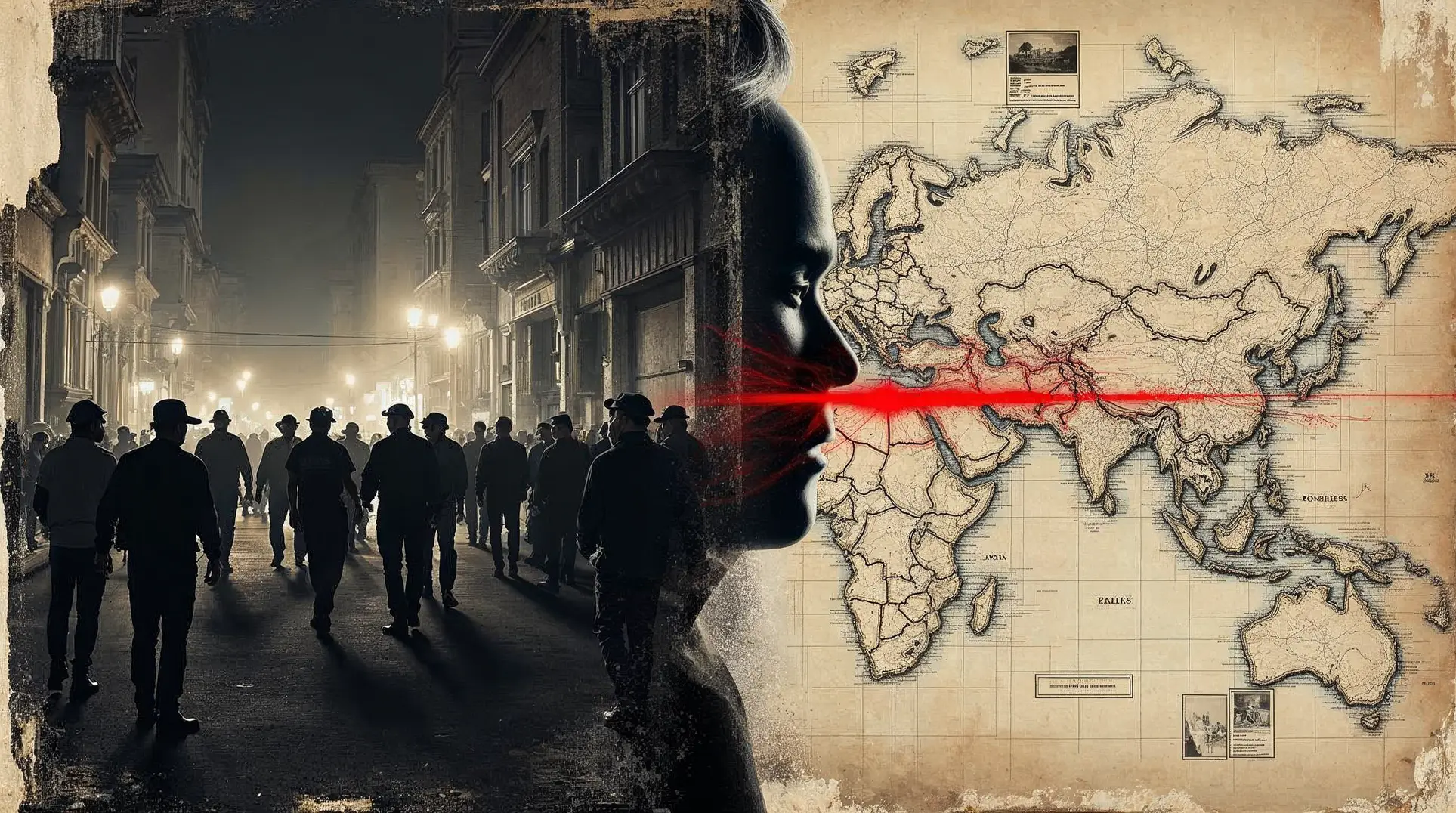
Members are reading: How Tehran's fusion of domestic repression and external aggression creates a high-risk trap for both the regime and regional stability.
The narrowing pathway between regime collapse and regional war
The current trajectory leaves little room for optimism about near-term stability. Iran's leadership has explicitly tied regime survival to its ability to control two simultaneous fronts: the streets at home and the strategic environment abroad. This fusion makes both challenges more acute. Domestically, the brutality of the crackdown—over 116 dead, thousands detained, communications severed—fuels the very anger the regime seeks to suppress. Regionally, the aggressive posture invites the external pressure that Tehran claims justifies the crackdown.
What makes this moment particularly dangerous is the elimination of middle ground. For the Iranian regime, partial concessions domestically could signal fatal weakness, while backing down regionally would undermine the nationalist narrative essential to internal control. The strategic reality is stark: a fragile regime weakened by economic collapse and military degradation has raised the stakes on both fronts, making the consequences of failure existential. The risk is no longer merely regime collapse or regional war, but the increasing likelihood that one will trigger the other.
Subscribe to our free newsletter to unlock direct links to all sources used in this article.
We believe you deserve to verify everything we write. That's why we meticulously document every source.


