


When the United States designated Viv Ansanm and Gran Grif as Foreign Terrorist Organizations on May 2, 2025, it erected a legal wall around Haiti's most powerful armed groups at precisely the moment they were pivoting toward political legitimacy. The collision between Washington's counterterrorism framework and the coalition's bid for recognition will define the next nine months, as Haiti's Transitional Presidential Council approaches its February 7, 2026 mandate expiry. What emerges from that collision—institutional capture or governance restoration—will determine whether Haiti's transition ends in elections or entrenchment of criminal rule.
The stakes are concrete and immediate. Analysts warn that Viv Ansanm, having consolidated territorial control across most of Port-au-Prince and expanded into rural Ouest and Artibonite, will attempt to place allies within the transitional bodies responsible for organizing elections and administering security. The FTO/SDGT designations criminalize material support, freeze assets, and expose anyone negotiating amnesty or recognition to legal liability. That raises a stark policy dilemma: how do international actors isolate and degrade criminal governance without either triggering abusive force that validates gang propaganda, or leaving space for armed groups to launder power into politics?
From firepower to populism
Viv Ansanm announced itself through violence. On February 29, 2024, coordinated assaults targeted prisons, police stations, and government buildings across the capital, forcing then-Prime Minister Ariel Henry to announce his resignation on March 11. ACLED data shows that inter-gang clashes fell 78 percent between March and August 2024 as the alliance—unifying the G-9 and G-Pèp networks under Jimmy "Barbecue" Chérizier—consolidated. That internal discipline enabled both territorial expansion and a strategic shift toward political messaging.
By early 2025, Viv Ansanm was deploying social media campaigns, populist rhetoric, and selective community service to rebrand as a defender of the poor. Chérizier posted videos decrying rogue kidnappings by coalition members and positioning the alliance as a guarantor of order amid state collapse. Gran Grif, meanwhile, demonstrated lethal capacity: its October 3, 2024 massacre in Pont Sondé left at least 115 dead, according to ACLED. Human Rights Watch's 2025 chapter documents the humanitarian toll—5,601 killed, roughly 1,500 kidnapped, and gangs controlling approximately 85 percent of Port-au-Prince by year-end 2024, with hundreds of thousands displaced and millions facing severe food insecurity.
The political turn is instrumental, not ideological. Gangs provide selective order and occasional services where the state has vanished, but their governance remains predatory—financed by extortion, kidnapping, and territorial rents. The populist veneer aims to cultivate local legitimacy and create bargaining leverage for amnesty or formal recognition as the transition nears its climax.
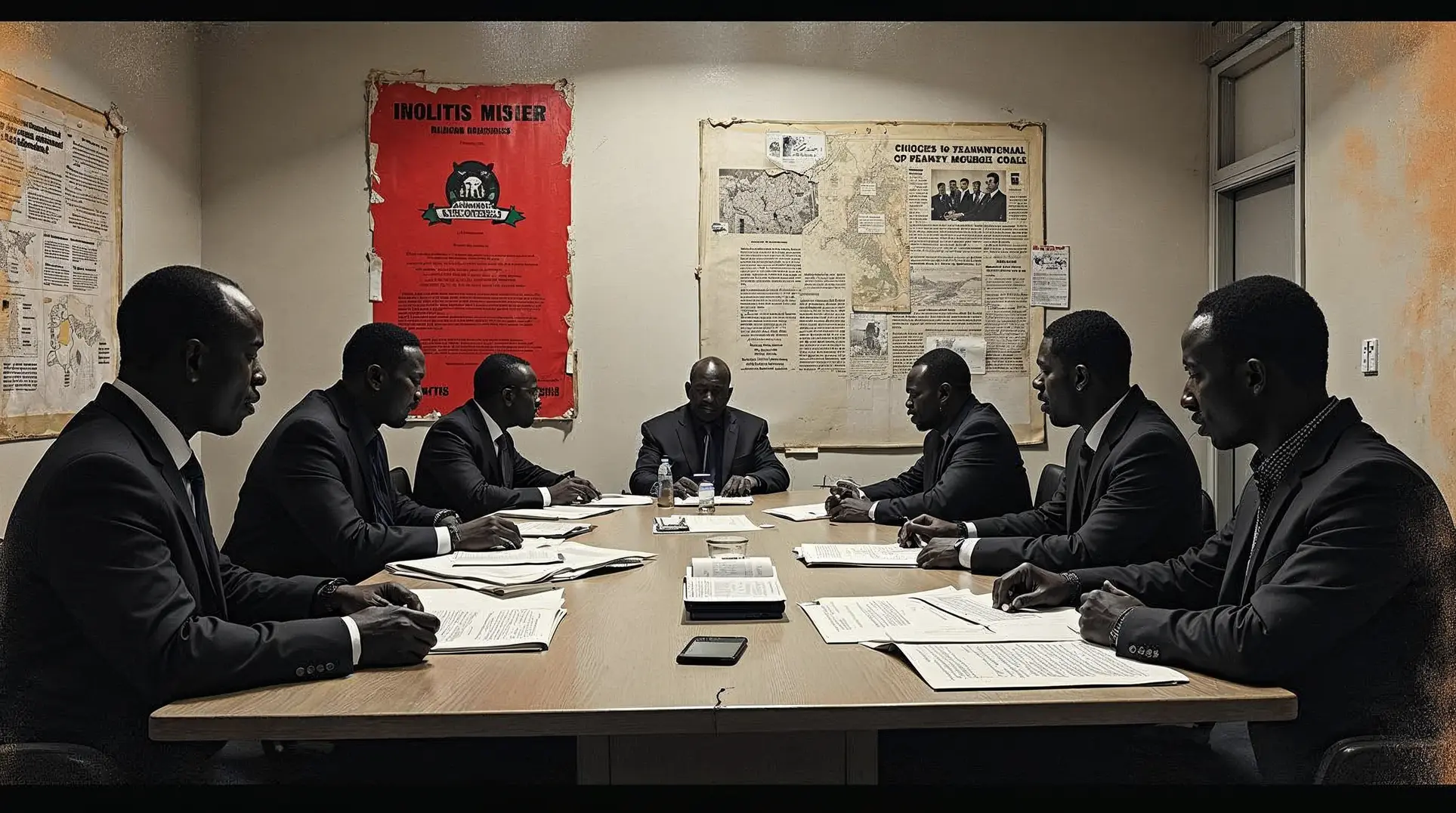
Members are reading: How gangs plan to infiltrate Haiti's election machinery before February 2026—and why current security operations may accelerate that capture.
What to watch as the deadline approaches
Several near-term indicators will signal whether Viv Ansanm's political gambit is gaining traction. Public ceasefire-for-access offers, framed as humanitarian gestures, would test international willingness to engage despite designations. Appointments to the Provisional Electoral Council and key security portfolios will reveal whether vetting holds or patronage prevails. Social media campaigns positioning the coalition as a moral authority—especially anti-kidnapping narratives—merit close scrutiny, as do shifts in extortion and kidnapping patterns that may reflect sanctions pressure or internal discipline erosion. Deteriorating security conditions and institutional collapse markers documented in earlier reporting remain relevant benchmarks.
The transition's core test is whether Haiti can rebuild institutions faster than Viv Ansanm can launder power into politics. That requires not just designations and raids, but governance capacity: transparent appointments, arms interdiction targeting the Florida-to-Haiti pipeline, adequately resourced and vetted security units operating under enforceable human-rights standards, and immediate humanitarian access that denies gangs their patronage monopoly. The legal red line Washington drew in May matters only if it anchors a broader strategy to restore state presence before the February 2026 deadline. Otherwise, the FTO label will be a formality, and the gangs' political future will be fait accompli.
Subscribe to our free newsletter to unlock direct links to all sources used in this article.
We believe you deserve to verify everything we write. That's why we meticulously document every source.


