



- Haiti's Viv Ansanm gang coalition controls 85-90% of Port-au-Prince through sophisticated three-tier governance system, not chaotic violence
- 1.9 million Haitians face catastrophic famine-like hunger; 680,000 children displaced as humanitarian funding reaches only 9% of need
- Kenya-led security mission operates at 40% strength with inadequate equipment, no territorial holding capacity, and political funding uncertainty
The Security Council's authorization of a multinational Gang Suppression Force marks a critical juncture, but can international intervention reverse the Caribbean nation's descent into chaos?
Heavy gunfire erupted near Haiti's National Palace on Thursday as the country's fragile interim government convened a rare cabinet meeting in the heart of gang-controlled Port-au-Prince. The symbolic gathering—an attempt to project normalcy in a capital where armed groups now control approximately 85-90% of the territory—was interrupted by clashes between gang members and police, underscoring the precarious state of governance in the Caribbean nation.
The violence came just weeks after the UN Security Council approved in September 2025 a new multinational Gang Suppression Force (GSF), authorized to independently neutralize armed gangs with enhanced international oversight. This decisive action represents the most significant international response yet to Haiti's deepening security and humanitarian crisis, which has left over 1.3 million people displaced and 5.7 million facing acute food insecurity. Yet as gang coalitions like Viv Ansanm intensify coordinated attacks on civilian infrastructure and expand their territorial control into previously secure regions, a fundamental question looms: Has the international community's intervention come too late to prevent Haiti's complete collapse into a gang-controlled state?
The formation of the Viv Ansanm coalition in February 2024 fundamentally transformed Haiti's security landscape. This unprecedented alliance brought together the country's most powerful gang factions—G-9 and G-Pèp—under coordinated leadership, nearly eliminating inter-gang clashes and allowing criminal groups to concentrate resources on territorial expansion and attacks against state institutions.
The coalition's strategic sophistication became evident through its coordinated February 2024 incursions on state institutions, which ultimately forced Prime Minister Ariel Henry to resign. Since then, gang violence has killed at least 5,601 people in 2024 alone—an increase of over 1,000 deaths compared to 2023, according to UN Human Rights Office figures. The same period saw significantly higher numbers of injuries and kidnappings, with the violence creating a humanitarian catastrophe affecting every aspect of Haitian life.
Beyond Port-au-Prince, gangs have dramatically expanded their presence into Haiti's agricultural heartland. The National Human Rights Defense Network (RNDDH) reported that armed gangs carried out 24 massacres and attacks in the Artibonite department between January and September 2024, leaving at least 84 people dead. The violence has spread to previously peaceful areas including Mirebalais, which experienced such severe attacks that all 100,000 residents fled earlier this year.
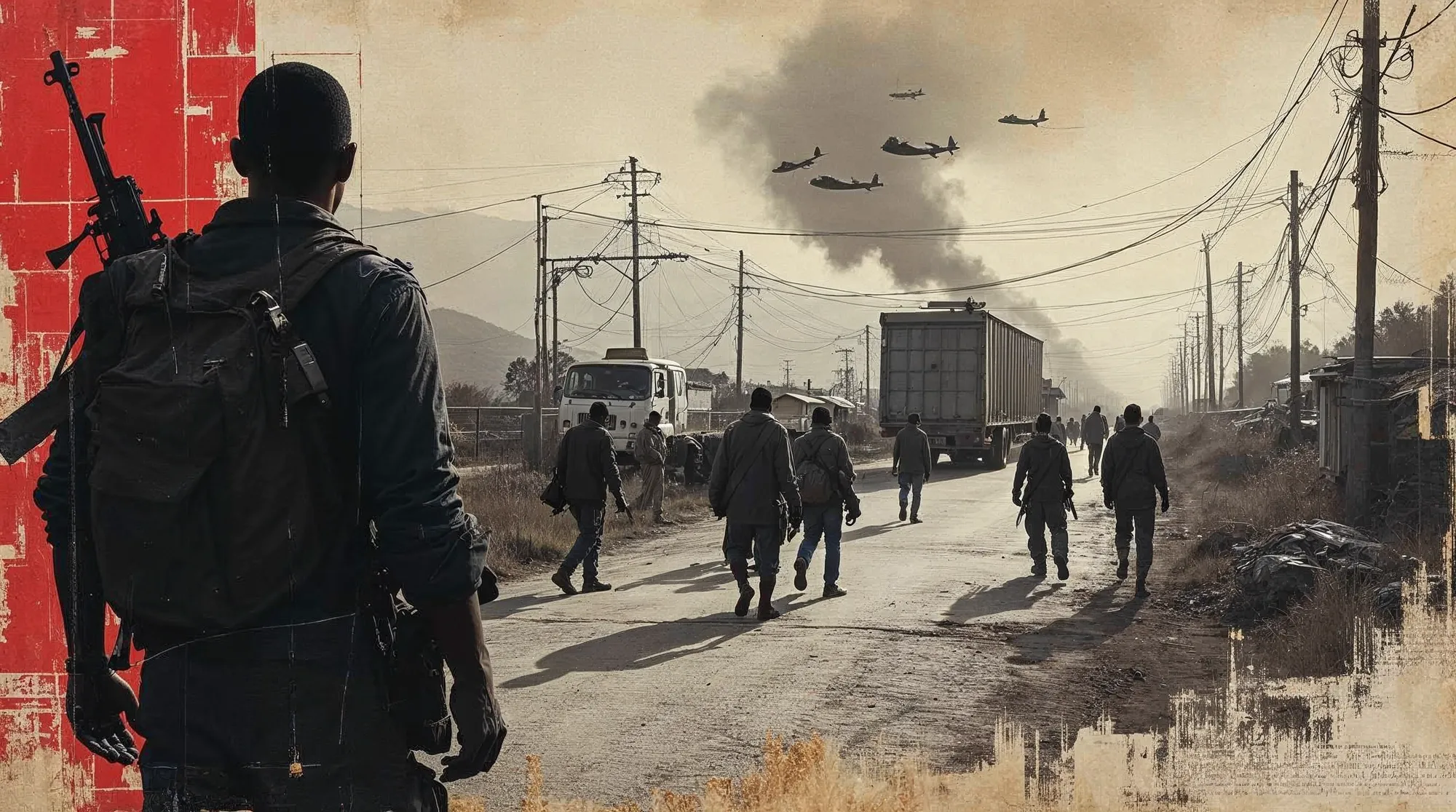
EXPOSED: The three-tier system gangs use to transform Port-au-Prince neighborhoods into autonomous criminal fiefdoms that challenge Haiti's very existence as a functioning state
A humanitarian catastrophe unfolds
The security crisis has precipitated one of the world's most severe humanitarian emergencies. The Integrated Food Security Phase Classification (IPC) reported that 5.7 million Haitians—more than half the population of roughly 11 million—face high levels of acute food insecurity. Of these, 1.9 million people experience catastrophic levels of hunger equivalent to famine-like conditions, marked by severe food gaps and dangerous rates of malnutrition.
The crisis affects children with particular severity. UNICEF reported that an estimated 680,000 children have been displaced by gang violence, nearly double the number from a year ago. In 2024, the UN documented grave violations against thousands of Haitian children, including killings, injuries, sexual violence, and forced gang recruitment—representing a dramatic increase over the previous year.
"For Haiti's children, these compounding crises mean a daily struggle for survival—shuttered schools, hospitals overwhelmed, and childhoods cut short by violence, neglect, exploitation and hunger," UNICEF stated in its report. With more than 1,600 schools directly affected by violence and over 1,080 completely closed in 2025, at least one in four Haitian children is out of school, increasing their vulnerability to forced gang recruitment.
The World Food Programme (WFP) has warned that women, children, and displaced families are hardest hit by the crisis. An estimated 1.3 million Haitians displaced by armed violence are among the most food insecure, with three in four people sheltering in schools and public buildings facing Crisis or Emergency levels of hunger. Overcrowded and unsanitary conditions, coupled with limited access to nutritious food, are putting babies and young children at heightened risk of malnutrition.
Despite these desperate needs, Haiti remains the least funded of all underfunded country appeals globally. As of mid-2025, the humanitarian response plan has received less than 9% of the $908 million required. The funding crisis has forced WFP to suspend hot meal distributions and reduce food rations by half for families in displacement centers. The agency requires at least $139 million to sustain aid operations for Haiti's most vulnerable populations over the next twelve months.
The floundering international security response
The Kenya-led Multinational Security Support (MSS) mission, which began deployment in June 2024, has struggled to make meaningful progress against gang violence despite initial hopes. More than six months after arriving in Port-au-Prince, the mission operates at approximately 40% of its authorized personnel strength, with fewer than 1,000 officers deployed against a planned force of 2,500.
The mission faces severe structural challenges. While the estimated annual cost is $600 million, it has received only around $400 million in actual funding through bilateral contributions and a UN-administered trust fund that has collected $85 million. The slow disbursement of pledged funds and limited number of contributing countries have prevented the mission from achieving operational effectiveness.
"We didn't get what we expected," a police source in contact with the Kenyan contingent in Port-au-Prince told investigators. The equipment—guns and armored personnel vehicles—is either inadequate or substandard, putting the Kenyan forces at further risk. The mission also lacks sufficient operational and tactical support to plan deployments effectively, resulting in a design that no longer reflects the reality on the ground.
Security experts interviewed for investigations into the mission's performance noted that Kenyan police have been placed in an untenable position. "This type of intervention has been tried since 1915," said George Musamali, a Kenyan security expert and former senior officer in an elite police unit. "The Americans started and left without achieving anything. The UN [MINUSTAH] was there with 17,000 strong Brazilian military officers who also left. It is a totally impossible mission."
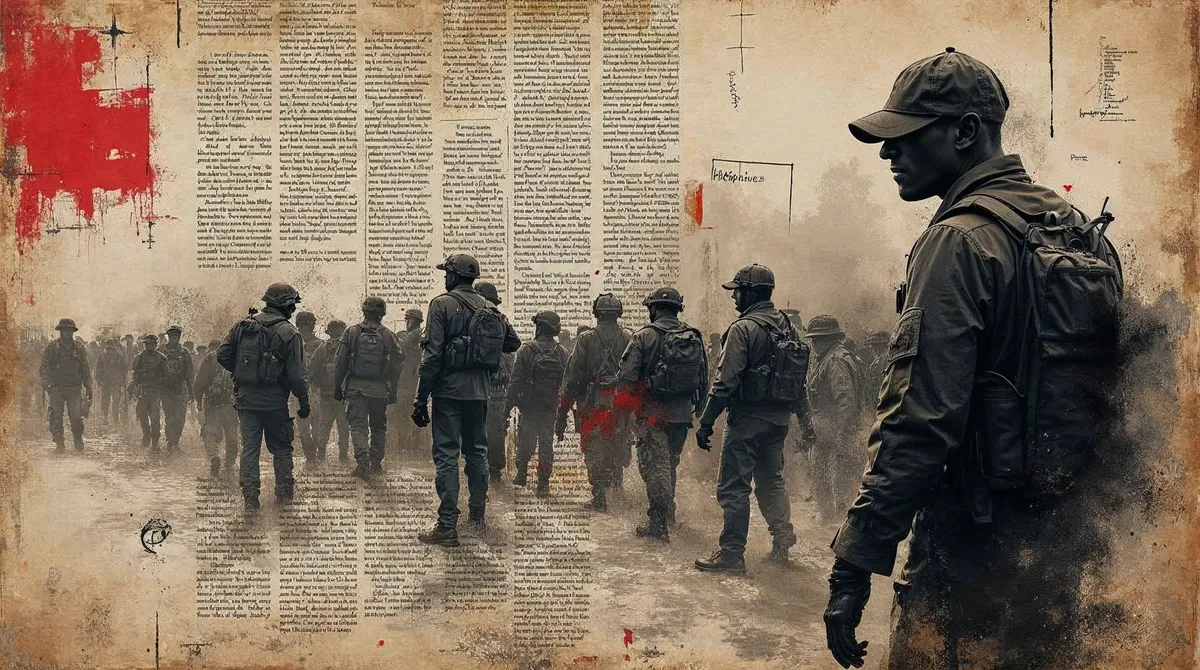
REVEALED: Why 261 elite officers remain stranded in Nairobi while gangs tighten their grip—the devastating logistical failures and political calculations that sealed the Kenya mission's fate before a single shot was fired
Political paralysis compounds the crisis
Haiti's transitional government, established in April 2024 to pave the way for elections, has been paralyzed by internal political warfare and corruption allegations. The Transitional Presidential Council (TPC), designed to provide interim leadership, has been embroiled in scandals involving several of its members, further eroding public trust.
The political instability reached a new low when the TPC abruptly dismissed Prime Minister Garry Conille and his government in early November 2024, appointing Alix Didier Fils-Aimé as the new prime minister. This leadership churn has prevented progress on critical security reforms and delayed the establishment of institutions necessary for governance.
"The two-headed governance structure set up in April 2024, with the Transitional Presidential Council on one side and the government on the other, has become paralyzed by political infighting," according to analysis from the Global Initiative Against Transnational Organized Crime. "Institutional weaknesses and internal political wars opened up opportunities for the gangs to exploit. Criminal groups acted quickly and strategically, adapting to the context and putting pressure on the authorities."
The transitional government's request in September 2024 for the UN Security Council to transform the MSS mission into a full UN peacekeeping operation reflects desperation about the current mission's sustainability. However, such a transformation would require formal Security Council approval, new mandate negotiations, and votes from permanent members—a process that could lead to significant operational delays and further jeopardize Haiti's chances of holding elections planned for 2026.
Protests persist nationwide as Haitians demand improved security and new government leadership amid dissatisfaction with the transitional government's capacity to curb gang violence and restore order. The government has not held an election since 2016, and poverty-stricken Haiti currently has no sitting congress or president.
The regional spillover threat
The UN has warned that Haiti's crisis poses significant risks beyond its borders. The expansion of gang territorial control threatens to spread violence and increase transnational trafficking in arms and people throughout the Caribbean region.
Between October 2024 and June 2025, at least 1,018 people were killed, 213 injured, and 620 abducted in the Artibonite and Centre departments, as well as in Ganthier and Fonds Parisien west of Port-au-Prince. The violence has spread along key routes toward the Dominican Republic, with gangs taking control of border crossings and customs offices.
"Human rights abuses outside Port-au-Prince are intensifying in areas of the country where the presence of the State is extremely limited," said Ulrika Richardson, ad interim Head of the UN Integrated Office in Haiti (BINUH). "The international community must strengthen its support to the authorities, who bear the primary responsibility for protecting the Haitian population."
The Dominican Republic has responded by dramatically increasing deportations of Haitians, with a 71% increase in 2025 according to AFP. This includes raiding hospitals to target undocumented pregnant women and women with newborns. Despite UN High Commissioner for Refugees' calls to extend refugee protection to Haitians under the 1984 Cartagena Declaration, foreign governments returned nearly 200,000 people to Haiti between January and mid-December 2024, with the Dominican Republic responsible for 97% of returns.
The United States extended Temporary Protected Status (TPS) for Haitians for 18 months in June 2024, but Haitians continue to face challenges accessing humanitarian parole programs. Since October 2023, the US Coast Guard has intercepted 857 Haitians at sea and returned them to Haiti, despite the acute insecurity and human rights crisis that make safe return impossible.
The path forward: Can Haiti be saved?
The UN Security Council's approval of the Gang Suppression Force in September 2025 represents a critical opportunity, but success is far from guaranteed. The new force will need to address the fundamental failures that have plagued the MSS mission: inadequate funding, insufficient personnel, lack of strategic coordination, and absence of mechanisms to hold territory after operations.
UN High Commissioner for Human Rights Volker Türk has emphasized that restoring the rule of law must be a priority. "It has long been clear that impunity for human rights violations and abuses, as well as corruption, remain prevalent in Haiti, constituting some of the main drivers of the multi-dimensional crisis the country faces, along with entrenched economic and social inequalities," Türk stated. "Additional efforts from the authorities, with the support of the international community, are needed to address these root causes."
The international community must also address the weapons pipeline fueling gang violence. Experts estimate that 270,000 to 500,000 firearms are in illegal circulation in Haiti, the majority controlled by gangs. Arms trafficking from the United States, particularly Florida with its permissive gun laws, continues to supply gangs with increasingly sophisticated weapons. The full implementation of the UN Security Council's arms embargo and sanctions regime remains crucial to cutting off this supply.
However, security measures alone cannot resolve Haiti's crisis. The underlying drivers—extreme poverty affecting a significant portion of the population, lack of access to education and healthcare, political instability, and years of economic decline—require long-term development investments and political reforms that address systemic inequalities.
The formation of civil society initiatives like the Patriotic Congress for National Rescue (Congrès Patriotique pour le Sauvetage National), which plans to hold dialogues across the country to reach consensus on political, economic, and security reforms, offers some hope for Haitian-led solutions. Yet these efforts struggle to gain traction amid the violence and political paralysis.
As Haiti enters the second quarter of 2025, the country stands at a crossroads. The Gang Suppression Force represents perhaps the last viable opportunity to prevent complete state collapse. But without adequate funding, comprehensive strategic planning, political stability, and sustained international commitment to addressing root causes, even this enhanced intervention may prove insufficient. The question is no longer whether Haiti needs help—it's whether the international community will provide the sustained, comprehensive support necessary to prevent a humanitarian catastrophe from becoming a permanent failed state in the heart of the Caribbean.


